Packera, Genus, spp., Multiple species,
- Genus
- Multiple species
American groundsels and ragworts
North America, with a few species in Siberia
Overview
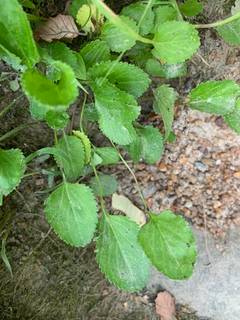
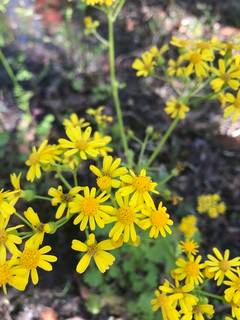
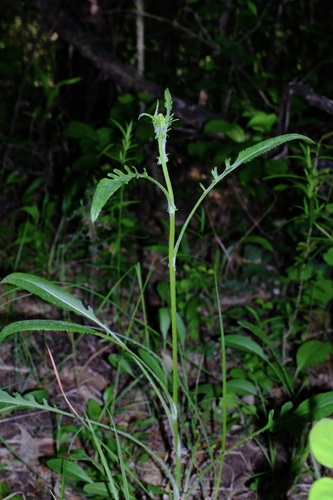
Packera is a genus of about 60 to 80 species of mostly perennial herbs in the family Asteraceae, formerly placed in Senecio and native largely to North America. Plants form a basal rosette of variable leaves, often spoon-shaped or lyre-shaped at the base with smaller, dissected leaves up the stem. Flowering stems rise 15-60 cm (6-24 in) and carry flat-topped clusters of yellow daisy flower heads, each 1-2.5 cm (0.4-1 in) across, with ray and disc florets. P. aurea, golden ragwort, spreads into colonies in moist ground, while P. obovata occupies drier rocky woods. Flowering peaks in spring and early summer, followed by seed heads of tufted, wind-borne achenes. Plants spread by rhizomes and self-sown seed, forming groundcover-like patches. The foliage contains pyrrolizidine alkaloids that are toxic to grazing animals and to people if eaten. Most species die back to a low evergreen or semi-evergreen rosette through winter, then resume growth in early spring.
Native Range
Native largely to North America, from Canada through the United States into Mexico, with a few species in Siberia. P. aurea and P. obovata are widespread in eastern North American woodlands and wetlands. The genus occupies meadows, woods, stream banks, and rocky slopes.Suggested Uses
Grown as groundcover in moist woodland and rain gardens, and in native and pollinator plantings where early yellow flowers feed emerging insects. Spreading rhizomes suit naturalized areas rather than tightly managed borders.How to Identify
Appearance
Size & Dimensions
Height6" - 2'
Width/Spread1' - 1'6"
Bloom Information
Detailed Descriptions
Foliage Description
greenGrowing Conditions
Sun Requirements
Requires 3-8 hours of direct sunlight daily
• Full Sun: 6+ hours of direct sunlight
• Partial Shade: 3-6 hours of direct sunlight
• Full Shade: Less than 3 hours of direct sunlight
Care & Maintenance
Care Guide
Golden ragworts and their relatives grow in full sun to part shade across a wide moisture range, from wet stream margins to dry rocky woods, depending on species. P. aurea grows in consistently moist soil, while P. obovata tolerates drier ground. Most species are hardy to -30 C (-22 F) and keep a low winter rosette. Plants spread by rhizomes and seed and can colonize open ground quickly. The pyrrolizidine alkaloids in the foliage deter most grazing animals.Pruning
Spent flower stems are sheared after bloom to limit self-seeding where spread is unwanted. The basal rosette is left in place through winter. Colonies are divided in spring to manage their extent.Pruning Schedule
Prune: June–July
summer