Packera, Genus, aurea, Species,
- Genus & species
golden ragwort
Overview
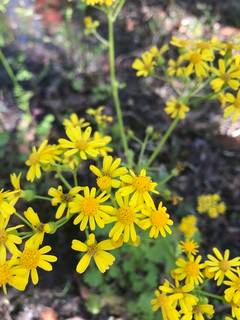
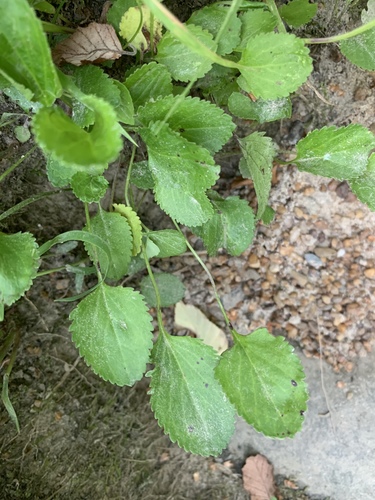
Packera aurea is a clump-forming herbaceous perennial native to eastern North America, grown for its spring flowers and persistent basal foliage. The plant forms a low rosette of rounded to heart-shaped basal leaves 1-3 inches (2.5-7.5 cm) long, dark green above and often purple-tinged beneath, with deeply lobed stem leaves higher up. In mid to late spring it sends up flowering stems 1-2.5 feet (30-75 cm) tall topped with flat clusters of yellow, daisy-like flower heads about 0.75 inch (2 cm) across. After bloom the flowers form dandelion-like seed heads with tufted seeds carried on the wind. P. aurea spreads by rhizomes and self-seeding to form a dense groundcover, colonizing moist woodland, stream banks, and seeps. The basal rosette persists through winter, giving the plant a semi-evergreen habit in milder zones. It tolerates wet soils that many perennials cannot, including seasonal flooding. All parts contain pyrrolizidine alkaloids that are toxic to people and livestock if eaten. Growth is moderate to rapid, and a single plant can spread into a broad patch within a few seasons.
Native Range
Packera aurea is native to eastern and central North America, from Newfoundland and Ontario south to Florida and Texas. It grows in moist woods, wet meadows, swamp margins, and along streams.Suggested Uses
P. aurea is used as a groundcover for moist shade, in rain gardens, woodland gardens, and along pond and stream edges. It suits naturalized plantings where its spreading habit fills bare ground. Plants are spaced 12-18 inches (30-45 cm) apart.How to Identify
Appearance
Size & Dimensions
Height1' - 2'6"
Width/Spread1' - 2'
Bloom Information
P. aurea blooms in mid to late spring, generally April to June. The flat clusters of yellow flower heads open over three to four weeks. Wind-borne seeds disperse shortly after, and the basal foliage remains through the rest of the year.
Detailed Descriptions
Foliage Description
dark green, purple-tinged beneathGrowing Conditions
Sun Requirements
Requires 2-8 hours of direct sunlight daily
• Full Sun: 6+ hours of direct sunlight
• Partial Shade: 3-6 hours of direct sunlight
• Full Shade: Less than 3 hours of direct sunlight
Care & Maintenance
Care Guide
P. aurea grows in part shade to full shade and tolerates full sun where soil stays moist. It establishes in consistently moist to wet soils rich in organic matter and tolerates clay and seasonal flooding. Water needs are moderate to high, and the plant declines in dry, sandy soil. Hardy in USDA zones 3-8, it overwinters as a semi-evergreen basal rosette. It spreads readily by rhizome and seed and can colonize beyond its intended area. Removing spent seed heads before they ripen limits self-sowing where a contained patch is wanted.Pruning
P. aurea needs little pruning. Spent flower stems can be cut back after bloom to limit self-seeding and tidy the rosette. The basal foliage is left in place through winter. Old or tattered leaves are removed in early spring.Pruning Schedule
Prune: June
summer
Container Growing
Suitable for container growing
Minimum container size: 2 gallons