Muscari, Genus, spp., Multiple species,
- Genus
- Multiple species
grape hyacinths
Mediterranean, southern Europe, North Africa, southwestern Asia
Overview
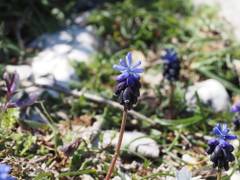
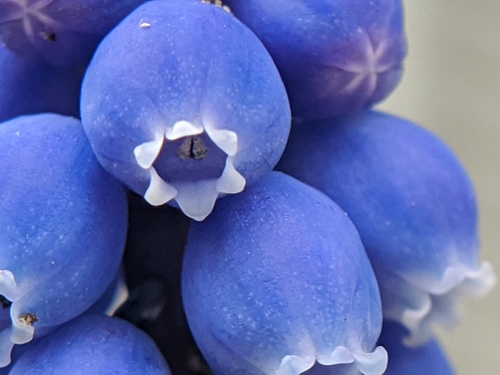
Muscari is a genus of about 40 to 60 species of small bulbous perennials in the asparagus family, Asparagaceae, known as grape hyacinths. Each bulb produces a tuft of narrow, fleshy, grass-like basal leaves and, in spring, one or more leafless stalks 4 to 12 inches (10 to 30 cm) tall topped with a dense spike of many small flowers. The individual flowers are urn- or bead-shaped with a constricted, often pale-rimmed mouth, packed tightly so the spike resembles a cluster of grapes, most often deep blue or violet but also pale blue, white, yellow, or near-black depending on species. Sterile flowers at the top of the spike are usually smaller and paler. Muscari is native to the Mediterranean region, southern Europe, North Africa, and southwestern Asia, growing in open woodland, grassland, scrub, and rocky hillsides. Bulbs multiply quickly by offsets and seed, so plantings thicken into drifts over a few years, and some species, especially M. armeniacum, can spread beyond where they are wanted. The leaves of several species emerge in autumn and stand through winter before the spring bloom.
Native Range
Muscari is native to the Mediterranean Basin, southern and central Europe, North Africa, and southwestern and central Asia. Plants grow in open woodland, meadows, grassy slopes, scrub, and rocky or disturbed ground, often on well-drained limestone soils.Suggested Uses
Muscari is planted in drifts at the front of borders, under shrubs and deciduous trees, in rock gardens, short grass, and containers, and for naturalizing in lawns, set 3 to 4 inches (8 to 10 cm) apart in groups. The blue spikes are used to edge paths and to underplant tulips and daffodils for layered spring color. The early flowers feed bees emerging from winter.How to Identify
Appearance
Size & Dimensions
Height4" - 1'
Width/Spread2" - 6"
Bloom Information
Muscari blooms in early to mid spring, generally March through May, the spikes lasting two to three weeks. Most open deep blue or violet, with white, pale blue, and two-toned forms among the garden kinds. The flowers carry nectar and a light scent that draws early bees. As the bloom fades the foliage continues for a while before dying back for summer dormancy.
Detailed Descriptions
Flower Description
blue, violet, white, yellow, or near-blackFoliage Description
green, grass-likeGrowing Conditions
Sun Requirements
Requires 4-8 hours of direct sunlight daily
• Full Sun: 6+ hours of direct sunlight
• Partial Shade: 3-6 hours of direct sunlight
• Full Shade: Less than 3 hours of direct sunlight
Care & Maintenance
Care Guide
Muscari grows in full sun to light shade and any well-drained soil at a pH of 6.0 to 7.5, tolerating poor and stony ground once established. Bulbs are planted 3 to 4 inches (8 to 10 cm) deep in autumn and left undisturbed to multiply. Most species are cold hardy to USDA zones 4 to 8 and need a cold winter to flower well. Plants are watered during growth and bloom but kept drier through summer dormancy, when wet soil rots the bulbs. Few pests trouble them. Crowded clumps that flower less are lifted and divided after the leaves yellow.Pruning
Muscari needs little care beyond removing the spent flower spikes to limit self-seeding where it spreads too freely. The leaves are left to yellow and die down naturally after bloom, since they feed the bulb for the next year. Crowded clumps are lifted and the offsets separated once the foliage has faded.Pruning Schedule
Prune: May
late spring
Container Growing
Suitable for container growing
Minimum container size: 1 gallons