Image 1 of 16
1 / 16
Plant Reference
Muscari, Genus, armeniacum, Species,
- Genus & species
grape hyacinth
Southeastern Europe and western Asia — Turkey, Armenia, the Caucasus region of Georgia and Azerbaijan, and northwestern Iran; rocky slopes, alpine meadows, open woodlands, and disturbed ground at low to mid elevations; naturalized widely outside the native range across temperate Europe, North America, and other continents through escape from garden cultivation
Overview
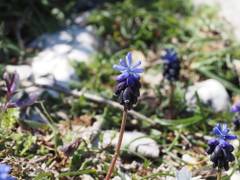
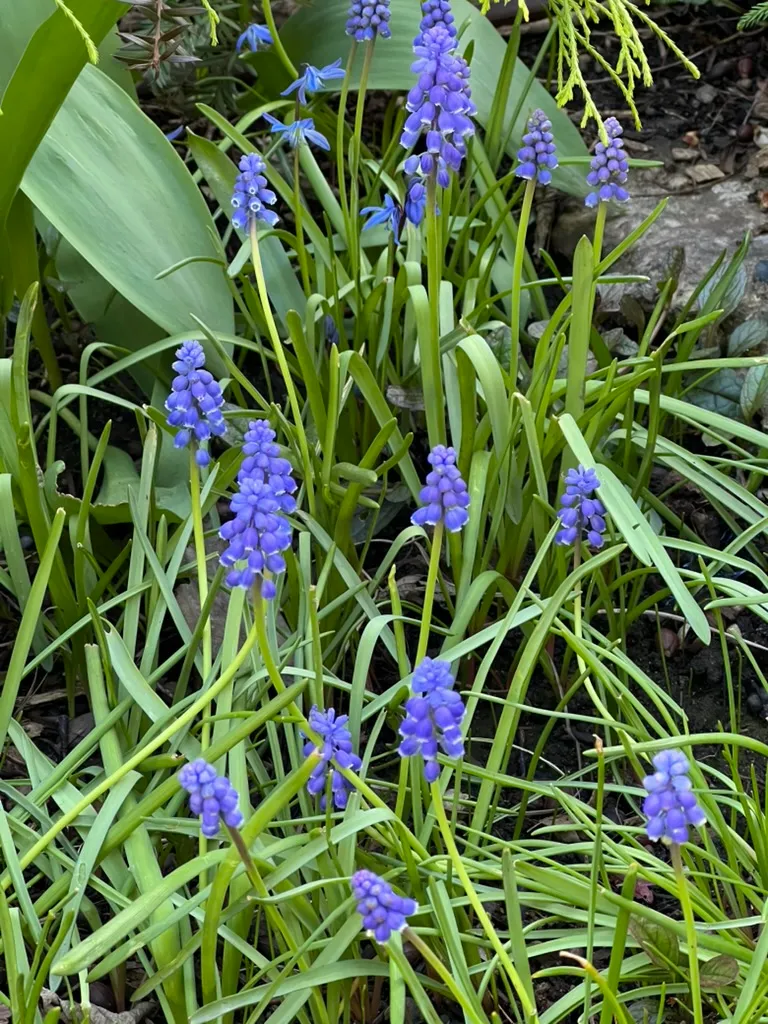
Muscari armeniacum is a small bulbous spring-flowering perennial in the family Asparagaceae growing 4-8 inches (10-20 cm) tall and 2-4 inches (5-10 cm) wide from a small underground bulb, native to southeastern Europe and western Asia. The species produces dense conical racemes 1-2 inches (2.5-5 cm) long of cobalt-blue to deep violet-blue urn-shaped florets 0.2 inch (5 mm) long during March and April, with each small urceolate floret carrying a contracted white-rimmed mouth that gives the raceme the pointillist texture characteristic of the genus. The genus name Muscari derives from the Greek word 'moschos' meaning 'musk' and refers to the lightly musky fragrance of the flowers, which is most noticeable in warm sun and at close range — the scent has been described as reminiscent of ripe plums or grape candy and is part of the sensory character of a spring bulb planting at its peak bloom. One cultural quirk of the species is atypical among spring-flowering bulbs: the narrow fleshy strap-shaped foliage emerges from the dormant bulb in fall (October-November) rather than in spring, persists through the winter months as a low basal tuft, and is already present and waiting when the flowering stalks rise in early spring. The fall-emerging foliage looks floppy and weather-beaten through the coldest winter weeks and some gardeners mistake it for dead plant material, but the foliage is functional and contributes photosynthetic energy to the bulb for the following spring's bloom — cutting or removing the winter foliage weakens the plant. The species naturalizes freely in garden and lawn settings by a combination of bulb offset division and self-sowing, with single planting of 25-50 bulbs expanding into a colony of hundreds or thousands within a few years under favorable conditions. This aggressive naturalization is both the species' main asset (producing large-scale spring color displays with minimal effort) and its main limitation (the bulbs are difficult to eradicate from areas where they are not wanted, because abundant offsets and seed production replenish the colony after each attempt at removal). All parts of the plant contain saponins and other glycosides that cause vomiting, diarrhea, and abdominal discomfort in humans, dogs, cats, and livestock if ingested, though the small size of the bulbs and the mild nature of the compounds make serious poisoning rare in practice. Drought-tolerant once established. Deer-resistant — the species is reliably avoided by deer browsing in garden settings. The genus Muscari contains approximately 40-60 species of small spring-flowering bulbs across the Mediterranean and western Asian region, and M. armeniacum is the species most frequently encountered in North American commercial bulb sales because of its naturalizing vigor and the saturated cobalt-blue flower color.
Native Range
Muscari armeniacum is native to southeastern Europe and western Asia, with a natural range spanning Turkey, Armenia (for which the species is named), the Caucasus region of Georgia and Azerbaijan, and northwestern Iran. The species grows on rocky slopes, alpine meadows, open woodlands, and disturbed ground at low to mid elevations where the Mediterranean-to-continental climate pattern of cool wet winters and hot dry summers matches the spring-active bulb lifecycle. European garden cultivation extends back several centuries and the species has been a standard spring bulb in Northern European gardens since at least the 17th century, reaching commercial bulb catalogs in large quantities during the 19th and 20th centuries as Dutch bulb trade expanded. The species has naturalized widely outside its native range across temperate Europe, North America, New Zealand, and other continents through escape from garden cultivation and is considered an invasive non-native plant in several regions including parts of the northeastern United States, though it is not federally regulated as a noxious weed. The related species Muscari botryoides (common grape hyacinth, from southern and central Europe) and Muscari neglectum (starch grape hyacinth, from the Mediterranean and western Asia) are also cultivated and can be difficult to distinguish from M. armeniacum without close examination of floret characters.Suggested Uses
Planted in mass naturalizing plantings under deciduous trees, as a lawn feature in meadow-style grass settings where the foliage turnover tolerates moderate mowing timing, in rock gardens, along path edges, in mixed spring bulb borders, and in containers of 2 gallons (7.5 L) or larger at 2-4 inch (5-10 cm) spacing in zones 4-9. Mass planting in drifts of 50-200 bulbs is the traditional approach because the small size of individual plants means that a scattered planting of 10-20 bulbs reads as a minor accent while a concentrated drift of 100+ bulbs produces the river-of-blue effect that is the species' central ornamental contribution. Combined with other early spring bulbs including Narcissus, Tulipa, Chionodoxa, Scilla siberica, and Crocus in mixed spring plantings where the sequential and overlapping bloom periods extend the spring bulb display. Planted in lawns as 'bulb lawns' where the foliage turnover tolerates the late-spring mowing schedule once the grape hyacinth foliage yellows and dies back. Not suited to formal beds where the naturalizing spread conflicts with controlled planting schemes, wet or poorly drained sites where bulb rot develops, or gardens where the fall-to-winter appearance of the emerging foliage creates an untidy look during the cold months when visual interest is scarce in the planting.How to Identify
Appearance
Size & Dimensions
Height4" - 8"
Width/Spread2" - 4"
Bloom Information
Dense conical racemes 1-2 inches (2.5-5 cm) long of cobalt-blue to deep violet-blue urn-shaped florets 0.2 inch (5 mm) long open at the top of short upright flowering stalks during March and April in zones 4-9, lasting approximately 3 weeks. Each small urceolate floret has a contracted white-rimmed mouth that gives the raceme a pointillist texture at close range. Flowers are lightly fragrant with a musky-grape scent that is most noticeable in warm sun and at close range — the scent is part of the sensory character of a spring bulb planting at its peak bloom and the musky fragrance separates the species from the scentless grape hyacinth Muscari neglectum and from the differently-scented M. botryoides. Bees visit the flowers during daylight hours and the species is a useful early-spring nectar resource for emerging queen bumblebees. After bloom each floret matures into a small seed capsule that splits to release several seeds, which combine with abundant bulb offset production to drive the species' rapid naturalizing spread.
Detailed Descriptions
Flower Description
cobalt-blue to deep violet-blueFoliage Description
dark greenGrowing Conditions
Sun Requirements
Requires 3-10 hours of direct sunlight daily
• Full Sun: 6+ hours of direct sunlight
• Partial Shade: 3-6 hours of direct sunlight
• Full Shade: Less than 3 hours of direct sunlight
Care & Maintenance
Care Guide
Plant bulbs 3-4 inches (7-10 cm) deep in fall in well-drained soil with a pH of 6.0-8.0 in full sun to partial shade (3-10 hours of direct sun); tolerated soil types include loam, sand, and chalky limestone-based soils (the species handles alkaline and chalk soils as well as neutral and mildly acidic soils). Space bulbs 2-4 inches (5-10 cm) apart for massed naturalizing plantings or 4-6 inches (10-15 cm) apart for mixed borders. The species is drought-tolerant once established because the bulb is dormant below ground through the hot dry summer months, and summer irrigation is unnecessary and can trigger bulb rot. Foliage emerges from the dormant bulb in fall (October-November) and persists through the winter as a low basal tuft — the fall-emerging foliage is atypical among spring bulbs and can look floppy or weather-damaged through the coldest winter weeks, but cutting or removing the winter foliage weakens the plant because the leaves contribute photosynthetic energy to the following spring's bloom. Spring foliage is allowed to yellow and die back naturally in late spring and early summer (May-June) without cutting, tying, or braiding. The species naturalizes freely by a combination of bulb offset division and self-sowing, and colonies expand several feet per year under favorable conditions — gardeners wanting a contained planting should plan for this spread, and gardeners seeking a mass display can count on rapid colony expansion from an initial planting of 25-50 bulbs into a carpet of hundreds or thousands within a few years. All parts of the plant contain saponins and other glycosides that cause vomiting, diarrhea, and abdominal discomfort in humans, dogs, cats, and livestock if ingested. Deer avoid the foliage.Pruning
No routine pruning is needed. Spent flower stalks are cut at the base after bloom finishes in April or May if self-sowing is unwanted, or left in place to ripen seed if the colony is being allowed to expand. Foliage is allowed to yellow and die back naturally in late spring and early summer (May-June) without cutting, tying, or braiding — the yellowing leaves photosynthesize energy into the bulb for the following year's bloom. The fall-emerging winter foliage is left in place through the cold months and not cut back, because the winter leaves also contribute energy to the bulb and removing them weakens the plant. Dormant bulbs are left undisturbed in the ground through summer and early fall until the new foliage cycle begins in October-November.Pruning Schedule
Prune: May–June
late spring
Container Growing
Suitable for container growing
Minimum container size: 2 gallons