Morella, Genus, rubra, Species,
- Genus & species
Chinese bayberry
Overview
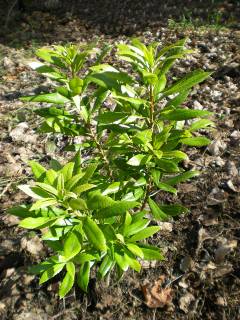
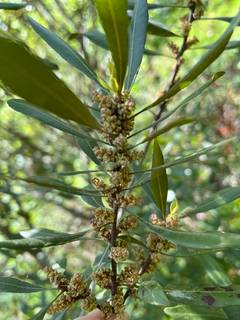
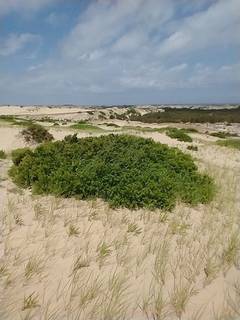
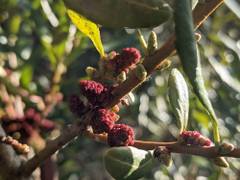
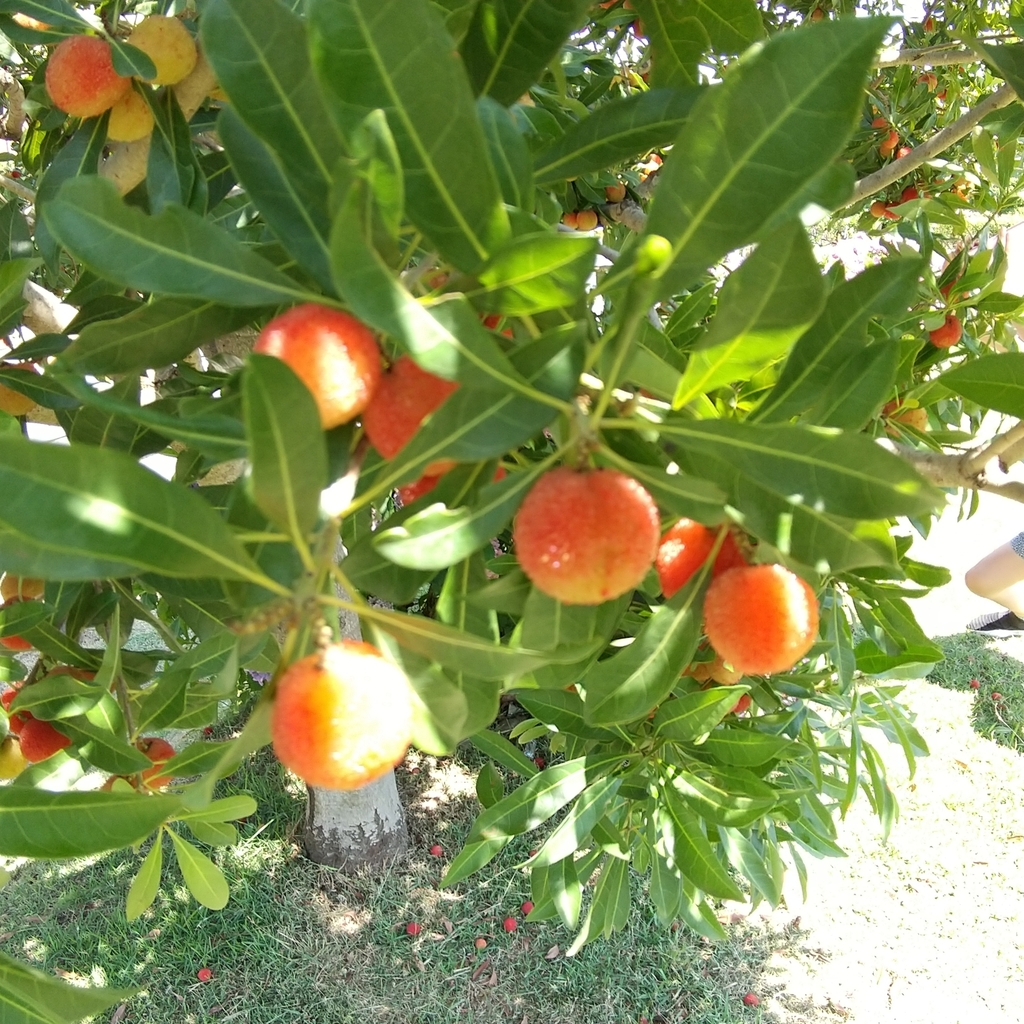
Morella rubra is a dioecious evergreen tree reaching 30-50 feet (9-15 m) tall and 20-30 feet (6-9 m) wide, with a dense rounded crown and grey bark. Leaves are obovate to lance-shaped, 2-5 inches (5-13 cm) long and 0.8-1.6 inches (2-4 cm) wide, leathery, dark green and glossy above and dull beneath, with entire margins on mature growth and scattered teeth on juvenile shoots. Male and female flowers are carried on separate plants in short catkins 0.4-1.2 inches (1-3 cm) long, without petals, wind-pollinated, in March and April. Fruit forms only on female plants: a globose drupe 0.6-1.2 inches (1.5-3 cm) in diameter covered in juicy papillae, ripening from pale pink through dark red to near-black in June and July, with a single stone. Roots carry nodules holding Frankia bacteria that fix atmospheric nitrogen, supporting growth on soils low in nitrogen. Grafted trees begin fruiting in the fourth to sixth year. Fruit bruises within 1-2 days of picking and travels poorly without refrigeration. Foliage is damaged below 14F (-10C) and plants are killed near 5F (-15C), which confines cultivation to zones 8-10.
Native Range
Native to southern and eastern China, from Zhejiang and Jiangsu south to Guangdong and Guangxi, with populations in Japan, Korea, the Philippines, and parts of Southeast Asia. Grows in hill forest and on acidic slopes from near sea level to 5,900 feet (1,800 m). Cultivated in Zhejiang for more than two thousand years, with orchards concentrated between 200 and 2,600 feet (60-800 m).Suggested Uses
Grown in orchards at 16-20 foot (5-6 m) spacing in zones 8-10, and as a shade or screen tree in gardens across the same range. Nitrogen-fixing root nodules support planting on poor acidic slopes where other fruit trees grow slowly, and the evergreen canopy holds screening through winter. Ripe fruit stains paving and draws wasps for 3-4 weeks in early summer, and fruit is carried only on female plants.How to Identify
Appearance
Size & Dimensions
Height30' - 50'
Width/Spread20' - 30'
Bloom Information
Catkins open March to April in zones 9-10, and in April in zone 8. Pollen release runs 10-14 days and depends on wind rather than insects. Fruit ripens 90-110 days after pollination, from mid-June to late July. Cool wet weather during pollen release reduces fruit set to under 30 percent.
Detailed Descriptions
Flower Description
greenish to reddish, in catkins without petalsFoliage Description
glossy dark green above, dull pale green beneathGrowing Conditions
Sun Requirements
Requires 6-12 hours of direct sunlight daily
• Full Sun: 6+ hours of direct sunlight
• Partial Shade: 3-6 hours of direct sunlight
• Full Shade: Less than 3 hours of direct sunlight
Care & Maintenance
Care Guide
Water 15-20 gallons (57-76 L) per week per mature tree during fruit development in the absence of rain; drought in the 4 weeks before harvest reduces both fruit diameter and sugar content. Soil pH of 4.5-6.0 with free drainage is required, and leaves yellow where pH exceeds 6.5. Nitrogen fertiliser is applied sparingly, at 0.1-0.2 pound (45-90 g) actual N per tree per year, because root nodules supply part of the nitrogen demand and surplus nitrogen delays fruit colouring. One male tree per 8-10 female trees, or a grafted male branch, is needed for fruit set. Fruit fly damages ripening fruit from late June in warm humid conditions, and twig blight kills shoot tips on poorly drained soils. Trees defoliate below 14F (-10C).Pruning
Pruning is done after harvest in late July or August, taking out crossing branches and thinning the crown to admit light to interior fruiting wood. Orchard trees are headed at 8-10 feet (2.4-3 m) to hold fruit within reach, since fruit at the top of an unheaded 40 foot (12 m) crown cannot be picked without bruising. Removing more than one third of the canopy in a single season triggers watersprout growth that carries no fruit for 2-3 years. Dead and blighted shoot tips are cut out as they appear.Pruning Schedule
Prune: July–August
summer