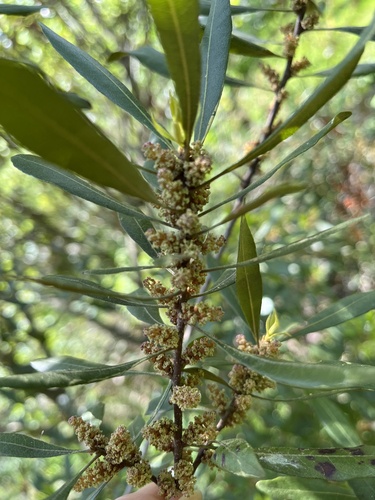
© harrisash6, some rights reserved (CC-BY-NC) · iNaturalist
Morella, Genus, cerifera, Species,
- Genus & species
wax myrtle
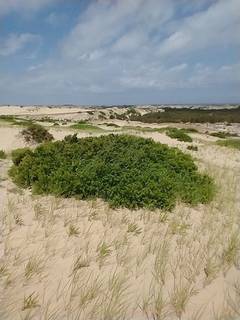
Eastern and southeastern North America — New Jersey south to Florida and west to Texas; coastal and wetland adapted
Overview
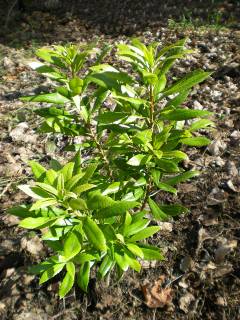
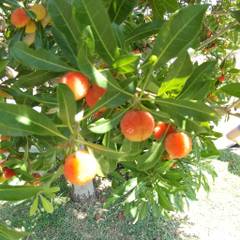
Morella cerifera (syn. Myrica cerifera) is wax myrtle, growing 120–240 inches (300–600 cm) tall and 72–180 inches (180–450 cm) wide. Olive green aromatic lance-shaped leaves 1.5–4 inches (4–10 cm) long release a bayberry fragrance when crushed. The species name 'cerifera' means 'wax-bearing' — the small gray-blue waxy berries on female plants were the original source of bayberry candle wax in colonial America (berries are boiled to release the waxy coating). Nitrogen-fixer: symbiotic root bacteria (Frankia) fix atmospheric nitrogen, enabling growth in poor, sandy, infertile, and coastal soils. Native to eastern North America, from New Jersey south to Florida and west to Texas. Dioecious — separate male and female plants; only females produce berries. Salt-tolerant. Drought-tolerant once established. Deer-resistant. Tolerates both wet and dry soil conditions. Can be maintained as a hedge with shearing or allowed to grow as a large shrub or small multi-stemmed tree. Non-toxic. Zones 7–10. Evergreen in mild zones; semi-evergreen in zone 7. The aromatic foliage and berries have historical use in candle-making and soap production. Whitefly can be a pest in humid climates.
Native Range
Morella cerifera is native to eastern and southeastern North America — coastal and wetland adapted.Suggested Uses
Grown as a screen, hedge, or specimen spaced 48–72 inches (120–180 cm) apart for hedging. Suited to coastal conditions (salt-tolerant), poor sandy soils (nitrogen-fixer), and wet or dry sites. Native to eastern North America. Deer-resistant. Non-toxic. Zones 7–10.How to Identify
Appearance
Size & Dimensions
Height10' - 20'
Width/Spread8' - 15'
Colors
Bloom Information
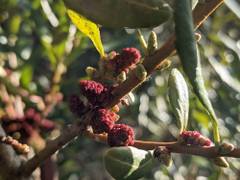
Inconspicuous catkin flowers in spring. Dioecious — only female plants produce the small gray-blue waxy berries that persist through winter.
Detailed Descriptions
Foliage Description
Olive green, lance-shaped, aromatic (fragrant when crushed — bayberry scent), with tiny waxy dots on the surfaceGrowing Conditions
Sun Requirements
Requires 4-10 hours of direct sunlight daily
• Full Sun: 6+ hours of direct sunlight
• Partial Shade: 3-6 hours of direct sunlight
• Full Shade: Less than 3 hours of direct sunlight
Care & Maintenance
Care Guide
Full sun to partial shade. Tolerates poor, sandy, infertile soil (nitrogen-fixer). Salt-tolerant. Drought-tolerant once established. Tolerates wet or dry conditions. Dioecious — plant females for berries. Deer-resistant. Non-toxic. Zones 7–10.Pruning
Prune for shape or shear as a hedge at any time during the growing season. Responds well to hard pruning for rejuvenation. Remove suckers at the base if a tree form is desired.Pruning Schedule
Prune: February–March
late winter