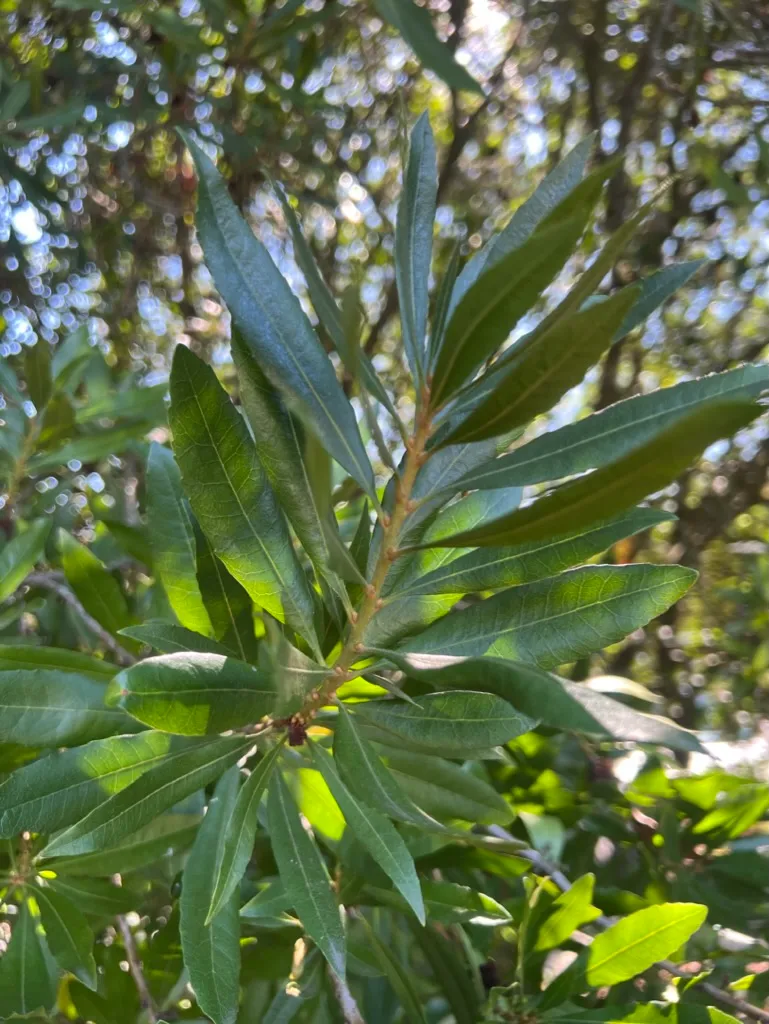
Morella californica, California wax myrtle
1 / 4
Broadleaf Evergreen Shrubs

Morella californica

California wax myrtle

Myricaceae

Pacific coast of North America from southwestern Washington south through Oregon and California

At a Glance

TypeShrub
HabitUpright
FoliageEvergreen
Height10-30 feet (3-9 m)
Width10-20 feet (3-6 m)
Maturity10 years

Growing Zones

USDA Hardiness Zones

7 - 10
Zone 7
Zone 8
Zone 9
Zone 10
These zones indicate the coldest temperatures this plant can typically survive.
Frost Tolerancehardy

Key Features

Attracts Pollinators
Deer Resistant
Drought Tolerant
Fragrant (moderate)
Native to North America
Maintenancelow

Overview

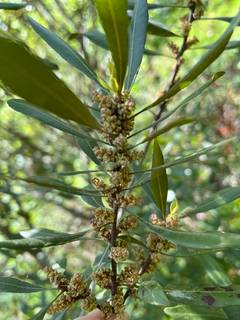
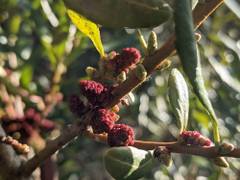
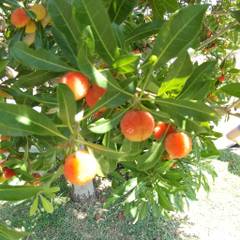
A large, upright to rounded broadleaf evergreen shrub or small tree reaching 10-30 feet (3-9 m) tall and 10-20 feet (3-6 m) wide. Growth rate is moderate to fast, adding 12-24 inches (30-60 cm) per year in favorable conditions. Leaves are alternate, simple, oblanceolate, 2-4.5 inches (5-11 cm) long and 0.5-1 inch (1.3-2.5 cm) wide, with a glossy dark green upper surface and small resinous gland dots visible on the underside with magnification. Leaf margins are finely serrated toward the tip, entire near the base. Foliage is aromatic when crushed, releasing a scent variously described as bay-like, waxy, or spicy-resinous. Dioecious: male and female flowers are borne on separate plants. Male catkins are small, cylindrical, 0.3-0.5 inches (8-13 mm) long, appearing in spring at leaf axils. Female plants produce clusters of small, rounded, waxy, purple-gray drupes approximately 0.15-0.2 inches (4-5 mm) in diameter, coated with a white to gray wax layer, persisting through fall and winter. The species fixes atmospheric nitrogen through a symbiotic relationship with Frankia actinomycetes in root nodules, enabling it to thrive in nutrient-poor soils. Formerly classified as Myrica californica; reclassified to Morella based on phylogenetic analysis. Bark is smooth and gray on young stems, becoming rougher with age. Tolerates salt spray and coastal wind exposure. Hardy to approximately 10-15°F (-12 to -9°C).

Native Range

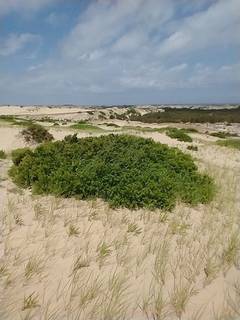
Native to the Pacific coast of North America from southwestern Washington south through Oregon and California to Los Angeles County. Found naturally in coastal scrub, dune margins, riparian corridors, and mixed evergreen forests from sea level to approximately 1,500 feet (450 m) elevation, primarily within the maritime climate zone influenced by coastal fog and moderate temperatures.

Suggested Uses

Commonly planted as a screening shrub, windbreak, or informal to formal hedge at 4-6 foot (1.2-1.8 m) spacing. Suitable for coastal gardens where salt spray and wind exposure limit plant choices. The nitrogen-fixing ability makes it suitable for poor, depleted, or sandy soils where other shrubs struggle. Trained as a single-trunk small tree for native plant gardens and wildlife habitat plantings. Berries provide food for birds. Tolerates urban pollution.

How to Identify

Identified by alternate, glossy dark green, oblanceolate evergreen leaves 2-4.5 inches (5-11 cm) long with finely serrated margins toward the tip and aromatic resinous gland dots on the underside. When foliage is crushed, it releases a distinctive bay-like, waxy-resinous fragrance. Distinguished from Laurus nobilis (bay laurel) by the serrated (vs. entire) leaf margins and the smaller leaf size. Distinguished from Morella cerifera (southern wax myrtle) by the longer, wider leaves and west coast native range. Female plants bear clusters of small, waxy, purple-gray berries with a white wax coating.

Appearance

Size & Dimensions

Height10' - 30'
Width/Spread10' - 20'

Reaches mature size in approximately 10 years

Colors

Flower Colors

green

Foliage Colors

dark green

Bloom Information

Bloom Period

~2 weeks
J
F
M
A
M
J
J
A
S
O
N
D
Spring
Male catkins appear in March to April, small and inconspicuous. Female plants produce clusters of waxy purple-gray drupes approximately 0.15-0.2 inches (4-5 mm) in diameter, ripening in September to October and persisting through winter. The waxy coating gives berries a frosted appearance. Bloom is inconspicuous; the plant is grown primarily for its foliage, form, and ecological value.

Detailed Descriptions

Flower Description

Inconspicuous greenish

Foliage Description

Glossy dark green upper surface with resinous gland dots on underside

Growing Conditions

Sun Requirements

Full Sun
Partial Shade
Requires 4-10 hours of direct sunlight daily
• Full Sun: 6+ hours of direct sunlight
• Partial Shade: 3-6 hours of direct sunlight
• Full Shade: Less than 3 hours of direct sunlight

Soil Requirements

pH Range5.0 - 7.5(Neutral)
357912
Soil Types
loamsandclay
Drainage
well drained

Water & Climate

Water Needs

Medium

Frost Tolerance

hardy

Time to Maturity

5-10 years

Drought Tolerance

Drought tolerant when established

Care & Maintenance

Care Guide

Plant in full sun to partial shade. Tolerates a wide range of soil types including poor, sandy, and infertile soils due to its nitrogen-fixing root nodules. Adapts to soil pH from 5.0 to 7.5. Water regularly during the first growing season; established plants tolerate moderate drought of 3-4 weeks. Performs well in coastal conditions with salt spray, wind exposure, and sandy soils. In colder inland sites (zone 7), plant in a sheltered position; foliage may suffer damage at temperatures below 10°F (-12°C). Generally free of serious pest and disease problems. Can sucker from the base; remove unwanted suckers at ground level if a single-trunk tree form is desired.

Pruning

Prune in late winter to early spring to shape and maintain desired size. Responds well to heavy pruning and can be maintained as a formal hedge with shearing 2-3 times during the growing season. For a tree form, remove lower branches gradually and select a single leader. Sucker growth from the base can be removed at ground level at any time. Hard rejuvenation pruning to 12-24 inches (30-60 cm) is tolerated; vigorous regrowth emerges from the base within one growing season.

Pruning Schedule

J
F
M
A
M
J
J
A
S
O
N
D
winterearly spring

Maintenance Level

low

⚠️ Toxicity Warning

Non-toxic