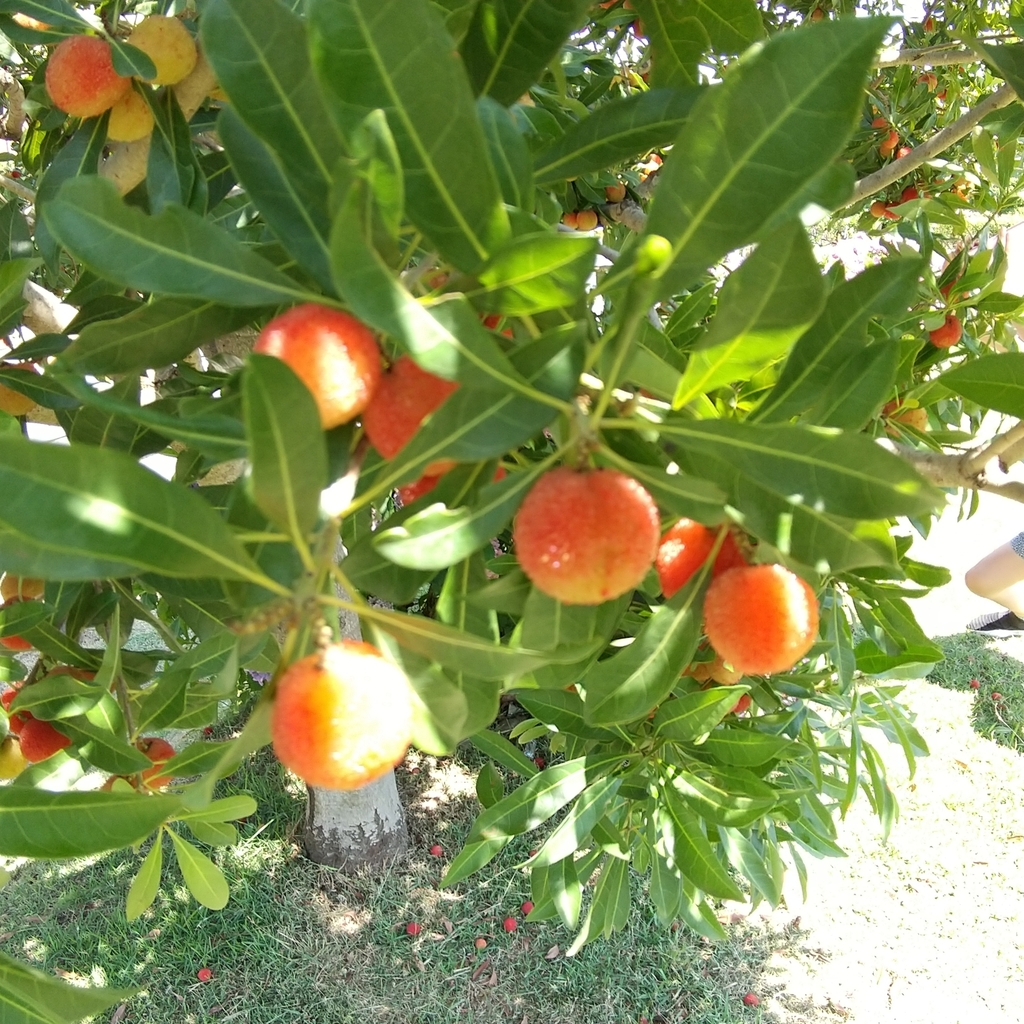
Morella, Genus, spp., Multiple species,
- Genus
- Multiple species
bayberries
Overview
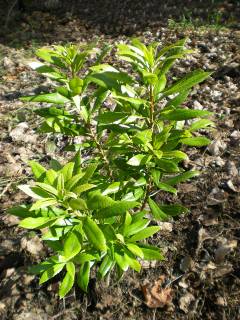
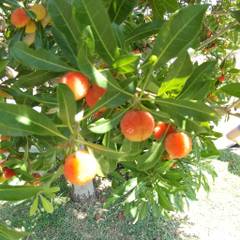
Morella is a genus of about 50 species of evergreen and deciduous shrubs and small trees in the family Myricaceae, distributed across the Americas, Africa, Asia, and Europe. Plants range from low shrubs 3 feet (90 cm) tall to small trees reaching 30 to 40 feet (9 to 12 m), often forming dense, multi-stemmed clumps that spread by suckers. The narrow, leathery leaves are aromatic when crushed, releasing a spicy, resinous scent, and are dotted with tiny glands. Most species are dioecious, with male and female flowers on separate plants in small catkins; the female plants bear clusters of small round fruit coated in pale blue-gray wax, the source of the wax once used in bayberry candles. The roots host nitrogen-fixing actinobacteria, allowing the genus to grow on poor, sandy, and disturbed soils. Across the genus, plants tolerate salt spray, wind, drought, and periodic flooding, which suits coastal and wetland sites. A limitation is the suckering habit, which lets colonies spread well beyond the original planting, and the need for both sexes to obtain the waxy fruit.
Native Range
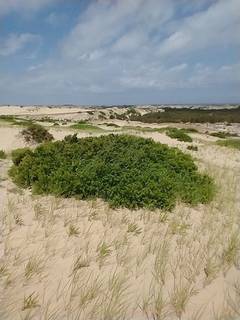
Morella is widely distributed across the Americas, Africa, eastern Asia, and Europe. North American species such as M. cerifera and M. pensylvanica grow in coastal dunes, pine barrens, wetland margins, and old fields from the eastern seaboard to the Gulf Coast.Suggested Uses
Morella species are used as informal hedges, screens, and windbreaks, in coastal and seaside plantings, and in rain gardens and wetland edges. The salt and wind tolerance suits exposed sites, and the waxy fruit on female plants supports overwintering birds.How to Identify
Appearance
Size & Dimensions
Height3' - 40'
Width/Spread5' - 15'
Bloom Information
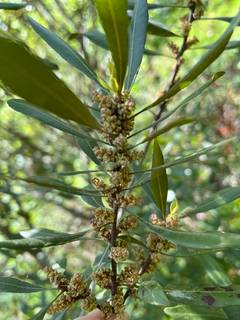
Morella flowers in spring, roughly March through May, with small greenish catkins that are easy to overlook. Male and female flowers occur on separate plants. On female plants, the waxy gray fruit ripens in late summer and autumn and persists on the stems through winter.
Detailed Descriptions
Foliage Description
green to olive-greenGrowing Conditions
Sun Requirements
Requires 4-12 hours of direct sunlight daily
• Full Sun: 6+ hours of direct sunlight
• Partial Shade: 3-6 hours of direct sunlight
• Full Shade: Less than 3 hours of direct sunlight
Care & Maintenance
Care Guide
Across the genus, Morella grows in full sun to part shade in a wide range of soils, from sand to clay, and tolerates both dry and periodically wet ground, with a soil pH of about 5.5 to 7.0. Nitrogen-fixing root associations let plants grow in poor, infertile soil without added fertilizer. Established plants tolerate salt, wind, and drought, which suits coastal and roadside plantings. Suckering forms spread into colonies and are cut back or root-pruned to limit their spread. Both male and female plants are grown together where the waxy fruit is wanted. Plants are propagated by seed, cuttings, or removal of rooted suckers.Pruning
Plants tolerate hard pruning and shearing and are cut back in late winter to maintain a hedge or to renew leggy, bare-based growth. Suckers are removed to keep clumps in bounds. Evergreen species are sheared in spring after the hardest frosts pass.Container Growing
Suitable for container growing
Minimum container size: 5 gallons