Mitellastra, Genus, caulescens, Species,
- Genus & species
leafy miterwort
Overview
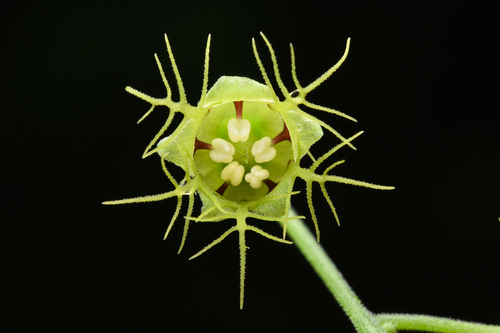
A small herbaceous perennial reaching 6-16 inches (15-40 cm) tall when in flower from a short rhizome. Basal leaves heart-shaped to broadly ovate, 1-2.5 inches (2.5-6.5 cm) wide, with shallowly lobed and toothed margins, dark green, on petioles 2-4 inches (5-10 cm) long. Stems leafy with 1-3 reduced cauline leaves, separating this species from related Mitella species with strictly basal leaves. Inflorescence a one-sided raceme of 5-15 small greenish-white flowers, each 0.2-0.3 inch (5-8 mm) wide, with 5 deeply pinnately divided petals giving each flower the appearance of a tiny snowflake. Flowers face downward to outward along the raceme. Capsules small, splitting into a cup-shaped fruit 0.1-0.15 inch (2.5-4 mm) wide, ripening in summer. Plants spread slowly by short rhizomes, forming loose patches 8-12 inches (20-30 cm) wide after 4-6 years. Foliage often persists through winter in zones 7-9 with bronze-green coloration; dies back to the rhizome in colder zones.
Native Range
Native to moist coniferous forests of western North America from southern Alaska through British Columbia south to northern California, and east to Idaho and Montana. Found on streambanks, seeps, mossy rock outcrops, and shaded forest understory at 100 to 6,000 feet (30-1,830 m) elevation.Suggested Uses
Commonly planted in shaded woodland gardens, native plant restoration projects, and rain gardens at 8-12 inch (20-30 cm) spacing. Suitable for shaded containers of at least 1 gallon (3.8 L) with consistent moisture and high organic matter content. Pairs in cultivation with other moist-shade natives such as Tiarella trifoliata, Asarum caudatum, and ferns.How to Identify
Appearance
Size & Dimensions
Height6" - 1'4"
Width/Spread8" - 1'
Bloom Information
Detailed Descriptions
Foliage Description
dark greenGrowing Conditions
Sun Requirements
Tolerates up to 4 hours of direct sunlight daily
• Full Sun: 6+ hours of direct sunlight
• Partial Shade: 3-6 hours of direct sunlight
• Full Shade: Less than 3 hours of direct sunlight
Care & Maintenance
Care Guide
Plant container-grown specimens in autumn or early spring into shaded soil with high organic matter and consistent moisture. Maintain even soil moisture during the growing season; the species does not tolerate periods of drought longer than 2 weeks. Mulch with 1-2 inches (2.5-5 cm) of leaf mold annually to replicate native forest floor conditions. Slugs feed on young foliage in mild wet springs and may damage emerging flower scapes. Plants establish over 2-3 years and persist 10 or more years in stable woodland sites.Pruning
No active pruning is needed. Spent flower scapes can be removed after seed has dispersed in summer. Damaged or dead leaves can be cut at the petiole base in spring as new foliage emerges.Container Growing
Suitable for container growing
Minimum container size: 1 gallons