Mitellastra, Genus, spp., Multiple species,
- Genus
- Multiple species
leafy miterwort
Overview
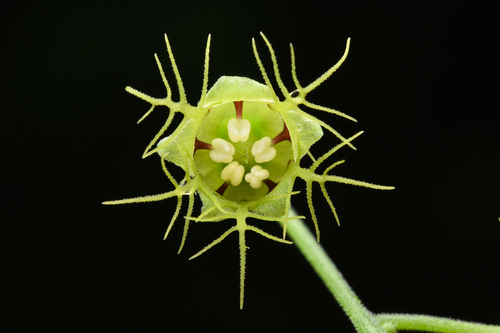
Mitellastra is a genus in the saxifrage family (Saxifragaceae) usually treated as the single species Mitellastra caulescens, the leafy or creeping miterwort, native to moist forests of western North America. It was long included in Mitella, and differs mainly in carrying leaves along its flowering stems rather than only at the base. Plants grow from creeping rhizomes, forming low patches of long-stalked, heart-shaped, shallowly lobed and toothed leaves. From late spring into summer, leafy flowering stems rise 6-18 inches (15-45 cm) and bear loose racemes of small flowers. Each greenish to yellowish flower has five petals cut into narrow thread-like segments, giving a fringed, snowflake-like outline. Small cup-shaped capsules follow, opening to release shining seeds. The flowers are tiny and pollinated by small flies and other minor insects. The genus grows in cool, shaded, moist woodland, along stream banks and seeps, on humus-rich soils, where the rhizomes spread slowly to form a low, leafy ground cover.
Native Range
Mitellastra caulescens, the only species in the genus, is native to moist coniferous and mixed forests of western North America, from British Columbia south to California and inland to Idaho and Montana. It grows on shaded stream banks, seeps, and damp forest floors.Suggested Uses
Grown in shade and woodland gardens, along shaded stream banks and damp path edges, and as a low leafy ground cover in native-plant schemes. The fringed flowers add close-up interest in naturalistic shade plantings. The genus suits cool, moist, humus-rich sites beneath trees and shrubs.How to Identify
Appearance
Size & Dimensions
Height6" - 1'6"
Width/Spread8" - 1'2"
Bloom Information
Detailed Descriptions
Foliage Description
GreenGrowing Conditions
Sun Requirements
Requires 1-5 hours of direct sunlight daily
• Full Sun: 6+ hours of direct sunlight
• Partial Shade: 3-6 hours of direct sunlight
• Full Shade: Less than 3 hours of direct sunlight
Care & Maintenance
Care Guide
Plants grow in partial to full shade on cool, moist, humus-rich soils with free drainage, matching the streamside forests where the species occurs. Consistent moisture suits the creeping rhizomes, while dry or sunny positions cause the leaves to scorch. A leaf-litter mulch keeps the soil cool and damp. Spread is slow but steady, forming a low, leafy carpet over time. Plants are increased by division of the rhizomes in spring or autumn and by fresh seed. Little feeding is needed on reasonable woodland soil.Pruning
Little pruning is needed. Spent flowering stems are removed after seeding unless seed is wanted, and old foliage is cleared as the plant dies back. Congested patches are lifted and divided in spring or autumn.Pruning Schedule
Prune: July & October
summerfall
Container Growing
Suitable for container growing
Minimum container size: 1 gallons
