Mimosa, Genus, strigillosa, Species,
- Genus & species
sunshine mimosa
Southeastern and south-central United States
Overview
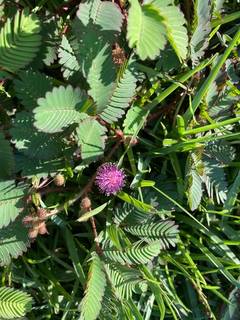
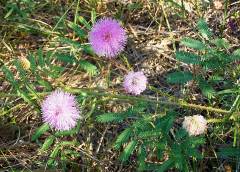
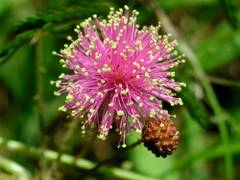
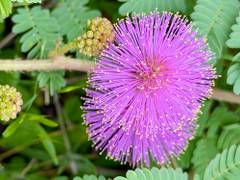
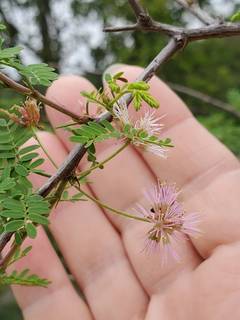
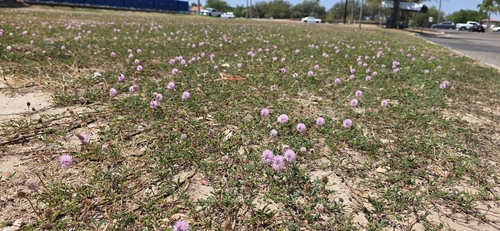
Mimosa strigillosa is a low, mat-forming perennial in the legume family that spreads by creeping stems (stolons) to form a dense groundcover 3-4 inches (8-10 cm) tall. The fern-like leaves are bipinnate, 2-4 inches (5-10 cm) long, and divided into many small leaflets that fold together when touched or at night, the movement behind its sensitive reputation. Pink, spherical powderpuff flower heads about 0.75-1 inch (2-2.5 cm) across rise on short stalks above the foliage from late spring into fall, each made of many thread-like stamens. The flowers are followed by small, flat, bristly seed pods typical of the mimosa group. M. strigillosa roots at the nodes as it spreads, knitting into a tough mat that tolerates foot traffic, drought, and heat once established. It grows in sandy and clay soils across the southeastern United States, often in open fields, roadsides, and disturbed ground. The top growth dies back after hard frost and returns from the roots in spring, leaving bare ground over winter. It can spread aggressively into nearby beds.
Native Range
Mimosa strigillosa is native to the southeastern and south-central United States, from Florida and Texas north to the Carolinas, and into northeastern Mexico. It grows in open prairies, fields, sandy ground, and along roadsides.Suggested Uses
Mimosa strigillosa is used as a drought-tolerant groundcover and lawn substitute, for erosion control on slopes, and in native and pollinator plantings. Its mat-forming roots hold soil on banks and roadsides. The pink flowers draw bees and butterflies through the warm season.How to Identify
Appearance
Size & Dimensions
Height3" - 4"
Width/Spread3' - 6'
Bloom Information
Pink powderpuff flower heads open from late spring through fall, roughly May to October, peaking in summer. Each head lasts a few days and is pollinated by bees and other insects. Flat, bristly seed pods follow and ripen through the warm months.
Detailed Descriptions
Foliage Description
greenGrowing Conditions
Sun Requirements
Requires 6-12 hours of direct sunlight daily
• Full Sun: 6+ hours of direct sunlight
• Partial Shade: 3-6 hours of direct sunlight
• Full Shade: Less than 3 hours of direct sunlight