Mimosa, Genus, nuttallii, Species,
- Genus & species
catclaw briar
Overview
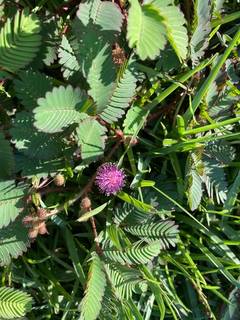
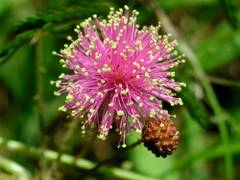
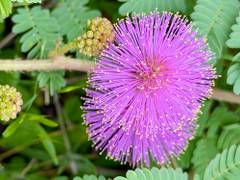
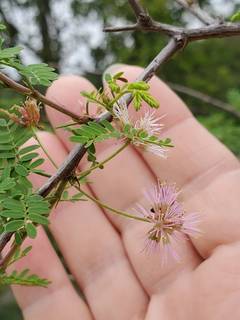
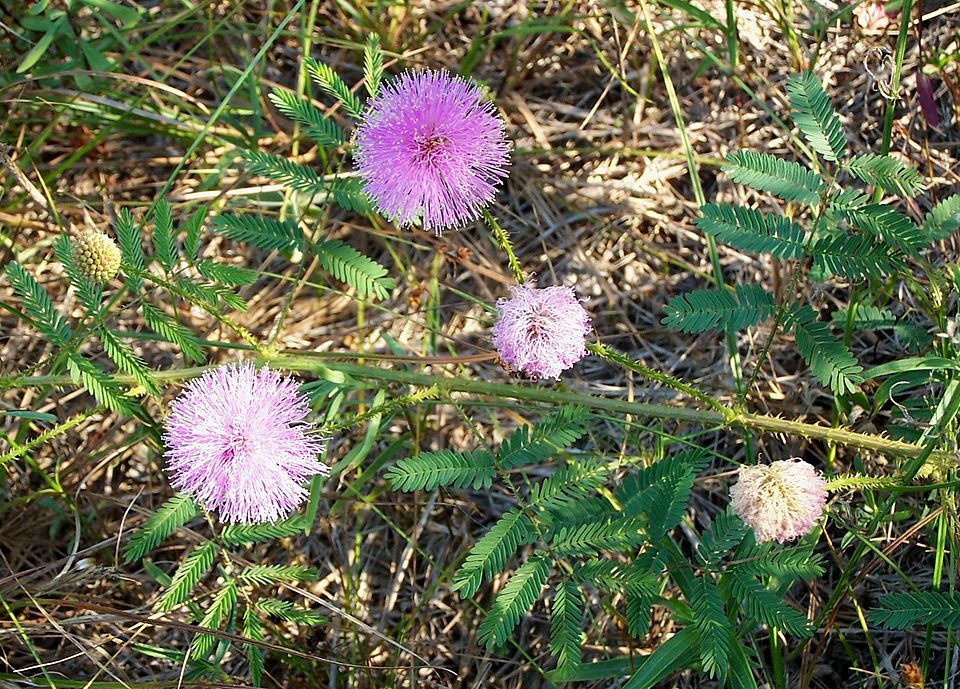
A sprawling perennial with trailing stems 2–4 feet (0.6–1.2 m) long that creep across the ground or scramble over other plants, rising only a few inches. The stems and leaf stalks are armed with small recurved prickles that catch on passing surfaces. Leaves are alternate and twice-divided into many small leaflets, fern-like, and fold inward within seconds when touched or at night. Pink, spherical flower heads 0.5–1 inch (1.3–2.5 cm) across are made of many slender stamens, resembling small pom-poms, on stalks from the leaf axils. Bloom occurs from May to August. Flat, prickly seed pods 1.5–3 inches (4–8 cm) long follow. The plant grows from a deep, woody taproot and dies back to the root each winter, returning from the crown in spring. It fixes nitrogen through root nodules. The recurved prickles can scratch skin and snag clothing.
Native Range
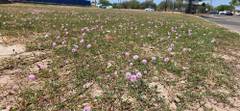
Native to the central United States, from the Great Plains and Midwest south to Texas. Grows in prairies, open grasslands, sandy fields, and roadsides on dry, well-drained soils in full sun.Suggested Uses
Grown in prairie plantings, native meadows, and wildlife or restoration areas at 18–24 inch (45–60 cm) spacing. Used as a sprawling groundcover on dry, sunny banks, where the prickly stems deter foot traffic. Suited to open, dry sites rather than tended borders, because the prickles snag passersby.How to Identify
Appearance
Size & Dimensions
Height4" - 1'
Width/Spread2' - 4'
Bloom Information
Detailed Descriptions
Foliage Description
GreenGrowing Conditions
Sun Requirements
Requires 6-12 hours of direct sunlight daily
• Full Sun: 6+ hours of direct sunlight
• Partial Shade: 3-6 hours of direct sunlight
• Full Shade: Less than 3 hours of direct sunlight
Care & Maintenance
Care Guide
Grows in full sun in dry, sandy or rocky, well-drained soils of low to moderate fertility. Water during establishment; the deep taproot makes mature plants drought-tolerant and difficult to transplant. As a nitrogen-fixing legume, it grows in poor soils without fertilizer. It spreads by seed and trailing stems and can scramble through neighboring plants. The recurved prickles scratch skin on contact. Few pests or diseases affect it.Pruning
Cut dead stems back to the ground in late fall or early spring. Trailing stems can be trimmed to keep the plant within bounds. Seed pods can be removed before they ripen to limit self-seeding. No other pruning is needed.Pruning Schedule
Prune: March & November
fallearly spring