Mimosa, Genus, quadrivalvis, Species,
- Genus & species
fourvalve mimosa
Central and southeastern United States
Overview
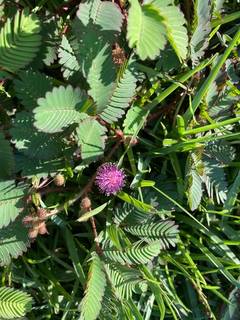
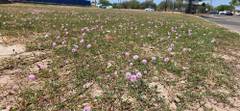
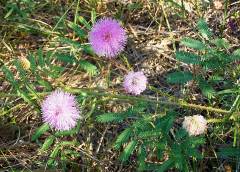
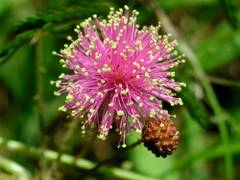
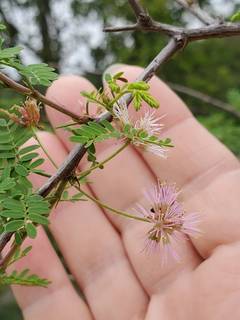
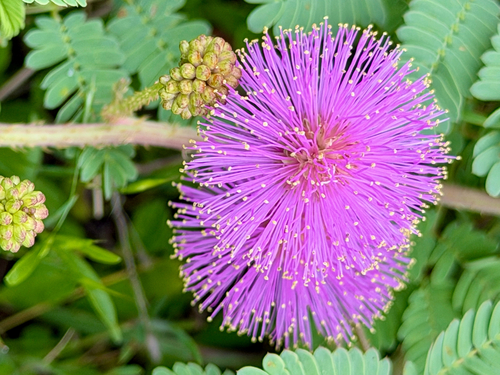
Mimosa quadrivalvis is a sprawling, prickly perennial that trails along the ground or scrambles over low vegetation on stems 2 to 6 feet (0.6 to 1.8 m) long, armed with small recurved prickles. The bipinnate leaves are divided into many small leaflets that fold together when touched or at night, a movement typical of sensitive plants. From late spring through summer it produces round pink flower heads about 0.5 to 1 inch (1.3 to 2.5 cm) across, made up of many tiny flowers with long stamens that give a puffball look. The flowers ripen into slender, prickly four-angled pods. It grows in dry, sandy soils of prairies, open woods, and roadsides, mainly in the central and southeastern United States. The recurved prickles catch on skin and clothing, and the sprawling habit can spread widely. It needs full sun and well-drained soil and tolerates drought once established. The deep root system makes established plants hard to move.
Native Range
Native to the central and southeastern United States, from the Great Plains east to the Atlantic and south to the Gulf. It grows in dry, sandy prairies, open woodlands, glades, and disturbed roadsides.Suggested Uses
Used in native prairie and meadow plantings, on dry banks, and for erosion control on sandy slopes. It serves as a larval host and nectar source for several butterflies and bees. The prickly, sprawling form suits naturalized areas rather than tidy borders.How to Identify
Appearance
Size & Dimensions
Height6" - 1'
Width/Spread3' - 6'
Bloom Information
Flowering runs from late spring through summer, generally May through August. The pink, globe-shaped heads open over many weeks, each lasting a few days. Long stamens give the heads a feathery look. Prickly four-angled pods follow through late summer.
Detailed Descriptions
Foliage Description
greenGrowing Conditions
Sun Requirements
Requires 6-12 hours of direct sunlight daily
• Full Sun: 6+ hours of direct sunlight
• Partial Shade: 3-6 hours of direct sunlight
• Full Shade: Less than 3 hours of direct sunlight
Care & Maintenance
Care Guide
Grow in full sun in dry, sandy, or rocky soil with good drainage. Mimosa quadrivalvis tolerates drought, heat, and lean soil once established and needs little water. As a legume it fixes nitrogen and grows well in low-fertility ground. A soil pH from 5.5 to 7.5 suits it. The recurved prickles and spreading stems call for placement away from paths and seating. It dies back in winter and resprouts from the root crown in spring.Pruning
Cut back dead stems in late winter before new growth begins. The sprawling stems can be trimmed during the season to keep the plant in bounds. Prickly growth can be cut and removed at any time. Plants resprout readily from the root crown after cutting.Pruning Schedule
Prune: February–March
winter