Overview
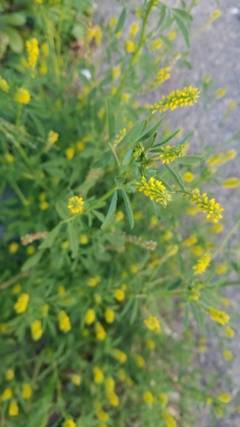
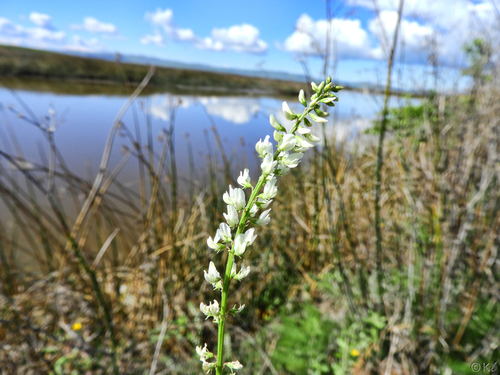
Melilotus albus is an upright biennial, sometimes annual, legume in the pea family, growing 3-8 feet (1-2.5 m) tall on branched, often woody-based stems. The leaves are divided into three narrow, finely toothed leaflets 0.5-1 inch (12-25 mm) long, with the middle leaflet on a short stalk. In its first year the plant forms a leafy rosette and a deep taproot, and in its second year it bolts and flowers. From late spring through summer it bears slender, tapering spikes of many small white pea-flowers, each about 0.2 inch (4-5 mm) long, which are strongly sweet-scented from coumarin. The flowers are followed by small, wrinkled pods, usually holding one or two seeds that remain viable in soil for decades. As a nitrogen-fixing legume it grows in poor, disturbed, and calcareous soils and is widely naturalized along roadsides and in old fields across North America. It self-sows heavily and can form tall, dense stands. Spoiled or moldy hay made from this plant can produce dicoumarol, an anticoagulant harmful to livestock.
Native Range
Native to temperate Europe and Asia, where it grows in grassland, scrub, and disturbed ground, often on lime-rich soils. It was introduced to North America as a forage, cover, and honey plant. It is now naturalized across most of the continent and is considered invasive in some prairie and natural areas.Suggested Uses
Used as a cover crop, green manure, and forage legume, and as a nectar plant in beekeeping. In gardens it appears mainly in wildflower or pollinator plantings rather than borders. Because it grows tall and seeds freely, it suits open naturalized areas.How to Identify
Appearance
Size & Dimensions
Height3' - 8'
Width/Spread1' - 2'
Bloom Information
Flowers from late spring through late summer, mainly June to September, in its second year. The fragrant white spikes are heavily visited by honeybees and other bees and are an important nectar source used in honey production. Flowering continues over many weeks as new spikes form along the branches.
Detailed Descriptions
Foliage Description
greenGrowing Conditions
Sun Requirements
Requires 6-12 hours of direct sunlight daily
• Full Sun: 6+ hours of direct sunlight
• Partial Shade: 3-6 hours of direct sunlight
• Full Shade: Less than 3 hours of direct sunlight
Water & Climate
Water Needs
Drought Tolerance
Drought tolerant when established
Care & Maintenance
Care Guide
Grows in full sun in a wide range of soils, including poor, dry, gravelly, and lime-rich ground, fixing its own nitrogen. It needs no fertilizing and little water once the deep taproot forms. Seed is sown in spring or late summer and germinates after scarification or winter chilling. Because it self-sows heavily and persists as long-lived seed, it spreads readily into open ground. Cutting before seed set limits its spread. It has few pests, though spoiled or moldy hay made from it can poison livestock through dicoumarol.Pruning
Mowing or cutting before the seed ripens reduces self-seeding and limits spread. Plants die after their second-year bloom, so cut stems do not regrow. No ornamental pruning is needed.Pruning Schedule
Prune: June–July
summer
Toxicity Warning
Toxic to petsPlanting Guide
Planting Methods & Timing
Planting Method
direct sow
Direct Sow Timing
Spring or late summer
Plant Spacing
6 inches