Overview
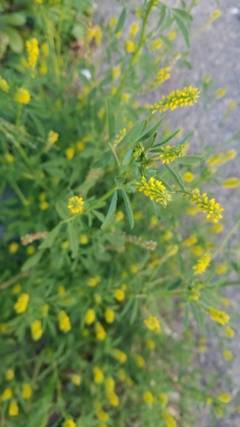
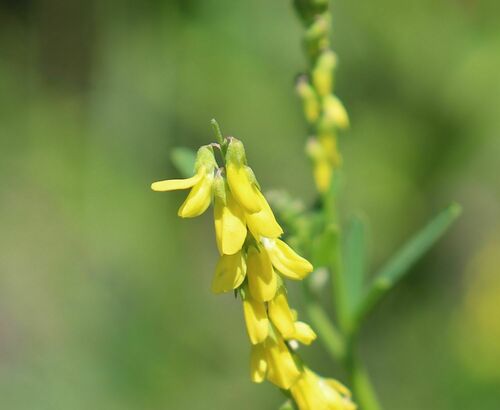
Melilotus is a genus of about 20 species of annual and biennial herbs in the legume family (Fabaceae), known as sweetclovers or melilots for the coumarin scent of the drying foliage. Plants grow 1–8 feet (30–240 cm) tall on erect, branching stems carrying trifoliate leaves with finely toothed leaflets. The small pea-type flowers, yellow or white and about 0.2 inch (5 mm) long, are arranged in slender tapering spikes that can reach 4 inches (10 cm); each forms a small one- to two-seeded pod. The genus is native to Europe, Asia, and North Africa and is naturalized across North America and other temperate regions, often along roadsides and disturbed ground. As legumes, plants fix nitrogen and are grown for forage, green manure, and bee forage. Coumarin in the foliage converts to dicoumarol in spoiled or moldy hay, which thins blood and can poison livestock that eat it. Deep taproots let plants withstand drought and open compacted soil. M. officinalis and M. albus are the species commonly sown on poor and alkaline ground where other legumes struggle.
Native Range
The genus is native to Europe, Asia, and North Africa, centered in the Mediterranean region and temperate Eurasia. Melilotus has naturalized widely across North America, South America, and Australia. Plants colonize roadsides, field margins, and disturbed open ground, often on alkaline or compacted soil.Suggested Uses
Melilotus is sown for green manure, forage, and soil improvement on poor and alkaline ground, and as a nectar source in bee-keeping. The tall spikes draw bees and other pollinators through summer. Deep taproots open compacted soil and add nitrogen when the plants are turned under.How to Identify
Appearance
Size & Dimensions
Height1' - 8'
Width/Spread1' - 3'
Bloom Information
Flowering runs from late spring through summer, roughly May to September, with the slender spikes opening from the base upward. Plants bloom in their first or second year depending on species, and the long spikes draw steady bee traffic. Seed sets through late summer.
Detailed Descriptions
Foliage Description
greenGrowing Conditions
Sun Requirements
Requires 6-12 hours of direct sunlight daily
• Full Sun: 6+ hours of direct sunlight
• Partial Shade: 3-6 hours of direct sunlight
• Full Shade: Less than 3 hours of direct sunlight
Water & Climate
Water Needs
Drought Tolerance
Drought tolerant when established