Melaleuca, Genus, spp., Multiple species,
- Genus
- Multiple species
bottlebrushes
Overview
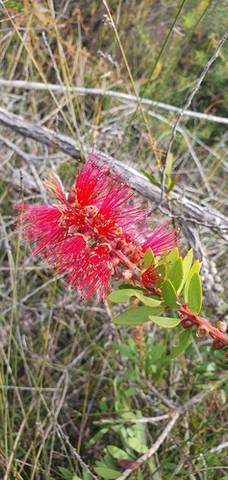
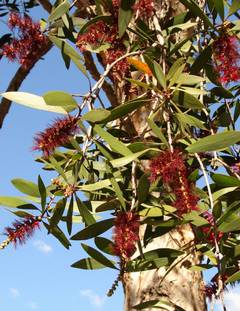
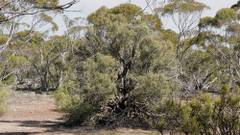
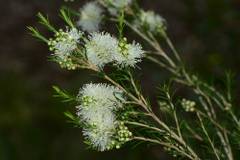
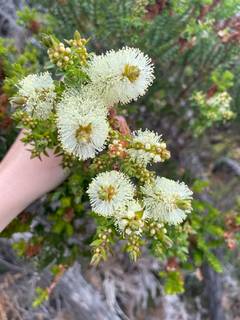
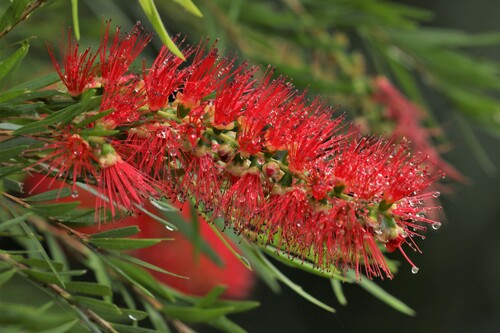
Melaleuca is a genus of about 290 species of evergreen shrubs and trees in the myrtle family, Myrtaceae, the great majority native to Australia, with a few species in Southeast Asia, New Guinea, and New Caledonia. Plants range from low shrubs 3–6 ft (1–1.8 m) tall to trees reaching 30–50 ft (9–15 m), and many develop thick, layered, papery bark that gives some species the name paperbark. The leaves are small, leathery, and often aromatic, releasing a spicy scent when crushed; the oil of M. alternifolia is the source of commercial tea tree oil. Flowers are tiny but carry long, projecting stamens grouped into dense cylindrical spikes or rounded heads 0.5–4 in (1.3–10 cm) long, in white, cream, pink, red, purple, or yellow. These bottlebrush-like clusters give the group one of its common names. The woody, cup-shaped fruits persist in tight clusters along the stems for years. Several species tolerate waterlogged ground, while others withstand drought. A few, notably M. quinquenervia, have become aggressive invaders of wetlands in Florida and elsewhere. The genus grows in heath, swamp, and open forest.
Native Range
Melaleuca is centered on Australia, where species occur in every state across heathland, swamp margins, and open woodland. A smaller number of species range into Southeast Asia, New Guinea, and New Caledonia. Outside their native range, several species, including M. quinquenervia, have naturalized and are listed as invasive in Florida.Suggested Uses
Melaleuca species are grown as screens, windbreaks, hedges, and specimen trees in warm climates, and some are planted in wet or poorly drained sites. The foliage of M. alternifolia is harvested for tea tree oil, and several species yield timber and honey. The nectar-rich flowers attract birds, bees, and other pollinators.How to Identify
Appearance
Size & Dimensions
Height3' - 50'
Width/Spread3' - 25'
Bloom Information
Bloom time varies across the genus, with many species flowering in spring and early summer and some flowering more than once a year in warm climates. The bottlebrush flower spikes last 2 to 4 weeks and are followed by woody fruit clusters. Flower color ranges from white and cream through pink, red, purple, and yellow depending on species. In cultivation, flowering is heaviest on plants in full sun.
Detailed Descriptions
Flower Description
white, cream, pink, red, purple, or yellowFoliage Description
green to grey-greenGrowing Conditions
Sun Requirements
Requires 6-12 hours of direct sunlight daily
• Full Sun: 6+ hours of direct sunlight
• Partial Shade: 3-6 hours of direct sunlight
• Full Shade: Less than 3 hours of direct sunlight