Melaleuca, Genus, citrina, Species,
- Genus & species
crimson bottlebrush
Overview
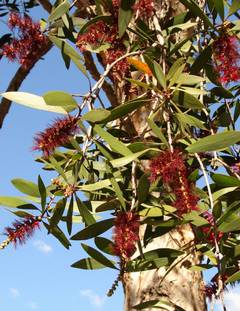
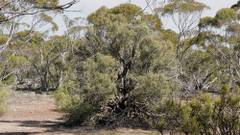
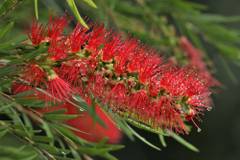
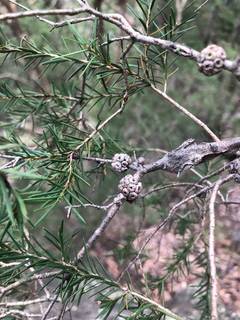
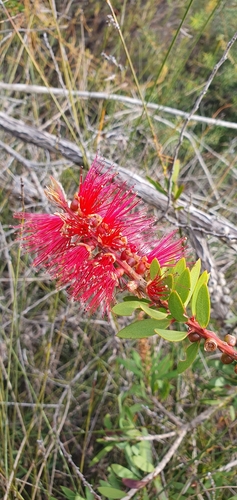
Melaleuca citrina, long known as Callistemon citrinus, is an evergreen shrub in the myrtle family reaching 6-15 feet (1.8-4.6 m) tall and 6-12 feet (1.8-3.7 m) wide, with an upright to rounded, densely branched form. The stiff, narrow leaves are 1-3 inches (2.5-7.5 cm) long, lance-shaped, and aromatic with a lemon scent when crushed; new growth often emerges pink to coppery before turning dark green. From late spring through summer, and sporadically at other times, it produces cylindrical brushlike flower spikes 2-4 inches (5-10 cm) long made up of many red flowers whose color comes from long stamens. Small woody seed capsules follow and persist on the stems for years. Native to eastern Australia, it grows along watercourses and in damp heath, and it adapts to a wide range of garden conditions. M. citrina tolerates both periodic flooding and extended drought once established, as well as coastal salt and moderate frost to about 20F (-7C). In colder areas it is damaged by hard freezes, and in shade it flowers sparsely and grows open and weak.
Native Range
Native to eastern Australia, in New South Wales, Victoria, and Queensland, where it grows along streams and in moist heathland. It is now widely planted in warm-temperate and subtropical regions worldwide.Suggested Uses
Used as an informal hedge, screen, or specimen shrub in warm-climate, coastal, and water-wise gardens, spaced 4-6 feet (1.2-1.8 m) apart for screening. It suits rain gardens and pond margins because it tolerates wet soil, and it draws nectar-feeding birds, bees, and butterflies. It can also be trained as a small single-stemmed tree or grown in large containers.How to Identify
Appearance
Size & Dimensions
Height6' - 15'
Width/Spread6' - 12'
Bloom Information
The main flush of red spikes appears from late spring into summer, roughly May to July in the Northern Hemisphere, with scattered repeat bloom in fall in mild climates. Each spike opens over one to two weeks. Removing spent spikes can prompt a second flush.
Detailed Descriptions
Foliage Description
dark greenGrowing Conditions
Sun Requirements
Requires 6-12 hours of direct sunlight daily
• Full Sun: 6+ hours of direct sunlight
• Partial Shade: 3-6 hours of direct sunlight
• Full Shade: Less than 3 hours of direct sunlight
Care & Maintenance
Care Guide
Grow M. citrina in full sun for the heaviest flowering; it tolerates part shade but blooms less and grows looser there. It accepts most soils, from sandy to clay and from acidic to slightly alkaline, and copes with both wet, periodically flooded ground and prolonged drought once established. Young plants need regular water until rooted in, after which they are low-maintenance. It is sensitive to hard frost, with foliage and stems damaged below about 20F (-7C). Phosphorus-rich fertilizers can harm members of this family, so a low-phosphorus feed in spring is sufficient. Iron chlorosis can appear on very alkaline soils.Pruning
Light pruning just after each flush of bloom keeps the shrub dense and shapes it, and removing spent flower spikes before they form seed capsules encourages more flowers. It tolerates harder pruning into older wood than many shrubs and can be renewed gradually. It also responds to shearing as an informal hedge.Pruning Schedule
Prune: June–July
summer
Container Growing
Suitable for container growing
Minimum container size: 7 gallons