Melaleuca, Genus, velutina, Species,
- Genus & species
barrens regelia
Overview
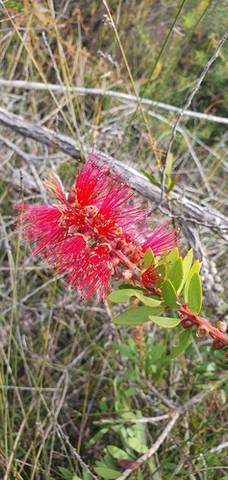
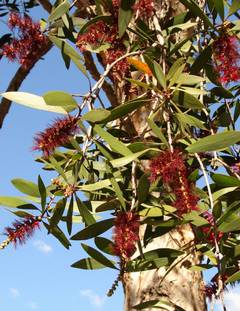
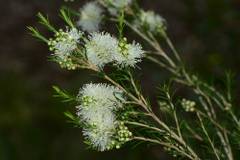
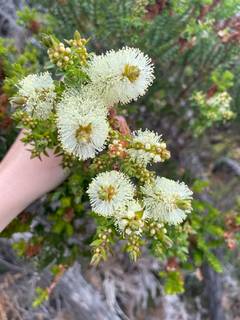
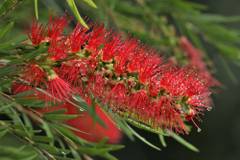
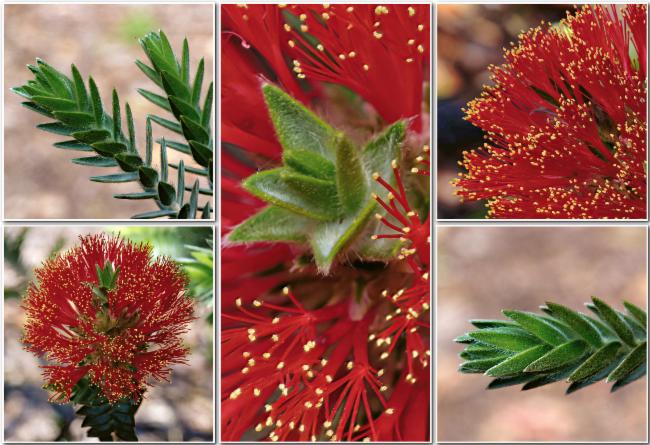
Melaleuca velutina is an evergreen large shrub in the Myrtaceae family, growing 6.5-20 feet (2-6 m) tall on long, straight stems. The grey-green leaves are velvety to the touch, covered in short soft hairs that give the species its name. Near-spherical flower heads open at the branch tips in shades of red to orange, sometimes yellow, and the branch continues to grow through the old flower head after blooming. Flowering runs mainly from early to mid-spring and can continue into late summer. Woody capsules follow and persist along the stems. It is native to the southern coast of Western Australia, where it grows on sandy and rocky soils in coastal heath and scrub. It tolerates coastal wind and drought once established and needs sharp drainage. It is frost tender, with damage in hard freezes. The flowers draw nectar-feeding birds.
Native Range
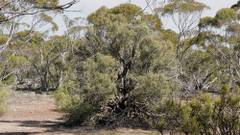
Melaleuca velutina is native to the southern coast of Western Australia, where it grows on sandy and rocky soils in coastal heathland and scrub. Its range is centred on the south coast of the state.Suggested Uses
Grown as a feature and screening shrub in coastal and low-water gardens, spaced 5-8 feet (1.5-2.4 m) apart. The long straight stems and rounded flower heads are used in cut-flower work. It suits sandy, sharply drained sites with coastal exposure.How to Identify
Appearance
Size & Dimensions
Height6'7" - 19'8"
Width/Spread4'11" - 9'10"
Colors
Bloom Information
Flowering runs mainly from early to mid-spring, roughly September to November in the Southern Hemisphere, and can continue into late summer. The rounded heads open red to orange at the branch tips. Nectar-feeding birds visit the flower heads.
Detailed Descriptions
Flower Description
Red to orangeFoliage Description
Grey-greenGrowing Conditions
Sun Requirements
Requires 6-10 hours of direct sunlight daily
• Full Sun: 6+ hours of direct sunlight
• Partial Shade: 3-6 hours of direct sunlight
• Full Shade: Less than 3 hours of direct sunlight
Care & Maintenance
Care Guide
Grows in full sun in sharply drained sandy or gravelly soil at a pH of 6.0-7.5. Water needs are low once established, and the plant tolerates coastal wind, salt, and drought. It is frost tender and damaged by hard freezes. In humid climates and heavy soils it is prone to root rot, so sharp drainage matters. Full sun supports dense growth and heavier flowering.Pruning
Light pruning after flowering keeps the long stems branched and the shrub dense. It tolerates trimming of soft growth but reshoots slowly from bare old wood. Pruning the spent flower heads is complicated by the stem growing on through them.Pruning Schedule
Prune: November–December
late springsummer