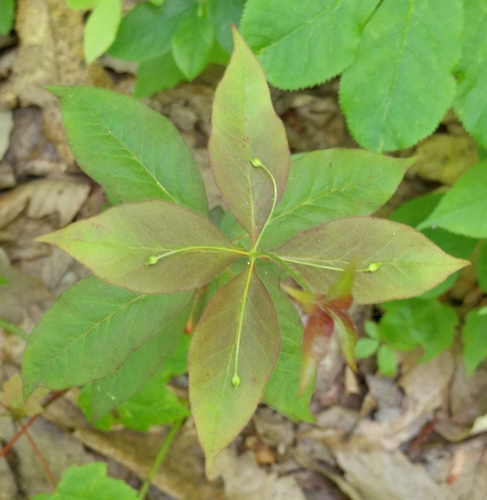
Lysimachia, Genus, quadrifolia, Species,
- Genus & species
whorled loosestrife
Overview
Lysimachia quadrifolia is an upright herbaceous perennial in the primrose family, growing 1-3 feet (30-90 cm) tall on slender, usually unbranched stems. The lance-shaped leaves are arranged in evenly spaced whorls of four to six around the stem, each 1.5-4 inches (4-10 cm) long. From late spring into summer, slender thread-like stalks rise from the leaf whorls, each carrying a single star-shaped yellow flower about 0.5 inch (1.2 cm) across, marked with red streaks and a red ring at the center. The five petals are spreading and pointed. After bloom, small round seed capsules form. Native to dry to moist open woods, clearings, and roadsides of eastern North America, it spreads by slender rhizomes to form loose colonies. It grows in part shade to full sun on average, slightly acidic soil and tolerates poor, dry ground once established. Hardy in USDA zones 4-8, the foliage dies back each winter and resprouts in spring. Unlike the aggressive purple loosestrife, this native species spreads modestly and is not considered invasive. The flowers draw small bees and other pollinators. It tolerates drought and neglect but flowers more heavily with some moisture and light.
Native Range
Native to eastern North America, from Maine and Ontario south to Georgia and Alabama, and west to Wisconsin and Illinois. It grows in dry to moist open woodlands, thickets, clearings, and along roadside banks.Suggested Uses
Used in woodland gardens, native plant borders, meadow plantings, and naturalized dry banks, spaced 12-18 inches (30-45 cm) apart. Suited to part-shade spots and informal areas where it can spread into drifts.How to Identify
Appearance
Size & Dimensions
Height1' - 3'
Width/Spread1' - 2'
Bloom Information
Detailed Descriptions
Flower Description
yellow with red centerFoliage Description
greenGrowing Conditions
Sun Requirements
Requires 4-8 hours of direct sunlight daily
• Full Sun: 6+ hours of direct sunlight
• Partial Shade: 3-6 hours of direct sunlight
• Full Shade: Less than 3 hours of direct sunlight
Care & Maintenance
Care Guide
Grow in full sun to part shade on average, well-drained, slightly acidic soil. The plant tolerates dry, poor, sandy or rocky ground and needs little water once established. It spreads by rhizomes into loose colonies but is easy to contain by pulling unwanted shoots. No feeding is needed in ordinary soil. Cut spent stems back in late fall or early spring. Hardy in USDA zones 4-8, it returns reliably from the root each spring.Pruning
Cut faded flowering stems to the ground after bloom to tidy the planting, or leave seed capsules for self-sowing. Remove old growth in early spring before new shoots emerge. Dividing clumps in spring controls spread and renews growth.Pruning Schedule
Prune: March & November
fallearly spring


