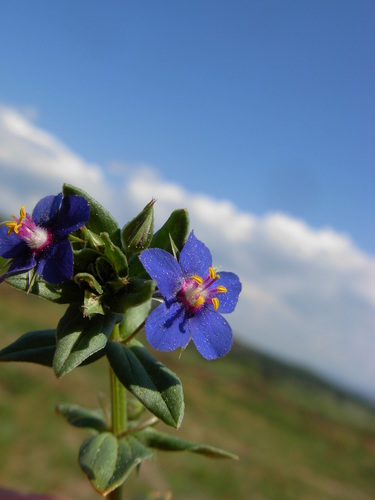
Lysimachia, Genus, loeflingii, Species,
- Genus & species
blue scarlet pimpernel
Overview
Lysimachia loeflingii is a small sprawling annual herb growing 4-12 inches (10-30 cm) long, with weak, square stems that trail along the ground or lean on other plants. The leaves are opposite, oval to lance-shaped, 0.4-0.8 inches (10-20 mm) long, stalkless, and dotted beneath with tiny dark glands. Solitary five-petalled flowers about 0.3-0.5 inches (8-12 mm) across open on slender stalks from the leaf axils, deep blue with a reddish centre, and close in dull or cool weather. Flowering runs through spring and into summer, followed by small round capsules that split around the middle to shed many seeds. The plant completes its life cycle in one season and dies after seeding. It grows quickly on disturbed and cultivated ground and is widely treated as a weed of crops and gardens.
Native Range
Native to the Mediterranean region and western Europe, and widely naturalised in temperate Australia and other regions. Grows on cultivated land, roadsides, gardens, and other disturbed open ground on a range of soils.Suggested Uses
Rarely grown on purpose, it appears mostly as a weed of cultivated and disturbed ground. Where it is wanted, the blue flowers add low colour to informal and wildflower-style plots on open soil. It has little role in formal garden planting because of its sprawling, short-lived habit and weedy spread.How to Identify
Appearance
Size & Dimensions
Height2" - 6"
Width/Spread8" - 1'4"
Bloom Information
Flowers through spring and into summer, mainly September to January in temperate areas. The flowers open in sun and close in dull, cool, or wet weather, so few are seen on overcast days. A plant flowers and sets seed continuously over many weeks.
Detailed Descriptions
Flower Description
deep blue with reddish centreFoliage Description
greenGrowing Conditions
Sun Requirements
Requires 6-12 hours of direct sunlight daily
• Full Sun: 6+ hours of direct sunlight
• Partial Shade: 3-6 hours of direct sunlight
• Full Shade: Less than 3 hours of direct sunlight
Water & Climate
Water Needs
Care & Maintenance
Care Guide
Grows in full sun on most soils, favouring disturbed, cultivated, and open ground. It germinates after rain and needs no care, completing its cycle on natural rainfall in temperate climates. Self-seeding is heavy, and volunteer seedlings appear in following seasons unless plants are removed before seed sets. The species is treated as a weed in crops, lawns, and gardens, where it competes with seedlings. The plant contains saponins and is reported toxic to grazing animals if eaten in quantity, and it dies back naturally after seeding.Pruning
Pruning is not practised on this short-lived annual. Plants may be pulled or hoed before flowering to limit seeding, since removal after seed set does little to reduce spread. Whole plants die off once seeding is complete.Toxicity Warning
Toxic to pets and humansPlanting Guide
Planting Methods & Timing
Planting Method
direct sow


