Lychnis, Genus, alpina, Species,
- Genus & species
alpine campion
Circumpolar arctic and alpine Northern Hemisphere; populations in Scandinavia, Iceland, Greenland, the European Alps, the Pyrenees, the Carpathians, and the mountains of northeastern North America
Overview
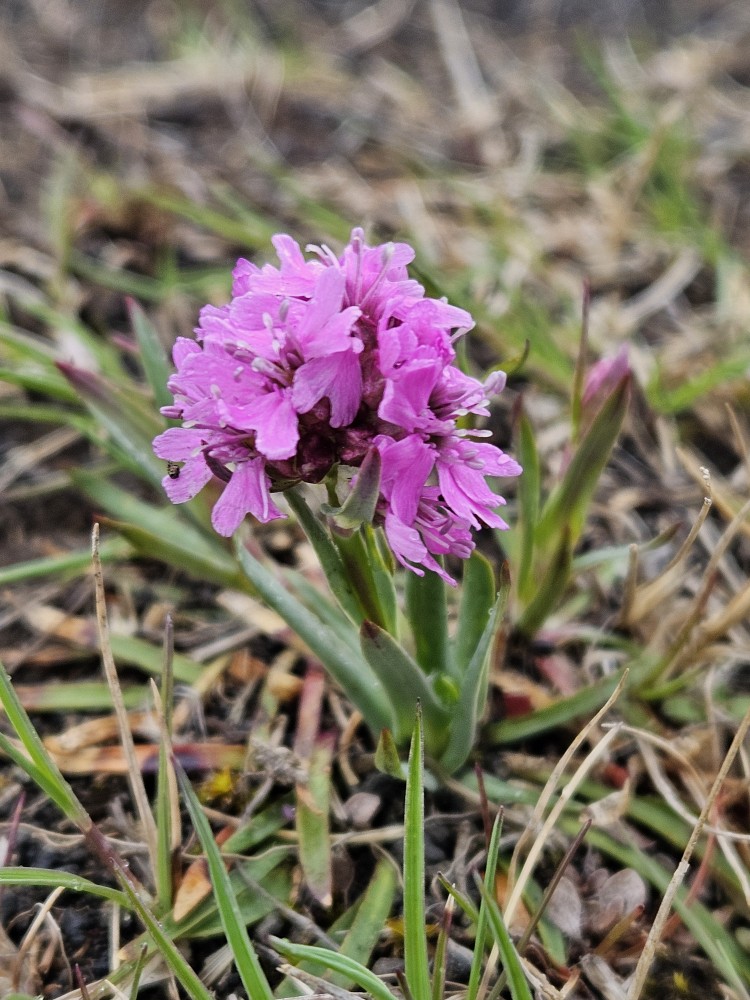
Lychnis alpina (sometimes placed in Silene as Silene suecica) is a circumpolar arctic-alpine perennial growing as a tight low rosette just 4–6 inches (10–15 cm) tall and 6–8 inches (15–20 cm) wide. Compact rounded clusters of 5–15 rose-pink to magenta flowers 0.4–0.5 inch (10–13 mm) across appear from mid-May through mid-June for about 3 weeks, carried on short stalks just above the foliage. The foliage is composed of dark green narrow strap-shaped leaves 0.5–1.5 inches (1.5–4 cm) long forming a dense semi-evergreen basal rosette. The species is native across high-latitude and high-altitude habitats spanning Scandinavia, Iceland, Greenland, the European Alps, the Pyrenees, the Carpathians, and the mountains of Quebec and Labrador in northeastern North America; populations grow on serpentine and heavy-metal-rich soils that exclude most competitors. Cold tolerance reaches USDA zone 2 (−50°F / −46°C). The arctic-alpine origin sets the cultural needs: sharply drained gritty or sandy soil, full sun, free air movement, and cool summer temperatures. The plant declines rapidly in regions where summer night temperatures stay above 70°F (21°C) for extended periods and rots in rich, wet, or humid lowland conditions. Lifespan in suitable cool-summer climates is 4–7 years; in warmer regions it behaves as a short-lived perennial of 1–2 years that may persist through self-sowing. Deer rarely browse the foliage.
Native Range
Lychnis alpina is circumpolar in arctic and alpine regions of the Northern Hemisphere, with populations in Scandinavia, Iceland, Greenland, the European Alps, the Pyrenees, the Carpathians, the mountains of northeastern North America (Quebec and Labrador), and disjunct sites in the Pacific Northwest. The species often grows on serpentine and heavy-metal-rich soils.Suggested Uses
Used in alpine troughs, crevice gardens, scree beds, and sand-bed plantings where the small scale and the cool, gritty conditions can both be supplied. Combines with other arctic-alpine miniatures such as Saxifraga oppositifolia, Silene acaulis, and small Draba species in trough plantings. Less suited to general garden borders in regions with hot, humid summers.How to Identify
Appearance
Size & Dimensions
Height4" - 6"
Width/Spread6" - 8"
Colors
Bloom Information
Detailed Descriptions
Flower Description
Rose-pink to magenta in compact rounded clusters of 5-15 flowers 0.4-0.5 inch (10-13 mm) acrossFoliage Description
Dark green narrow strap-shaped leaves 0.5-1.5 inches (1.5-4 cm) long forming a dense semi-evergreen basal rosetteGrowing Conditions
Sun Requirements
Requires 6-10 hours of direct sunlight daily
• Full Sun: 6+ hours of direct sunlight
• Partial Shade: 3-6 hours of direct sunlight
• Full Shade: Less than 3 hours of direct sunlight
Care & Maintenance
Care Guide
Plant in a site receiving 6 or more hours of direct sun daily with free air movement around the rosette. Soil must be sharply drained — coarse gritty mixes, sandy soils, or scree work, while standard garden loam holds too much moisture. Soil pH 5.5–7.0 in lean fertility; rich soils produce loose, floppy growth that rots over winter. Water during the first month of establishment, then irrigate sparingly only during prolonged drought. The species declines rapidly in regions where summer night temperatures stay above 70°F (21°C); cool-summer microclimates such as alpine troughs, north-facing rock walls, and gardens at higher elevations suit the species. Allow seed pods to disperse for self-sowing, since the plant may behave as short-lived in warmer regions.Pruning
No regular pruning is required. The rosette self-maintains at its mature size. Allow the small seed pods to ripen and disperse for self-sowing if persistence in warmer regions is wanted. Cut spent flower stalks at the base after seed dispersal for a tidier appearance.Container Growing
Suitable for container growing
Minimum container size: 1 gallons