Lewisia, Genus, columbiana, Species,
- Genus & species
columbia lewisia
Overview
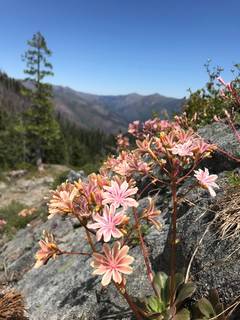
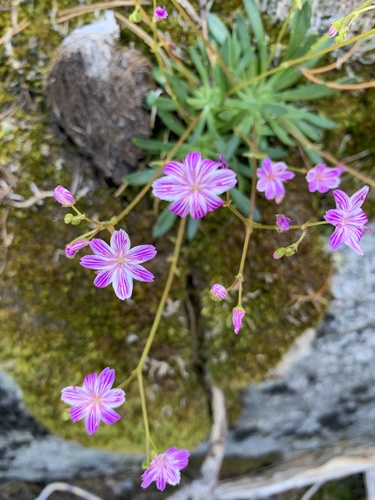
Forms a basal rosette of succulent, evergreen leaves 1-3 inches (2.5-8 cm) long, narrowly oblanceolate to spatulate, dark green, with smooth margins. Mature rosettes reach 4-6 inches (10-15 cm) wide with 6-12 leaves. Branched panicles emerge from the rosette in early summer, rising 8-12 inches (20-30 cm) tall and bearing 10-30 small flowers, each 0.5-0.75 inch (12-19 mm) across. Petals 7-10, white to pale pink with rose-pink veining and a yellow-green base. Stamens 5-6 with pale anthers. Capsules 0.25 inch (6 mm), ripening in late summer and releasing small black shiny seeds. Plants form a stout, fleshy taproot that may extend 6-8 inches (15-20 cm) into rock crevices. Foliage remains green through winter in zones 6-8 but may bronze under exposure to frost. Rosettes increase slowly, producing 2-3 offsets after 4-5 years. Self-seeds in suitable rocky substrates. Crown rot develops within a single growing season in soils that retain water at the root collar.
Native Range
Native to mountainous regions of the Pacific Northwest from southern British Columbia south through Washington, Oregon, Idaho, and into Montana. Found on rocky outcrops, talus slopes, and gravelly meadows from 1,500 to 9,000 feet (450-2,750 m) elevation, often in partial shade of conifers.Suggested Uses
Commonly used in alpine troughs, rock gardens, and crevice gardens at 6-10 inch (15-25 cm) spacing. Suitable for containers of at least 1 gallon (3.8 L) with at least 50% mineral grit. Lifespan in heavy clay garden soil rarely exceeds 2-3 years; lifespan extends to 10-15 years in sites with sharp drainage.How to Identify
Appearance
Size & Dimensions
Height4" - 1'
Width/Spread4" - 6"
Bloom Information
May through July depending on elevation; flowering begins at lower sites in May and finishes at high alpine sites in late July. Individual flowers last 5-7 days; the full bloom period extends 4-6 weeks. Cool, moist springs lengthen bloom; hot dry conditions reduce flowering to 2-3 weeks.
Detailed Descriptions
Flower Description
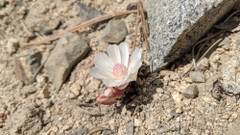
white to pale pink with rose-pink veiningFoliage Description
dark greenGrowing Conditions
Sun Requirements
Requires 4-8 hours of direct sunlight daily
• Full Sun: 6+ hours of direct sunlight
• Partial Shade: 3-6 hours of direct sunlight
• Full Shade: Less than 3 hours of direct sunlight
Care & Maintenance
Care Guide
Plant in sharply draining gritty soil with at least 50% pumice, scoria, or coarse sand. Water deeply once at planting and weekly during the first season; established plants need water only every 2-3 weeks during dry periods. Crown rot develops in soils that retain water at the root collar; raised plantings or rock crevices reduce this risk. Slugs and snails feed on succulent leaves in wet springs, particularly at lower elevations. Aphids appear on flower scapes in warm weather. Plants are long-lived in well-drained sites, persisting 10-15 years; lifespan in heavy soil rarely exceeds 2-3 years.Pruning
Remove spent flower scapes after seed has dispersed in late summer to reduce self-seeding. Damaged or dead leaves can be pulled gently from the rosette in spring. No annual cutback is required; the evergreen rosette persists year-round.Pruning Schedule
Prune: August–September
summerfall
Container Growing
Suitable for container growing
Minimum container size: 1 gallons