Lewisia, Genus, spp., Multiple species,
- Genus
- Multiple species
bitterroot
Overview
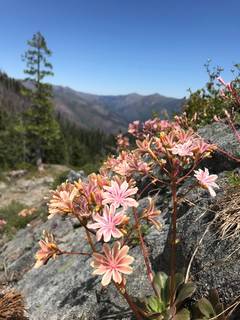
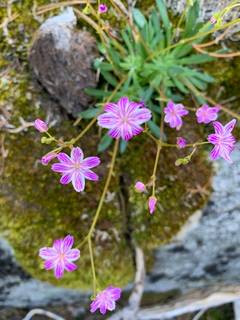
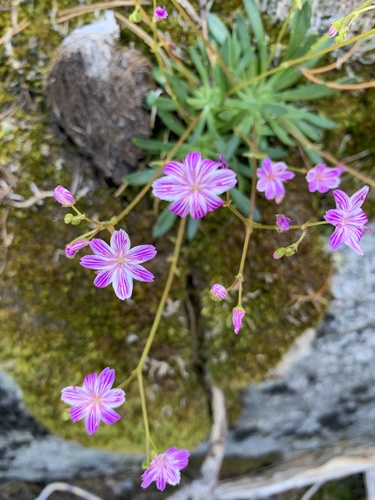
Lewisia is a genus of about 20 perennial species in the family Montiaceae, native to western North America from British Columbia south to California and east to the Rocky Mountains. Plants grow from a fleshy taproot or caudex and form basal rosettes of succulent leaves, ranging from spoon-shaped evergreen rosettes 2-6 inches (5-15 cm) across to narrow, fleshy leaves that die back in summer. Flowering stems rise 2-12 inches (5-30 cm) and carry open, many-petaled flowers 0.5-2 inches (1-5 cm) wide in white, pink, magenta, apricot, orange, or yellow, often with darker veining. Evergreen species such as L. cotyledon keep their rosettes year-round, while L. rediviva and related species are summer-dormant, losing their leaves after flowering. The genus grows on rocky slopes, cliffs, and gravelly soils with sharp drainage and is intolerant of standing moisture, particularly around the crown in winter. Flowering spans late spring into summer depending on species and elevation. Crown rot is the main cause of failure where drainage is poor or where water collects at the rosette.
Native Range
Lewisia species are native to western North America, where they grow on rocky outcrops, scree, cliff crevices, and gravelly mountain soils from British Columbia and Alberta south through the western United States to California, Arizona, and New Mexico.Suggested Uses
Grown in rock gardens, scree beds, trough and alpine containers, crevice gardens, and on dry stone walls where drainage is sharp. Evergreen rosette species are used at the front of gravel beds and in alpine houses, while summer-dormant species suit naturalistic plantings on dry slopes.How to Identify
Appearance
Size & Dimensions
Height2" - 1'
Width/Spread4" - 1'
Bloom Information
Most species flower from late spring into early summer, generally May to July, with some rebloom into late summer in evergreen types. Flowers open in sun and close in dull weather. Seed capsules ripen a few weeks after flowering and split to release rounded black seeds.
Detailed Descriptions
Flower Description
Pink, magenta, white, apricot, orange, or yellowFoliage Description
Green, often glaucousGrowing Conditions
Sun Requirements
Requires 6-10 hours of direct sunlight daily
• Full Sun: 6+ hours of direct sunlight
• Partial Shade: 3-6 hours of direct sunlight
• Full Shade: Less than 3 hours of direct sunlight
Care & Maintenance
Care Guide
Lewisia grows in full sun to light shade in gritty, sharply drained soil with a neutral to slightly acidic pH. Crowns rot where moisture collects, so plants are typically set on slopes, in rock crevices, or in gravel with the rosette neck surrounded by grit. Water is needed during active growth in spring, tapering off as summer-dormant species die back. Evergreen species take occasional summer water but tolerate dry spells once established. Cold is tolerated to USDA zone 4 in many species when drainage is sharp. Wet, heavy soils in winter are the main cause of loss.Pruning
Spent flower stems are removed after bloom to keep the rosette tidy and direct energy to the root. Deciduous species need no cutting back; their foliage withers naturally as they enter summer dormancy. Old or rotted outer leaves can be cleared from evergreen rosettes in spring.Pruning Schedule
summer
Container Growing
Suitable for container growing
Minimum container size: 1 gallons