Lepidium, Genus, didymum, Species,
- Genus & species
lesser swine-cress
South America (now a cosmopolitan weed)
SunFull Sun
Overview
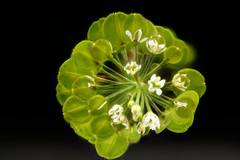
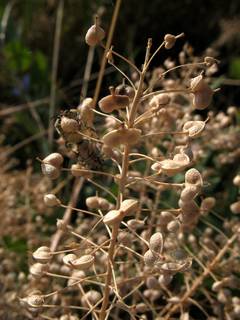
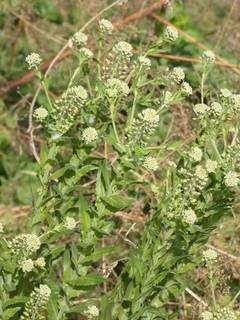
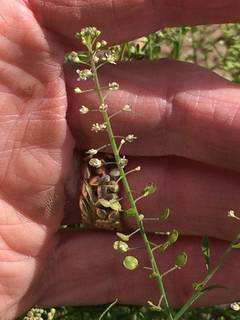
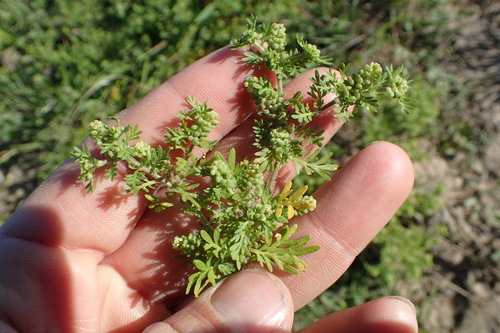
Lepidium didymum is a low, sprawling annual or overwintering annual in the cabbage family, forming flat, spreading mats 5-30 cm (2-12 in) across on trodden ground. The stems branch from the base and lie close to the soil, bearing finely pinnate leaves 1-5 cm (0.4-2 in) long with narrow lobes. Crushed foliage gives off a sharp, unpleasant cress-like smell. From spring onward it carries tiny white to greenish flowers, often without petals, in short clusters opposite the leaves. The flowers ripen into pairs of small, wrinkled, two-lobed fruits that split into single seeds. It grows on paths, pavements, gateways, waste ground, and other compacted, disturbed soils, tolerating trampling that flattens taller plants. The species favours open, sunny, fertile ground and completes its life cycle quickly, often through much of the year in mild climates. Its flat, weedy mats have little ornamental presence and spread readily by seed.
Native Range
Lepidium didymum is thought to be native to South America but has spread as a cosmopolitan weed across Europe, North America, Australia, and other temperate and warm regions. It grows on disturbed, compacted ground throughout its introduced range. It is most common in lowland, settled areas.Suggested Uses
Lepidium didymum is not grown ornamentally and is regarded as a weed of paths, paving, and cultivated ground. Its young leaves are edible with a sharp, cress-like flavour and are occasionally foraged. In gardens it is managed rather than planted.How to Identify
Appearance
Size & Dimensions
Height2" - 4"
Width/Spread6" - 1'
Bloom Information
Tiny white to greenish flowers open from spring through autumn, often almost year-round in mild areas. The small, frequently petalless flowers are easy to overlook. Paired wrinkled fruits follow quickly and ripen within weeks, shedding seed across the growing season.
Detailed Descriptions
Flower Description
white to greenishFoliage Description
greenGrowing Conditions
Sun Requirements
Requires 6-12 hours of direct sunlight daily
• Full Sun: 6+ hours of direct sunlight
• Partial Shade: 3-6 hours of direct sunlight
• Full Shade: Less than 3 hours of direct sunlight
Water & Climate
Water Needs
Drought Tolerance
Drought tolerant when established