Lepidium, Genus, spp., Multiple species,
- Genus
- Multiple species
pepperweeds
Cosmopolitan; centers of diversity in the Mediterranean, western North America, Australia, and South America
Overview
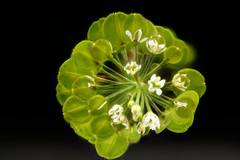
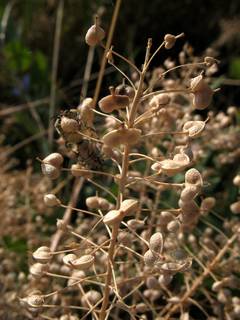
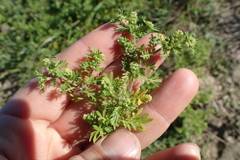
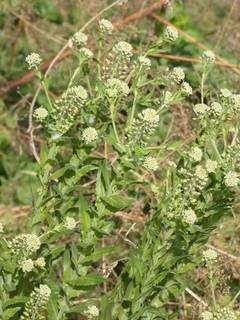
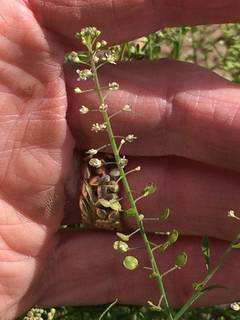
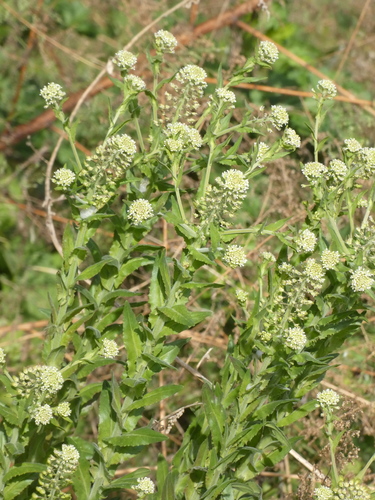
Lepidium is a genus of about 200 species of annual, biennial, and perennial herbs in the mustard family, Brassicaceae, found on every continent except Antarctica. Plants form a basal rosette of lobed or toothed leaves and send up erect, branching stems 4–24 in (10–60 cm) tall, with some species reaching 3 ft (90 cm). The foliage and stems carry the pungent, peppery taste characteristic of the family, which gives the group its common name. Small flowers, each with four white to greenish petals about 0.04–0.12 in (1–3 mm) long, are massed in slender racemes that elongate as the fruit develops. The fruit is a flattened, rounded to oval silicle 0.1–0.3 in (2–7 mm) across, often notched at the tip, holding one or two seeds per chamber. Several species, including garden cress L. sativum, are grown as salad greens, while L. meyenii is cultivated in the Andes for its edible root. Many species are ruderal colonizers of roadsides, fields, and disturbed soil, and some self-seed aggressively enough to become weeds. The genus is distributed across temperate and subtropical regions worldwide.
Native Range
Lepidium is nearly cosmopolitan, with centers of diversity in the Mediterranean, western North America, Australia, and South America. North American native species include Virginia pepperweed L. virginicum and L. densiflorum. Numerous species have naturalized far beyond their original ranges.Suggested Uses
Lepidium includes salad and culinary species grown for peppery leaves and, in the case of L. meyenii, an edible root. Wild species occur in meadows, verges, and restoration plantings on poor soils. The flowers attract small bees and hoverflies.How to Identify
Appearance
Size & Dimensions
Height4" - 3'
Width/Spread4" - 1'6"
Bloom Information
Lepidium species flower from spring into summer, with many blooming May through August in temperate climates. The small white flowers open progressively up the lengthening raceme over several weeks. Annual species complete flowering within one season, while perennial species rebloom across years. In mild regions some species flower nearly year-round.
Detailed Descriptions
Flower Description
white to greenish-whiteFoliage Description
greenGrowing Conditions
Sun Requirements
Requires 6-10 hours of direct sunlight daily
• Full Sun: 6+ hours of direct sunlight
• Partial Shade: 3-6 hours of direct sunlight
• Full Shade: Less than 3 hours of direct sunlight
Care & Maintenance
Care Guide
Most Lepidium species grow in full sun and tolerate poor, dry, and disturbed soils with a pH near 6.0 to 7.5. Established plants are drought tolerant and need little supplemental water once rooted. They need no fertilizer in average soils and often colonize nutrient-poor ground. Propagation is by seed, sown directly in place for cress-type salad species or self-sown by ruderal species. Because many species self-seed prolifically, plants spread without intervention and can move into adjacent beds. Cutting plants before seed matures limits unwanted spread.Pruning
Salad species such as garden cress are harvested by cutting young foliage and need no formal pruning. Perennial species can be cut back after flowering to reduce self-seeding. Removing flowering stems before the silicles ripen limits the spread of weedy species.Container Growing
Suitable for container growing