Krameria, Genus, lanceolata, Species,
- Genus & species
trailing rhatany
South-central and southwestern North America
Overview
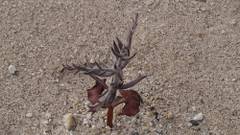
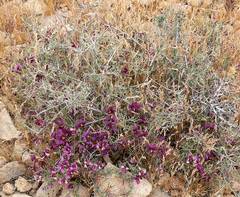
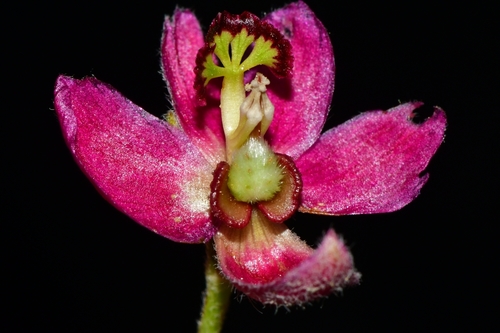
Krameria lanceolata is a low, trailing perennial subshrub in the family Krameriaceae, with slender prostrate stems spreading 1-3 feet (30-90 cm) across the ground from a woody root crown. Foliage is sparse: small, alternate, linear to lance-shaped leaves 0.2-0.8 inch (5-20 mm) long, gray-green and covered in short appressed hairs that reduce water loss. The irregular flowers are 0.5-0.8 inch (12-20 mm) wide, with five spreading petal-like sepals in deep reddish-purple to maroon and smaller modified petals, two of which bear oil-secreting glands. These glands draw specialized oil-collecting bees in the genus Centris, which pollinate the flowers. After bloom, the plant forms a rounded fruit covered in barbed spines that cling to fur and clothing for dispersal. Like other members of its genus, K. lanceolata is a root hemiparasite: it makes its own chlorophyll but taps the roots of neighboring grasses and shrubs for water and minerals, which makes it difficult to cultivate apart from host plants. It grows on dry prairies, rocky slopes, and open woodland in sandy or calcareous soils, and tolerates prolonged drought and intense sun.
Native Range
Native to the south-central and southwestern United States and northern Mexico, ranging from Kansas and Texas west to Arizona and south into Coahuila and Nuevo Leon, with scattered populations in the southeastern United States. It grows on dry prairies, limestone outcrops, sandy plains, and open oak woodland.Suggested Uses
Used in native dry-land and prairie restoration, on rocky banks, and in xeriscape plantings where its trailing stems cover bare ground. It supports specialized oil-collecting bees that depend on the genus. Its spiny fruits and low habit limit its use in high-traffic areas.How to Identify
Appearance
Size & Dimensions
Height4" - 1'
Width/Spread1' - 3'
Colors
Foliage Colors
Bloom Information
Flowers from spring into summer, mainly April through August, with heaviest bloom after rains. Individual flowers are short-lived, but the plant produces them in succession over many weeks. Flowering depends on warmth and soil moisture and pauses during severe drought.
Detailed Descriptions
Flower Description
reddish-purple to maroonFoliage Description
gray-greenGrowing Conditions
Sun Requirements
Requires 6-12 hours of direct sunlight daily
• Full Sun: 6+ hours of direct sunlight
• Partial Shade: 3-6 hours of direct sunlight
• Full Shade: Less than 3 hours of direct sunlight