Krameria, Genus, erecta, Species,
- Genus & species
littleleaf rhatany
Southwestern United States and Mexico
Overview
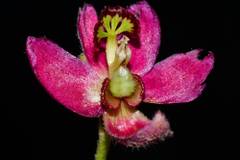
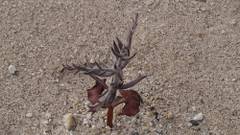
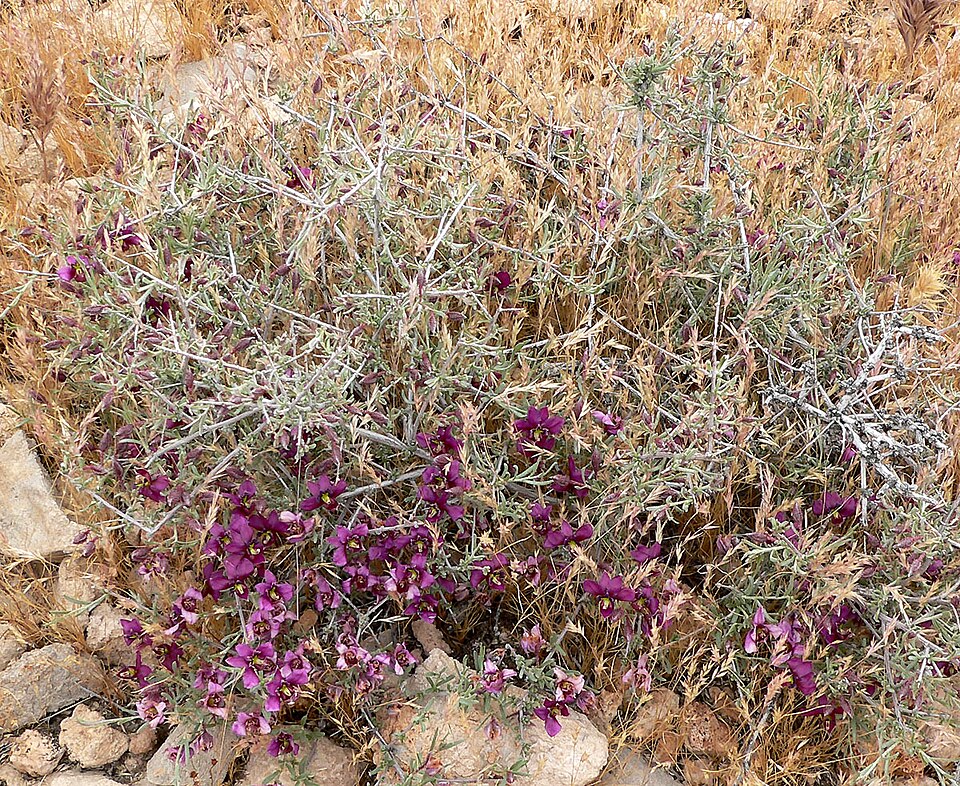
Krameria erecta is a low, much-branched desert shrub of the southwestern United States and Mexico, forming a dense, spiny mound 12-24 inches (30-60 cm) tall and 24-48 inches (60-120 cm) wide. The slender gray-green twigs end in stiff points, and the small, narrow leaves are 0.2-0.6 inch (5-15 mm) long and often shed in drought, leaving the plant nearly leafless. Magenta to pink-purple flowers about 0.5 inch (1.2 cm) wide appear mainly from spring into summer and again after summer rains; the flowers have enlarged petal-like sepals and smaller petals, two of which secrete oils that specialized bees collect. K. erecta is a root hemiparasite: it makes its own food by photosynthesis but taps the roots of neighboring shrubs and grasses for water and minerals, which makes it slow and difficult to establish on its own in cultivation. It grows on dry rocky slopes, desert flats, and washes in creosote-bush and desert-scrub communities. The plant tolerates extreme heat and drought but needs sharp drainage and full sun and is damaged by hard frost. The barbed fruits cling to passing animals, and the foliage is browsed by desert herbivores. Hardy in USDA zones 8-10, it is rarely offered in the nursery trade because of its parasitic roots.
Native Range
Krameria erecta is native to the deserts and semi-arid regions of the southwestern United States, from California and Nevada to Texas, and south into northern and central Mexico. It grows on dry rocky slopes, gravelly flats, and desert washes in creosote-bush and mixed desert-scrub communities.Suggested Uses
Used in desert and native restoration plantings, xeriscapes, and rock gardens within its range, often set near companion shrubs that serve as root hosts. It is spaced 2-4 feet (60-120 cm) apart on hot, dry, well-drained sites. The dense spiny habit also gives cover and forage for desert wildlife.How to Identify
Appearance
Size & Dimensions
Height1' - 2'
Width/Spread2' - 4'
Colors
Bloom Information
Flowering peaks from spring into early summer and recurs after summer monsoon rains where they fall. The magenta to pink-purple flowers are about 0.5 inch (1.2 cm) wide, with enlarged sepals and small oil-secreting petals. Oil-collecting bees in the genus Centris are the main pollinators.
Detailed Descriptions
Flower Description
magenta to pink-purpleFoliage Description
gray-greenGrowing Conditions
Sun Requirements
Requires 6-12 hours of direct sunlight daily
• Full Sun: 6+ hours of direct sunlight
• Partial Shade: 3-6 hours of direct sunlight
• Full Shade: Less than 3 hours of direct sunlight
Care & Maintenance
Care Guide
Krameria erecta grows in full sun with 6 or more hours of direct light and sharply drained sandy, rocky, or gravelly soil at pH 6.5 to 8.5. It tolerates extreme heat and prolonged drought once established and needs little or no irrigation. As a root hemiparasite it establishes more reliably near host shrubs and grasses whose roots it taps, and is slow to establish without them. The species is semi-hardy, surviving in USDA zones 8-10 but suffering damage below about 20°F (-7°C). Overwatering and poorly drained soil rot the roots.Pruning
Little or no pruning is needed. Stray or frost-damaged stems can be trimmed in spring once new growth shows, and the shrub regrows slowly from the base. The spiny twigs make handling difficult, so trimming is kept light.Pruning Schedule
Prune: March–April
early spring