Krameria, Genus, spp., Multiple species,
- Genus
- Multiple species
Warm and arid Americas (SW USA, Mexico, Central and South America)
Overview
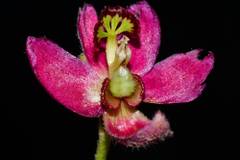
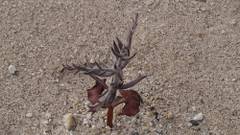
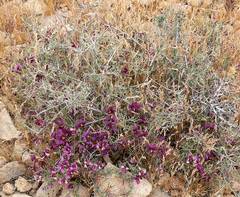
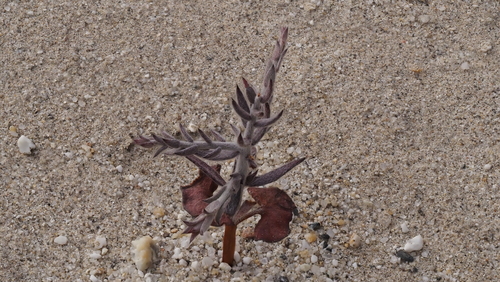
Krameria is a genus of about eighteen species of low, woody, hemiparasitic shrubs and subshrubs in its own family, Krameriaceae, native to the warm and arid Americas. Plants form dense, often spiny mounds 0.5-3 feet (15-90 cm) tall and as wide or wider, with small, grey-green, silky-haired leaves and stiff, intricately branched stems. The roots attach to and draw water and nutrients from neighbouring plants, so Krameria cannot be grown apart from host species. From spring into summer the branches carry irregular flowers 0.4-1 inch (1-2.5 cm) across in deep pink, red, or purple, with showy coloured sepals and smaller, modified petals, two of which secrete oils collected by specialist Centris bees. Dry, rounded fruits follow, armed with barbed or spined bristles that catch on fur and clothing. Krameria tolerates intense heat, drought, and poor desert soils but depends on host plants, grows very slowly, and is difficult to transplant or cultivate. Several species have been dug for their tannin-rich roots, used historically in traditional medicine and as a dye.
Native Range
Krameria is native to the Americas, from the southwestern United States and Mexico through Central America to South America, including the Caribbean. Plants grow in deserts, dry scrub, grassland, and rocky slopes, typically among the shrubs and grasses that serve as their hosts.Suggested Uses
Krameria is used in desert, native, and botanical collections in warm, arid regions, and in habitat restoration where its host plants also grow. The flowers support specialist oil-collecting bees. Its hemiparasitic roots, slow growth, and exacting needs make it unsuited to general garden planting or container culture.How to Identify
Appearance
Size & Dimensions
Height6" - 3'
Width/Spread1' - 4'
Colors
Bloom Information
Detailed Descriptions
Flower Description
pink, red, or purpleFoliage Description
gray-greenGrowing Conditions
Sun Requirements
Requires 6-12 hours of direct sunlight daily
• Full Sun: 6+ hours of direct sunlight
• Partial Shade: 3-6 hours of direct sunlight
• Full Shade: Less than 3 hours of direct sunlight