Kerria, Genus, spp., Multiple species,
- Genus
- Multiple species
Overview
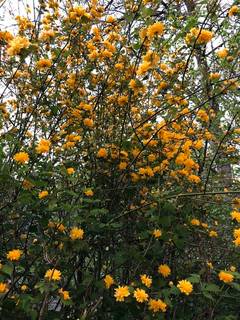
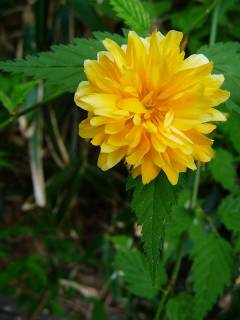
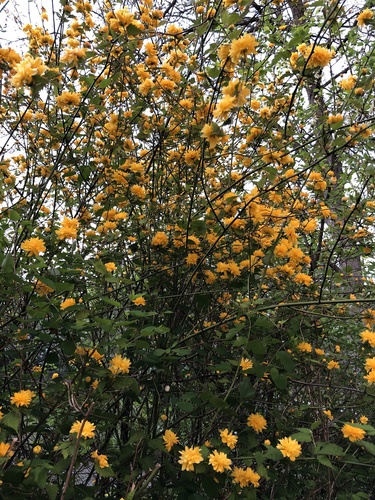
Kerria is a genus in the rose family represented by the single deciduous shrub Kerria japonica, native to China and Japan. Plants form a suckering thicket of slender, arching, bright green stems 3-6 feet (0.9-1.8 m) tall and as wide or wider, spreading steadily by underground runners. The alternate leaves are 1.5-4 inches (4-10 cm) long, oval with sharply double-toothed margins and a strongly veined, somewhat puckered surface, turning pale yellow before falling. Five-petalled yellow flowers 1-2 inches (2.5-5 cm) across open in mid to late spring, with scattered later flowers into summer; the cultivated double form carries rounded, many-petalled blooms. Small dry fruits form but are rarely seen. The green stems remain conspicuous through winter after the leaves drop. Kerria grows in sun or shade on most soils but spreads aggressively by suckers and can colonise beyond its intended space. Flower colour fades in strong sun, holding longer in light shade.
Native Range
Kerria is native to China and Japan, where K. japonica grows in moist woodland, thickets, and on shaded slopes in hill and mountain country. It has been cultivated for centuries in Japanese and Chinese gardens and is now widely naturalised in temperate regions.Suggested Uses
Kerria is used in shrub borders, woodland gardens, and shaded foundation plantings, and as an informal hedge or bank cover where its suckering habit fills space. The green winter stems add cool-season interest. Its spreading roots make it unsuited to tightly planted small beds.How to Identify
Appearance
Size & Dimensions
Height3' - 6'
Width/Spread4' - 8'
Bloom Information
Main flowering is in April and May, with a lighter scattering of flowers through summer, particularly in cooler or shadier sites. The single-flowered form blooms for about three to four weeks; the double form blooms longer. Flowers open along the previous season stems.
Detailed Descriptions
Foliage Description
bright greenGrowing Conditions
Sun Requirements
Requires 2-8 hours of direct sunlight daily
• Full Sun: 6+ hours of direct sunlight
• Partial Shade: 3-6 hours of direct sunlight
• Full Shade: Less than 3 hours of direct sunlight
Care & Maintenance
Care Guide
Plants grow in part shade to full shade and tolerate full sun where soils stay moist, though flower colour bleaches in strong sun. Most ordinary soils suit it, from clay to loam, provided they are not permanently waterlogged. Once established, plants need little water in temperate climates and are hardy to about -20F (-29C). Spreading suckers extend the clump each year and may need regular removal to limit spread. No routine feeding is required on average soils. Stems that die back can be cut to the base, where new shoots arise freely.Pruning
Pruning is done immediately after the main spring bloom, since flowers form on the previous year wood. Old, weak, or winter-killed stems are cut back to the ground to encourage strong new canes. Removing suckers at the edge of the clump keeps the shrub within bounds.Pruning Schedule
Prune: May–June
late spring