Image 1 of 10
1 / 10
Plant Reference
Kerria, Genus, japonica, Species, 'Pleniflora', Cultivar,
- Genus & species
- Cultivar
double kerria
Cultivar of garden origin; the species {Kerria japonica} is native to China and Japan
Overview
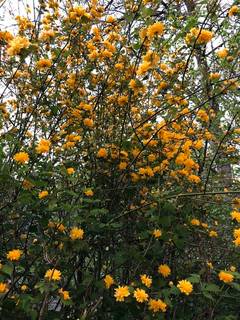
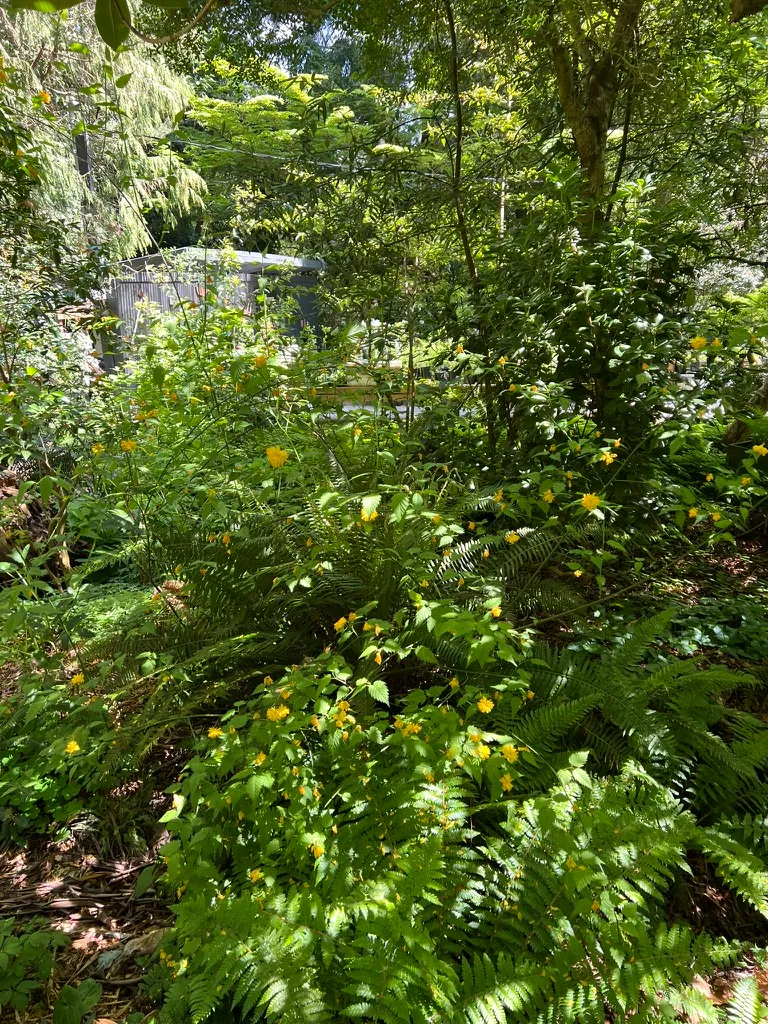
Kerria japonica 'Pleniflora' is a spreading deciduous shrub in the family Rosaceae reaching 5–8 feet (1.5–2.4 m) tall and 6–9 feet (1.8–2.7 m) wide with arching bright green stems that remain green through the winter after leaf drop. Kerria is a monotypic genus containing only K. japonica, and 'Pleniflora' is an old double-flowered cultivar widely grown since its introduction to European gardens in 1804. Leaves are alternate, ovate to lanceolate, 1.5–4 inches (4–10 cm) long, medium green with doubly serrated margins, turning yellow in fall. Golden-yellow double pompom-like flowers 1–1.5 inches (2.5–4 cm) across with numerous narrow petals open along the arching stems in April and May across a 3-week bloom period, with a sporadic secondary bloom flush in late summer; the double flowers are fully sterile and produce no fruit. 'Pleniflora' is taller and more vigorous than the single-flowered species type, reaching 5–8 feet (1.5–2.4 m) compared with 3–6 feet (0.9–1.8 m) for the single form. Flower color fades from golden-yellow toward pale yellow in full sun, and the cultivar holds its saturated color in part shade. Limitation: 'Pleniflora' suckers vigorously from the roots and forms an expanding colony that grows outward several inches to a foot per year, suckering more aggressively than the single species type, so sites without a lawn edge, hard barrier, or regular sucker removal are unsuitable for confined garden positions.
Native Range
'Pleniflora' is a cultivar of garden origin with no independent native range. The species Kerria japonica is native to China and Japan, growing in mountain woodlands and forest margins, and has been cultivated in Japanese gardens for centuries before introduction to Europe in 1804.Suggested Uses
Used in shade borders, woodland edges, and bank cover plantings at 6–9 foot (1.8–2.7 m) spacing where the spreading colony habit is tolerated, and in large containers of at least 10 gallons (38 L) where sucker spread is physically confined by the pot walls. The double golden-yellow April-May bloom and the bright green winter stems supply two seasons of interest. Small confined garden beds without sucker-removal maintenance are unsuitable because the cultivar expands laterally and crowds neighboring plantings.How to Identify
Appearance
Size & Dimensions
Height5' - 8'
Width/Spread6' - 9'
Bloom Information
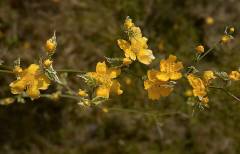
Golden-yellow double pompom-like flowers 1–1.5 inches (2.5–4 cm) across with numerous narrow petals open along the arching stems from April through May across about 3 weeks, with a sporadic secondary bloom flush in late summer. The double flowers are sterile and produce no fruit. The species blooms on previous-season wood.
Detailed Descriptions
Flower Description
golden-yellow double pompom-like flowers 1-1.5 inches (2.5-4 cm) across with numerous narrow petals, borne along the arching bright green stemsFoliage Description
medium green; alternate, ovate to lanceolate with doubly serrated margins, 1.5-4 inches (4-10 cm) long; turns yellow in fallGrowing Conditions
Sun Requirements
Requires 1-6 hours of direct sunlight daily
• Full Sun: 6+ hours of direct sunlight
• Partial Shade: 3-6 hours of direct sunlight
• Full Shade: Less than 3 hours of direct sunlight
Care & Maintenance
Care Guide
Site in part shade to full shade with 1–6 hours of direct sun per day in well-drained moist soil with a pH of 5.0–7.0. Full sun fades the flower color from saturated golden-yellow toward pale yellow, and part shade holds the deeper saturated color. The species tolerates clay and acidic loam and is not drought-tolerant; consistent soil moisture holds foliage quality through summer. 'Pleniflora' suckers vigorously from the roots, and sucker removal several times through the growing season is required to hold the plant in a confined space. Hardy in USDA zones 4–9. Routine fertilization is not required.Pruning
Pruning is done after flowering in May and June because the shrub blooms on previous-season wood. Renewal pruning removes the oldest stems at the base every 2–3 years to rebuild a younger framework, and dead or winter-damaged green stems can be cut at the same time. Root suckers are cut at the soil line on the schedule needed to hold the colony at the intended boundary; 'Pleniflora' suckers more vigorously than the single species type and calls for more frequent sucker removal.Pruning Schedule
Prune: May–June
late spring
Container Growing
Suitable for container growing
Minimum container size: 10 gallons