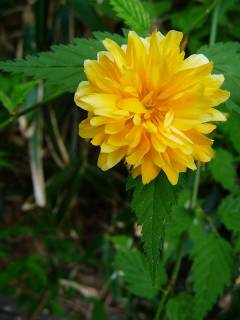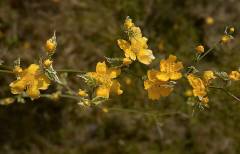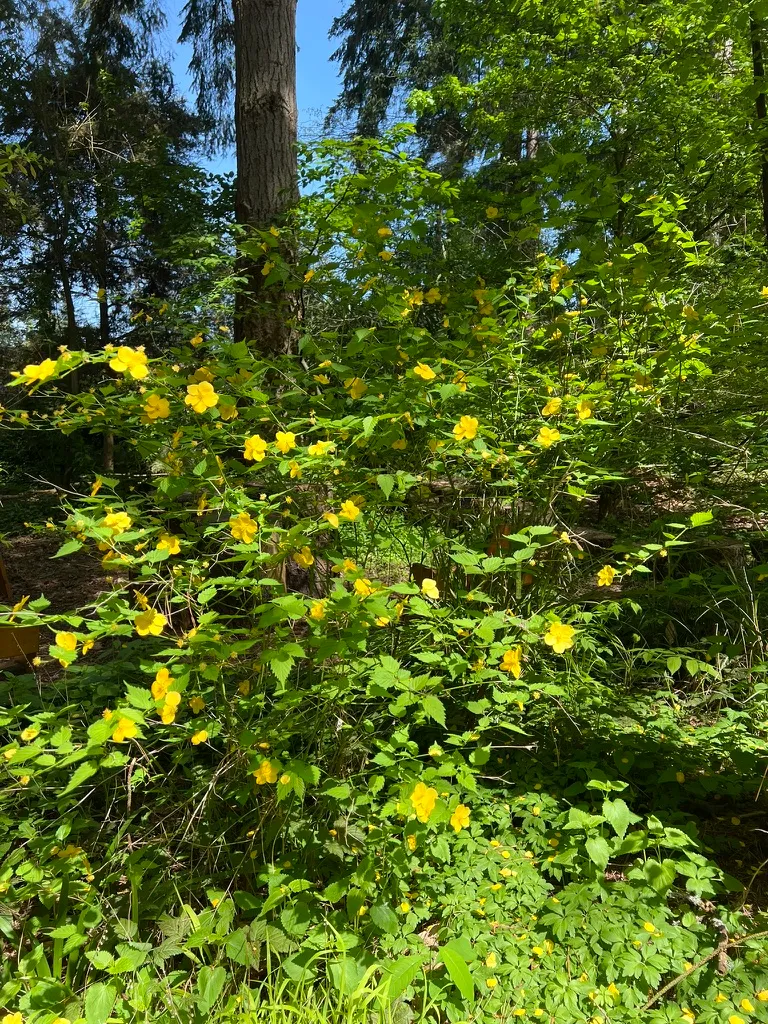
Kerria japonica, Japanese kerria
1 / 5
Deciduous Shrubs

Kerria japonica

Japanese kerria

RosaceaeAsia

At a Glance

TypeShrub
HabitSpreading
FoliageDeciduous
Height3–6 feet (90–180 cm)
Width6–9 feet (1.8–2.7 m)
Maturity4 years

Growing Zones

USDA Hardiness Zones

4 - 9
Zone 4
Zone 5
Zone 6
Zone 7
Zone 8
Zone 9
These zones indicate the coldest temperatures this plant can typically survive.
Frost Tolerancehardy

Key Features

Attracts Pollinators
Maintenancelow

Overview

Kerria japonica, commonly called Japanese kerria, is a graceful, suckering deciduous shrub in the family Rosaceae native to mountain slopes and forest margins of China and Japan. It is one of the most reliable and distinctive flowering shrubs for Pacific Northwest shade and part-shade gardens, producing bright golden-yellow, five-petaled, rose-like flowers 1–1.5 inches (2.5–4 cm) across in April and May on arching, slender branches. A defining character of the species is its bright green, prominently zigzag-angled stems that remain photosynthetically active and ornamentally attractive through winter after the leaves drop — providing a subtle but genuine year-round interest unlike most deciduous shrubs. Plants grow 3–6 feet (90–180 cm) tall and spread freely by root suckers to 6–9 feet (1.8–2.7 m) wide, forming broad, arching colonies. K. japonica blooms on the previous season's old wood; in Pacific Northwest gardens, where winter temperatures rarely kill the stems, bloom is consistently reliable every spring. Shade tolerance is outstanding — it flowers prolifically under the dappled canopy of deciduous trees and on north-facing exposures where most yellow-flowering shrubs fail. The alternate, ovate to lanceolate leaves with doubly serrated margins are medium green in summer and turn a clear yellow in autumn. Not fragrant. Non-toxic.

Native Range

Native to mountain slopes, woodland margins, and forest edges at low to mid elevations in China (widely distributed) and Japan, growing in moist, humus-rich, well-drained acidic soils in partial to full shade. Long cultivated in both countries; introduced to European horticulture in 1834. Not native to North America.

Suggested Uses

Kerria japonica is one of the most valuable flowering shrubs for Pacific Northwest shade gardens, north-facing exposures, and woodland understory plantings, delivering reliable golden-yellow spring bloom where most flowering shrubs cannot perform. Excellent massed on shaded slopes for erosion control and ground coverage. Outstanding combined with spring-flowering bulbs, Helleborus, Pulmonaria, and ferns in a woodland border. The green winter stems are particularly effective against a dark evergreen background. A Great Plant Pick for Pacific Northwest gardens.

How to Identify

Japanese kerria is identified by its bright golden-yellow, five-petaled, rose-like flowers 1–1.5 inches (2.5–4 cm) across in April–May on a slender, arching deciduous shrub, combined with its distinctively bright green, prominently zigzag-angled stems that remain green and photosynthetically active through winter. Leaves are alternate, ovate to lanceolate, 1.5–4 inches (4–10 cm), with sharply doubly serrated margins and prominent veining. Distinguished from the double-flowered cultivar K. japonica 'Pleniflora' by its single five-petaled flowers (vs. rounded, pompom-like double flowers); from Forsythia by its green zigzag stems (vs. round brown/gray stems) and rose-like (vs. tubular) flower form.

Appearance

Size & Dimensions

Height3' - 6'
Width/Spread6' - 9'

Reaches mature size in approximately 4 years

Colors

Flower Colors

yellow

Foliage Colors

green

Fall Foliage Colors

yellow

Bloom Information

Bloom Period

~3 weeks
J
F
M
A
M
J
J
A
S
O
N
D
Spring
Kerria japonica blooms in spring, typically April through early May in Pacific Northwest gardens, on the previous season's old wood over two to four weeks. The single, golden-yellow, five-petaled flowers 1–1.5 inches (2.5–4 cm) across appear along the length of the arching stems in profusion. Scattered rebloom on new growth may occur through summer, though never as heavy as the spring flush. Blooms are not fragrant. The species typically flowers slightly before K. japonica 'Pleniflora' and with a more open, airy quality.

Detailed Descriptions

Flower Description

Golden-yellow; single, 5-petaled, rose-like, 1–1.5 inches (2.5–4 cm)

Foliage Description

Alternate, ovate to lanceolate, 1.5–4 inches (4–10 cm), medium green, doubly serrated; yellow in autumn

Growing Conditions

Sun Requirements

Partial Shade
Full Shade
Tolerates up to 6 hours of direct sunlight daily
• Full Sun: 6+ hours of direct sunlight
• Partial Shade: 3-6 hours of direct sunlight
• Full Shade: Less than 3 hours of direct sunlight

Soil Requirements

pH Range5.0 - 7.0(Neutral)
357912
Soil Types
loampeatclay
Drainage
well drained

Water & Climate

Water Needs

Medium

Frost Tolerance

hardy

Time to Maturity

3–5 years

Care & Maintenance

Care Guide

Plant in partial shade to full shade in moist, well-drained, humus-rich, acidic to neutral soil. Kerria japonica is among the most shade-tolerant flowering shrubs for Pacific Northwest gardens — it performs and flowers well in conditions that defeat most ornamental shrubs. Tolerates full sun in cool, moist Pacific Northwest coastal conditions but may scorch in hot, dry, east-of-Cascades summers. Moderate summer moisture preferred; established plants tolerate brief dry spells. The plant spreads freely by root suckers; remove suckers at ground level to contain spread. Largely pest- and disease-free, though twig canker can blacken stems — cut affected stems to the ground.

Pruning

Prune immediately after flowering ends (May–June). Cut one-third to one-half of the oldest, most congested stems back to ground level each year to maintain vigor and an open, arching habit — Kerria japonica flowers most prolifically on young, vigorous growth. Remove any stems killed or blackened by twig canker at the base. Avoid pruning in autumn or winter as this removes the following spring's flower buds. Suckers can be removed at any time.

Pruning Schedule

J
F
M
A
M
J
J
A
S
O
N
D
late spring

Maintenance Level

low

Container Growing

Minimum container size: 7 gallons

⚠️ Toxicity Warning

Non-toxic