Iris, Genus, pseudacorus, Species,
- Genus & species
yellow iris
Overview
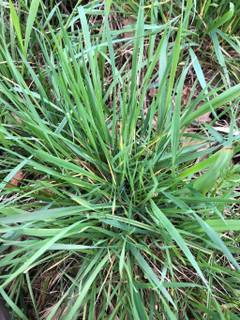
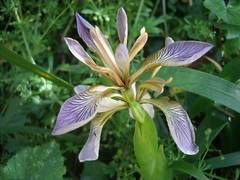
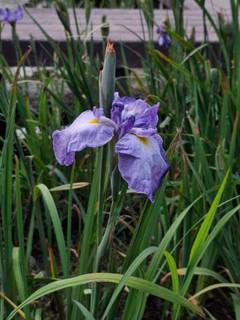
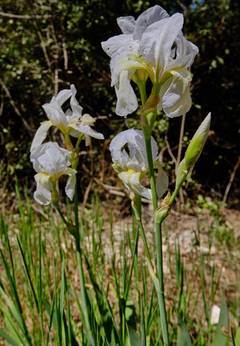
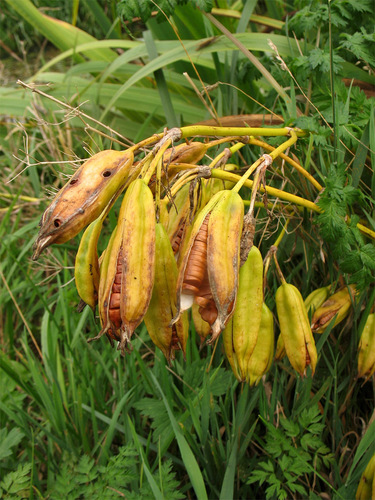
Iris pseudacorus, yellow iris or yellow flag, is a robust rhizomatous perennial in the iris family, growing 2-5 feet (60-150 cm) tall in wet ground and shallow water from thick, branching rhizomes. The erect, sword-shaped grey-green leaves are 2-3 feet (60-90 cm) long and about 1 inch (2.5 cm) wide, forming dense fans. In late spring and early summer it bears bright yellow flowers 3-4 inches (8-10 cm) across, each with three large drooping falls marked with brown or purple veining and three smaller upright standards. The flowers are followed by large, glossy, three-parted seed capsules holding many flattened, corky seeds that float and spread on water. The plant forms dense clumps and thick rhizome mats that can choke waterways and crowd out native wetland plants. It spreads by both seed and rhizome and tolerates a wide range of water levels and soils. It is native to Europe, western Asia, and North Africa and is considered invasive across much of North America. The sap and rhizomes are irritating to skin and toxic if eaten.
Native Range
Native to Europe, western Asia, and North Africa, where it grows along rivers, ponds, marshes, and ditches. It was introduced to North America as an ornamental and for erosion control and water gardens. It has since escaped and naturalized in wetlands across most of the continent, where it is listed as invasive in many states.Suggested Uses
Used in water gardens, pond margins, and wet borders for its tall foliage and yellow flowers, though planting is restricted where it is invasive. It takes up nutrients in constructed wetlands and rain gardens. In many regions native irises are grown in its place.How to Identify
Appearance
Size & Dimensions
Height2' - 5'
Width/Spread1' - 3'
Bloom Information
Flowers in late spring and early summer, mainly May and June, with each stem carrying several blooms that open in succession. The yellow flowers are pollinated mainly by long-tongued bees. Flowering is followed by large seed capsules that ripen through summer.
Detailed Descriptions
Foliage Description
grey-greenGrowing Conditions
Sun Requirements
Requires 4-12 hours of direct sunlight daily
• Full Sun: 6+ hours of direct sunlight
• Partial Shade: 3-6 hours of direct sunlight
• Full Shade: Less than 3 hours of direct sunlight
Care & Maintenance
Care Guide
Grows in full sun to part shade in wet, fertile soil and shallow water up to about 10 inches (25 cm) deep, and also tolerates ordinary moist garden soil. It spreads quickly by rhizome and seed and can become invasive in and around water. Because of that spread, planting is restricted or banned in many regions. Division of the rhizomes controls clump size and is the usual means of propagation. It has few pests, though iris borer and leaf spot can occur. Cut foliage and rhizomes can irritate the skin.Pruning
Spent flower stems can be cut after bloom to prevent seed capsules from forming and spreading. Old leaves can be cut back in late autumn or late winter. Removing seed heads before they ripen limits self-seeding into waterways.Pruning Schedule
Prune: November
fall
Container Growing
Suitable for container growing
Minimum container size: 3 gallons