Image 1 of 9
1 / 9
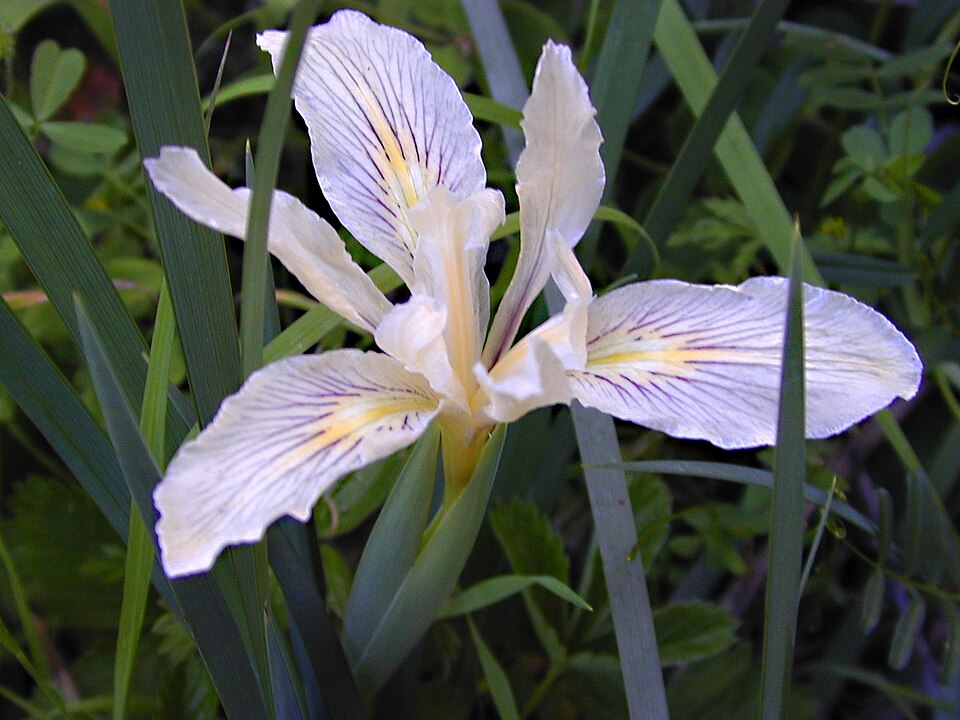
© Dawn Endico from Menlo Park, California, some rights reserved (CC-BY-SA) · Wikimedia Commons
Iris, Genus, macrosiphon, Species,
- Genus & species
bowltube iris
Overview
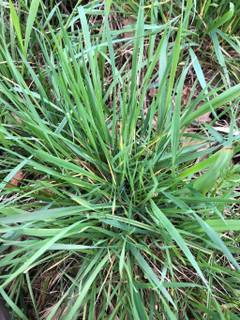
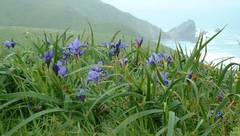
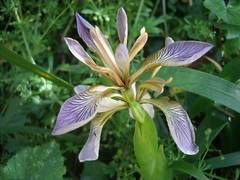
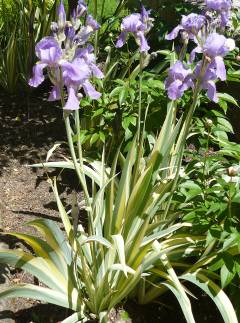
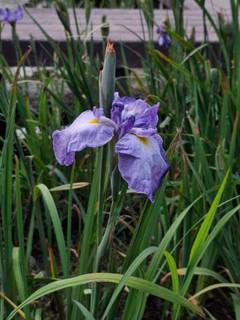
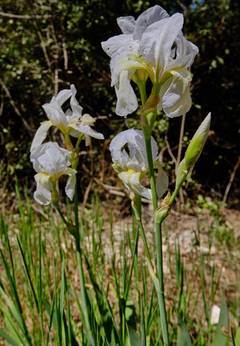
A low perennial iris growing 4–16 inches (10–40 cm) tall, forming clumps from short rhizomes and fibrous roots. The narrow, grass-like leaves are 8–16 inches (20–40 cm) long and 0.1–0.3 inch (3–8 mm) wide, deep green often tinged red at the base, and evergreen to semi-evergreen. Flowers vary widely in color from deep blue-purple to lavender, cream, or pale yellow, 2–3 inches (5–8 cm) across, with a very long slender floral tube 1.5–3 inches (4–8 cm) that gives the species its name. Each flower has three down-curved falls marked with veining and a paler signal patch. Bloom occurs from March to May. The flowers are held among or just above the foliage. Capsules with several seeds follow. The plant grows slowly from rhizomes into dense tufts and tolerates summer drought by going semi-dormant. Foliage may brown at the tips in dry summers.
Native Range
Native to California, mainly the Coast Ranges and Sierra Nevada foothills. Grows in dry, open woodland, grassy slopes, and forest edges, often under oak or pine, in well-drained soils.Suggested Uses
Grown in native and woodland gardens, dry shade, and rock gardens at 10–14 inch (25–35 cm) spacing. Used under oaks and on dry slopes where summer-dry conditions suit it. Suited to unirrigated Mediterranean-climate gardens and not to summer-wet beds.How to Identify
Appearance
Size & Dimensions
Height4" - 1'4"
Width/Spread8" - 1'4"
Bloom Information
Flowers from March to May, with peak bloom in April. An individual clump blooms for 2–4 weeks. Flowering is heavier after wetter winters and sparser in dry years.
Detailed Descriptions
Flower Description
Blue-purple to cream or pale yellowFoliage Description
Deep greenGrowing Conditions
Sun Requirements
Requires 4-8 hours of direct sunlight daily
• Full Sun: 6+ hours of direct sunlight
• Partial Shade: 3-6 hours of direct sunlight
• Full Shade: Less than 3 hours of direct sunlight
Care & Maintenance
Care Guide
Grows in full sun to partial shade in well-drained soils that are moist in winter and spring and dry in summer. Water through the first season to establish; established clumps need little or no summer water and rot in wet summer soils. It goes semi-dormant in summer drought, matching its native climate. The rhizomes are sensitive to disturbance and are divided or moved in fall as growth resumes. Few pests trouble it. Snails and slugs may chew young foliage.Pruning
Remove dead or browned leaves in late summer or fall to keep the clump tidy. Spent flower stems can be cut after bloom. Division, when needed, is done in fall rather than summer to limit rhizome rot. No other pruning is needed.Pruning Schedule
Prune: September–October
fall