Image 1 of 10
1 / 10
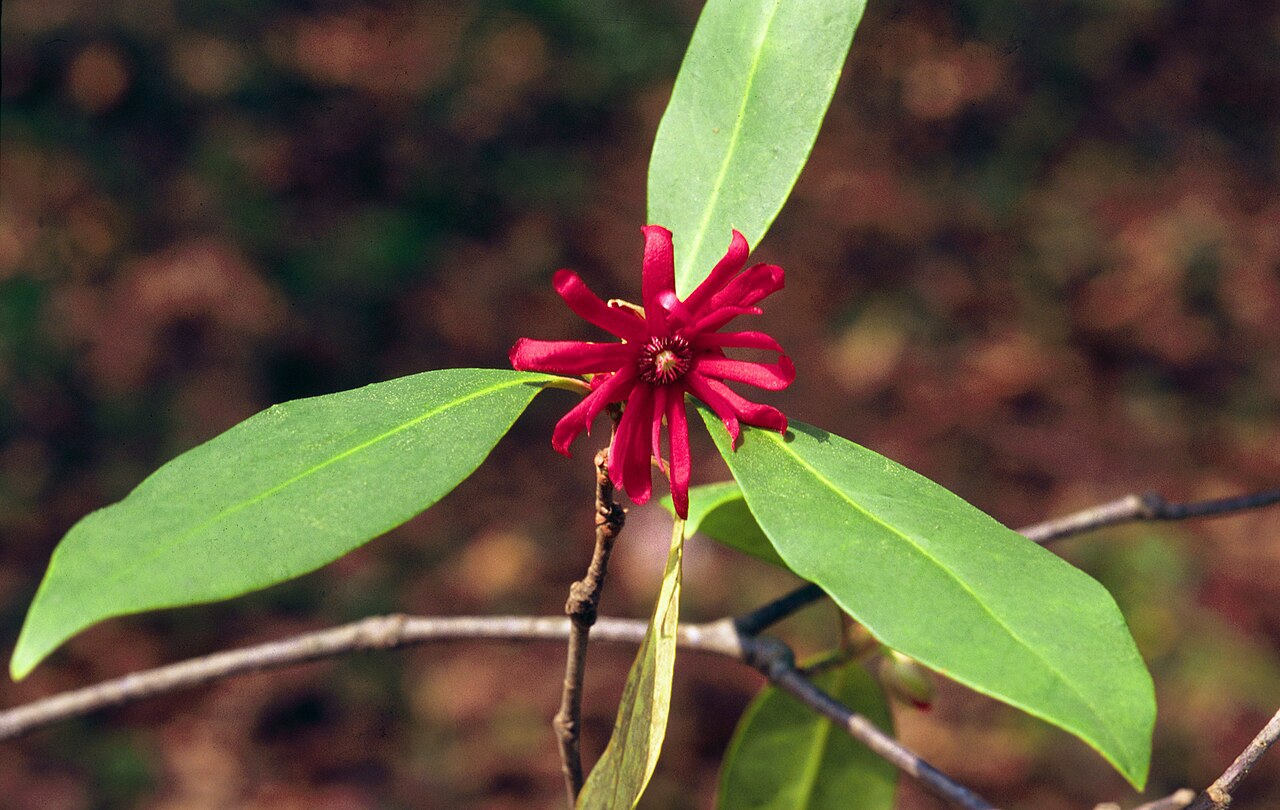
© James H. Miller & Ted Bodner, Southern Weed Science Society, Bugwood.org, some rights reserved (CC-BY) · Wikimedia Commons
Illicium, Genus, floridanum, Species,
- Genus & species
Florida anise
Southeastern United States (Gulf Coast, from northwestern Florida to Louisiana)
Overview
Illicium floridanum is an evergreen shrub in the family Schisandraceae, native to the Gulf Coast of the southeastern United States from northwestern Florida to Louisiana. Plants reach 6–10 feet (1.8–3 m) tall and 6–8 feet (1.8–2.4 m) wide, with a dense, upright to rounded habit and multiple stems. Leaves are alternate, clustered near the branch tips, lance-shaped to elliptic, 3–6 inches (7.5–15 cm) long, and glossy dark green, with an anise-like scent when crushed. Flowers are maroon-red, star-shaped, 1.5–2 inches (4–5 cm) across, with 20–30 narrow, strap-like tepals, and open in April and May with a slightly fishy scent. Fruit is a star-shaped aggregate of 11–14 follicles, about 1 inch (2.5 cm) across, that splits to release glossy seeds. All parts contain anisatin and related compounds, and the seeds are toxic if ingested. Plants are hardy in USDA zones 7–9 and grow in part to full shade in moist, acidic soil. Leaves brown in dry soil and in full afternoon sun, and stems are damaged by hard freezes below 5°F (−15°C).
Native Range
Native to the Gulf Coast of the southeastern United States, from northwestern Florida through Alabama and Mississippi to Louisiana, where it grows along streams, in swamp margins, and in moist woodland understory.Suggested Uses
Used in woodland gardens, shaded borders, and as an evergreen screen or hedge, spaced 4–6 feet (1.2–1.8 m) apart. Plants tolerate wet soil along streams and pond edges. Toxicity of the seeds and sensitivity to hard freezes and dry soil limit use in some gardens.How to Identify
Appearance
Size & Dimensions
Height6' - 10'
Width/Spread6' - 8'
Bloom Information
Flowers open in April and May, and individual flowers last 1–2 weeks. Flowers are held on slender stalks below the leaves and emit a slightly fishy scent that attracts flies and beetles. Fruit ripens in late summer to autumn. Plants flower at 3–4 years of age.
Detailed Descriptions
Foliage Description
Glossy dark greenGrowing Conditions
Sun Requirements
Requires 2-5 hours of direct sunlight daily
• Full Sun: 6+ hours of direct sunlight
• Partial Shade: 3-6 hours of direct sunlight
• Full Shade: Less than 3 hours of direct sunlight
Care & Maintenance
Care Guide
Growth is steadiest in part shade to full shade in moist, well-drained, acidic soil of pH 5.5–6.5 that is high in organic matter. Leaves scorch in full afternoon sun and in dry soil. Water is applied at 1 inch (2.5 cm) per week during the first two growing seasons and during dry periods afterward. Cold hardiness is USDA zones 7–9, and hard freezes below 5°F (−15°C) damage stems. A 2–3 inch (5–8 cm) layer of organic mulch conserves soil moisture. Alkaline soil above pH 7.0 causes leaf yellowing.Pruning
Little pruning is required. Shaping is done immediately after flowering in late spring, because flower buds form on the previous season's growth. Dead and damaged stems are removed at any time. Plants tolerate hard pruning to 12–24 inches (30–60 cm) and regrow from the base.Pruning Schedule
Prune: May–June
late spring