Illicium, Genus, verum, Species,
- Genus & species
Star anise
Southern China and northeastern Vietnam
Overview
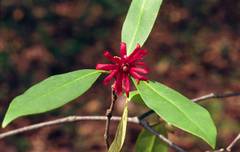
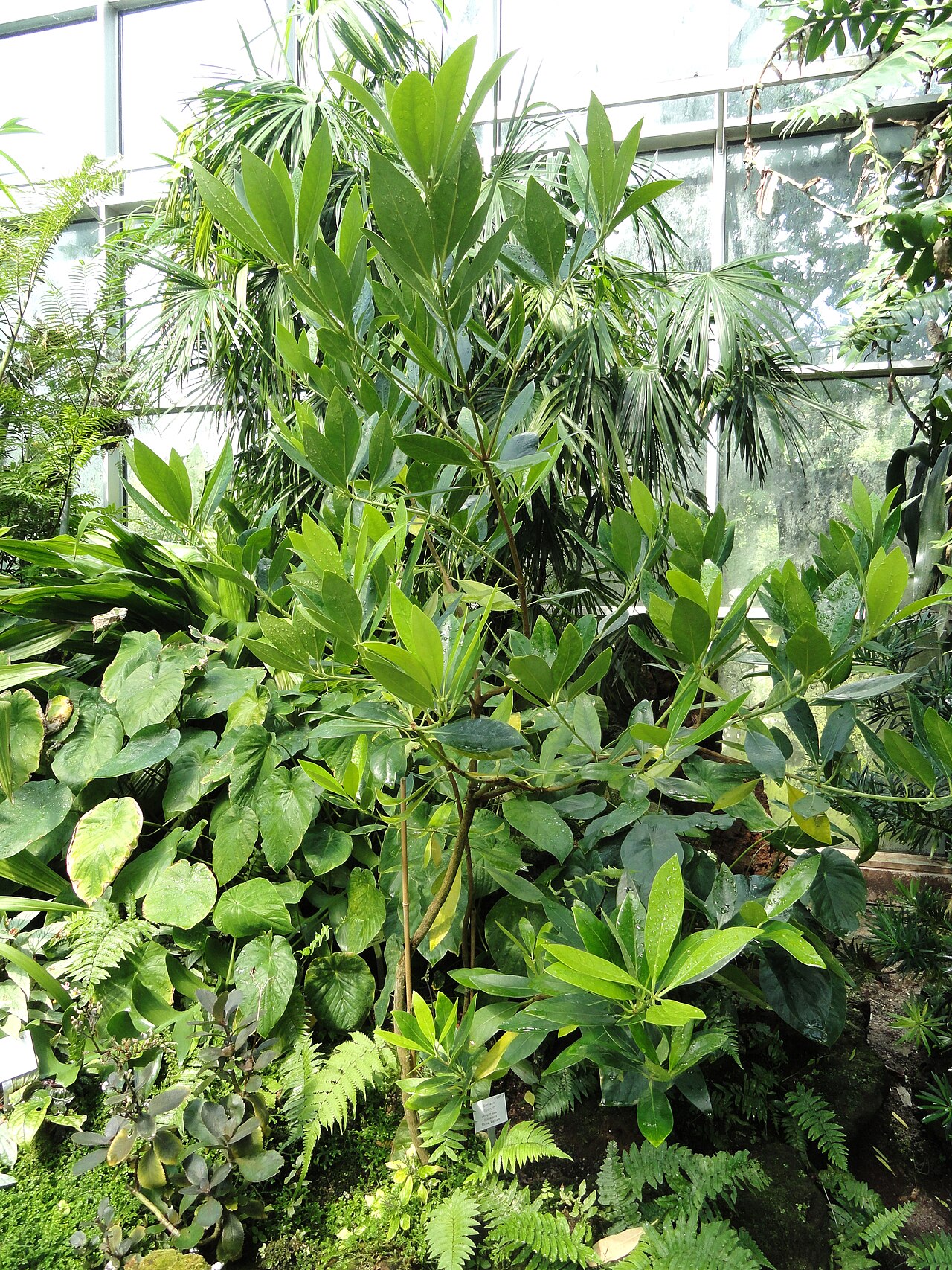
Illicium verum is an evergreen tree reaching 20-45 feet (6-14 m) tall and 10-20 feet (3-6 m) wide, with a conical crown and smooth grey-white bark. Leaves are alternate or clustered toward the shoot tips, elliptic to lance-shaped, 2-6 inches (5-15 cm) long and 0.8-2 inches (2-5 cm) wide, leathery, glossy dark green above, and release an anise scent when crushed. Flowers open singly in the leaf axils, 0.6-1.2 inches (1.5-3 cm) across, with 10-20 narrow pink to dark red tepals arranged in a shallow cup. Fruit is a woody aggregate of 6-8 follicles radiating from a central axis to form an eight-pointed star 1.2-1.6 inches (3-4 cm) across, green ripening to red-brown, each follicle splitting to release one glossy brown seed. Harvested and dried, this fruit is the star anise of commerce and the industrial source of shikimic acid. Trees take about 6 years from planting to first fruiting and 15 years to full yield. Growth is limited to USDA zones 8-11; temperatures below 15F (-9C) kill the top growth. The closely similar I. anisatum contains anisatin, a neurotoxin, and its fruit has been found as an adulterant in star anise shipments, causing seizures in people who consumed the tea.
Native Range
Illicium verum is native to southern China, chiefly Guangxi and Yunnan provinces, and to adjacent northeastern Vietnam, growing in warm subtropical evergreen forest. Guangxi accounts for most world production, with cultivation concentrated in orchards on hill slopes. The species is not known from truly wild populations outside this region.Suggested Uses
Grown as an evergreen shade or screening tree in USDA zones 8-11 and as a container specimen under glass in colder regions. Dried fruit is used whole or ground in Chinese five-spice powder, Vietnamese pho, braises, and mulled drinks, and the tree is the industrial source of shikimic acid used in antiviral manufacture. Leaves and bark are distilled for star anise oil used in flavouring and perfumery.How to Identify
Appearance
Size & Dimensions
Height20' - 45'
Width/Spread10' - 20'
Bloom Information
Flowering runs from March to May in its native range, with scattered flowers appearing again in autumn on mature trees. Individual flowers last 4-7 days. Fruit set from the spring flowers ripens over 5-7 months and is harvested from August to October, so flowers and developing fruit are often present on the tree at the same time. Trees under 6 years old rarely flower.
Detailed Descriptions
Flower Description
Pink to dark redFoliage Description
Glossy dark greenGrowing Conditions
Sun Requirements
Requires 3-6 hours of direct sunlight daily
• Full Sun: 6+ hours of direct sunlight
• Partial Shade: 3-6 hours of direct sunlight
• Full Shade: Less than 3 hours of direct sunlight
Care & Maintenance
Care Guide
Growth is steadiest with 3-6 hours of filtered light or morning sun and shade during the hottest part of the day; full sun in dry air scorches the leaf margins. Soil should be acidic at a pH of 5.0-6.5, rich in organic matter, and evenly moist without waterlogging. Watering to keep the root zone moist through the growing season is needed year-round, since the species has no drought dormancy and drops leaves under water stress. A mulch of 2-3 inches (5-7.5 cm) of leaf litter or bark maintains soil moisture and the acidic conditions the roots require. Feeding with an acid-forming fertilizer once in spring is sufficient, and lime or alkaline irrigation water produces yellowing between the leaf veins. Outside USDA zones 8-11 the tree is grown under glass, where scale insects are the usual pest.Pruning
I. verum forms a dense conical crown without training and needs no routine pruning. Cutting out dead or damaged branches at their point of origin in late spring, after flowering, avoids removing the season crop of developing fruit. In orchard cultivation trees are headed back to 13-16 feet (4-5 m) to keep the fruit within reach of harvesters. The species resprouts readily from cut stumps and from the base after cold damage.Pruning Schedule
Prune: May–June
late spring