Image 1 of 10
1 / 10
© peganum from Henfield, England, some rights reserved (CC-BY-SA) · Wikimedia Commons
Illicium, Genus, anisatum, Species,
- Genus & species
Japanese star anise
Japan, southern Korea, Taiwan, and southern China
Overview
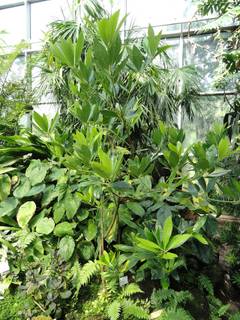
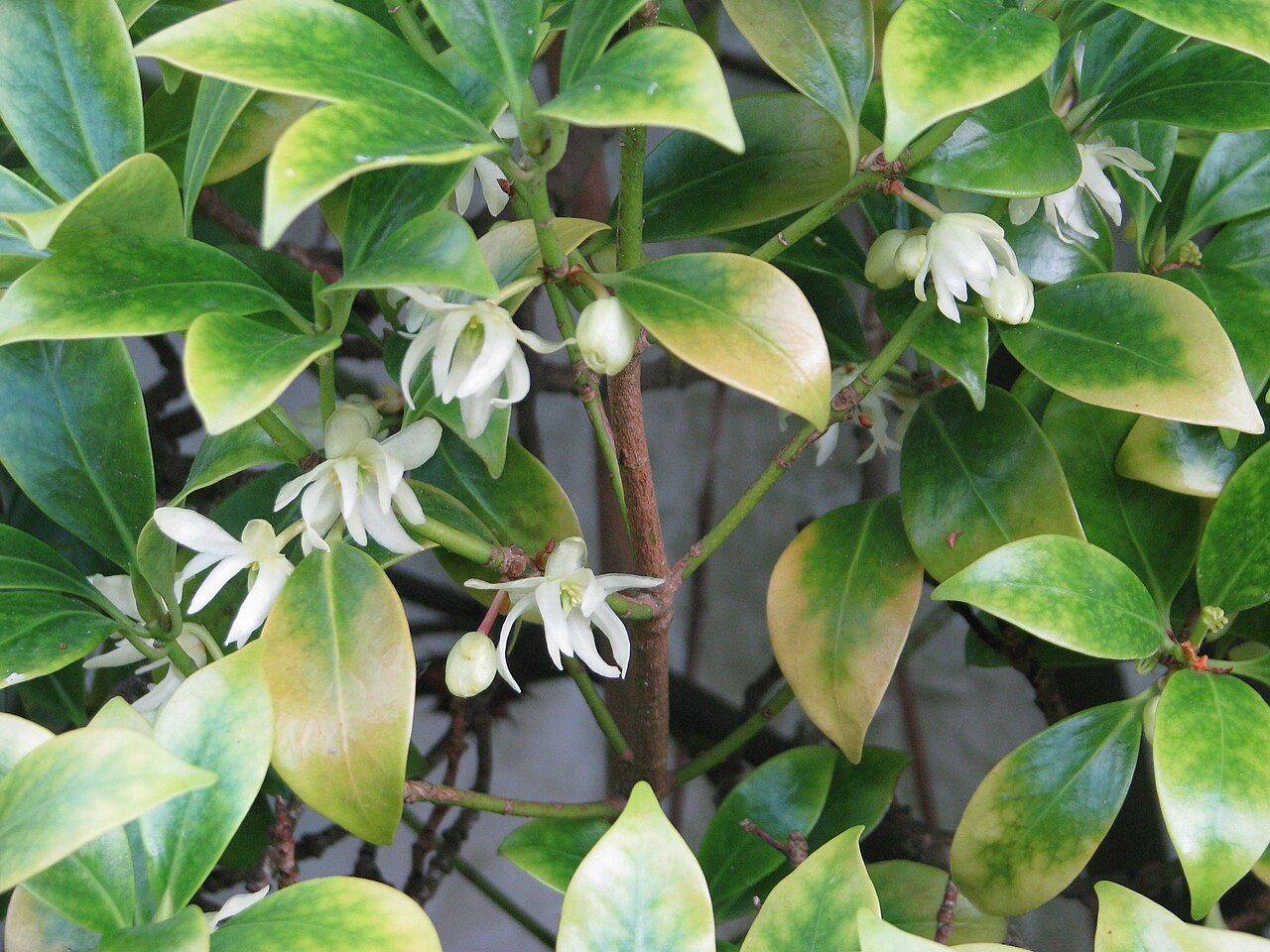
Illicium anisatum is an evergreen shrub or small tree in the Schisandraceae, reaching 6–15 feet (1.8–4.5 m) tall and 6–10 feet (1.8–3 m) wide, occasionally to 25 feet (7.5 m) on old plants in mild climates. Growth is slow at 4–8 inches (10–20 cm) a year, producing a densely branched, rounded to upright outline. Leaves are alternate but crowded toward the shoot tips, obovate to elliptic, 2–4 inches (5–10 cm) long, thick and leathery with entire margins and a glossy dark green upper surface, and crushed foliage releases an anise-like scent. Flowers are greenish-white to pale yellow, 1–1.2 inches (25–30 mm) across, with 20–30 narrow strap-shaped tepals, borne singly on short stalks from the leaf axils between March and May. Fruit is a woody star-shaped aggregate of eight follicles about 1 inch (25 mm) across, ripening brown in autumn. All parts contain anisatin, a neurotoxin that causes vomiting and seizures in humans and animals, and the fruit resembles that of the culinary Illicium verum closely enough that poisonings have followed confusion between the two. The shrub tolerates deep shade but is damaged below about 5°F (-15°C) and by drying winter wind.
Native Range
Illicium anisatum is native to Japan, southern Korea, Taiwan, and parts of southern China. It grows in the understorey of evergreen broadleaf forest and on shaded slopes from near sea level to about 3,300 feet (1,000 m), on acidic soils over volcanic and granitic rock. In Japan it is planted around Buddhist temples and cemeteries, where cut branches are used in ritual offerings and the bark and leaves are ground for incense.Suggested Uses
Grown as an evergreen shade shrub and informal hedge, spaced 4–6 feet (1.2–1.8 m) apart for a screen and 8–10 feet (2.4–3 m) apart as free-standing specimens. Also used in containers of 10 gallons (38 L) or larger in shaded courtyards, and in Japan as a temple and cemetery planting. The toxicity of the fruit limits use in gardens where children forage, since the follicles resemble culinary star anise.How to Identify
Appearance
Size & Dimensions
Height6' - 15'
Width/Spread6' - 10'
Bloom Information
Flowering runs four to six weeks from March into May, earliest in USDA zone 9 and reaching mid-May in zone 7. Flowers are borne singly on stalks 0.4–0.8 inch (10–20 mm) long from the axils of the previous season leaves, so they sit within the foliage rather than above it. Each flower holds 20–30 narrow tepals in greenish-white to pale yellow and carries a light scent. Pollination is by small flies and beetles, and fruit develops through summer to ripen brown in October.
Detailed Descriptions
Flower Description
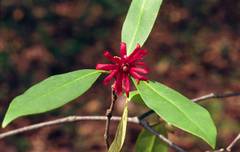
Greenish-white to pale yellowFoliage Description
Glossy dark greenGrowing Conditions
Sun Requirements
Requires 2-6 hours of direct sunlight daily
• Full Sun: 6+ hours of direct sunlight
• Partial Shade: 3-6 hours of direct sunlight
• Full Shade: Less than 3 hours of direct sunlight
Care & Maintenance
Care Guide
Two to six hours of direct sun daily, with shade through the afternoon, suits the foliage; leaves yellow and scorch in full sun in zones 8 and 9. Moist, free-draining acidic soil with a pH of 5.0 to 6.5 supports growth, and plants in ground above pH 7.0 develop interveinal chlorosis. Watering to hold the root zone damp during dry spells longer than two weeks sustains the shrub, which has little drought tolerance once the leaves begin to droop. The plant is hardy in USDA zones 7–9, with foliage burned below about 5°F (-15°C) and stems killed near 0°F (-18°C). A 2–3 inch (5–7.5 cm) layer of leaf mulch maintains soil moisture and the acidic surface horizon. Pests are few, though root rot follows in soil that stays saturated and leaf scorch develops on plants exposed to winter wind.Pruning
Pruning is carried out in late spring after flowering, from May into June, leaving time for the following season buds to form. Shortening branches by up to one third holds the shrub within a set space, and cuts into two-year-old wood resprout reliably. Renovation by cutting main stems to 12–18 inches (30–45 cm) is followed by regrowth over two to three seasons. Sap and cut foliage carry anisatin, and prunings are kept out of compost intended for food crops.Pruning Schedule
Prune: May–June
late spring
Container Growing
Suitable for container growing
Minimum container size: 10 gallons