Hypericum, Genus, kalmianum, Species,
- Genus & species
Kalm St. John's wort
Overview
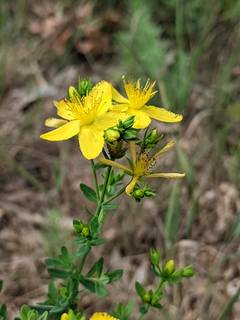
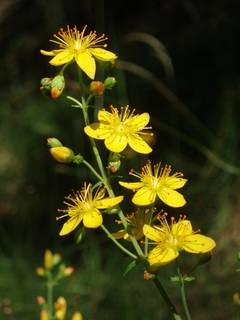
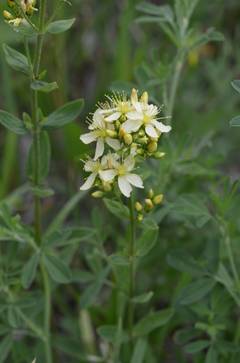
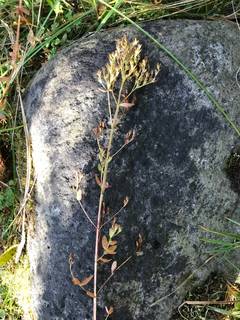
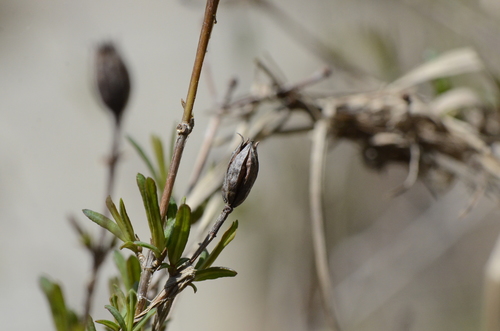
Hypericum kalmianum is a compact deciduous to semi-evergreen shrub native to the Great Lakes region of North America, reaching 24-36 inches (60-90 cm) tall and 24-36 inches (60-90 cm) wide at maturity, forming a tight rounded mound with peeling reddish-brown bark on older stems. Leaves are narrow, blue-green to gray-green, opposite, 1-2.5 inches (2.5-6 cm) long, persisting into early winter in zones 6-7 before dropping. Flowers are bright yellow, 1-1.5 inches (2.5-4 cm) across, with five petals and a large central tuft of yellow stamens; bloom occurs from mid June through August (8-10 weeks). The species is hardy in USDA zones 4-7, tolerating cold winters and alkaline calcareous soils where many Hypericum species fail. Plants form a dense root system that stabilizes soil on slopes and rocky banks. Pollinators including bumblebees, sweat bees, and syrphid flies visit the open flowers heavily. H. kalmianum is more compact than the related introduced H. prolificum and shows greater cold tolerance than southern species like H. patulum. Seedheads of dried capsules persist into winter and feed some songbirds.
Native Range
Hypericum kalmianum is native to the Great Lakes region of North America, with a primary range around the shores of Lake Huron, Lake Michigan, and Lake Ontario in Michigan, Wisconsin, Ontario, Quebec, and New York. It grows on calcareous limestone shores, dunes, and rocky outcrops. The species is uncommon in the wild and is listed as threatened in some states despite widespread availability in cultivation.Suggested Uses
Hypericum kalmianum is used as a low foundation shrub, in pollinator gardens, and on slopes and rock gardens with alkaline calcareous soils, spaced 24-36 inches (60-90 cm) apart for mature canopy contact. The compact form fits beneath windows and along walks where larger Hypericum species would outgrow the space. Native plant gardens use the species for its Great Lakes provenance and tolerance of poor soils.How to Identify
Appearance
Size & Dimensions
Height2' - 3'
Width/Spread2' - 3'
Bloom Information
Bloom begins in mid June in USDA zones 5-6, continuing through August (8-10 weeks of flowering). Each flower lasts 1-2 days, with continuous opening across the canopy through the bloom period. Bees and pollinators visit primarily in morning hours when flowers open fully.
Detailed Descriptions
Foliage Description
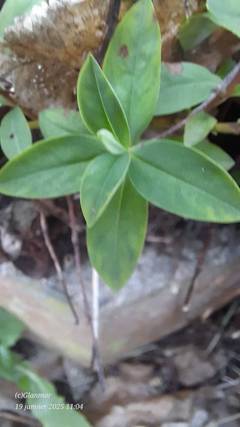
Blue-green to gray-greenGrowing Conditions
Sun Requirements
Requires 4-12 hours of direct sunlight daily
• Full Sun: 6+ hours of direct sunlight
• Partial Shade: 3-6 hours of direct sunlight
• Full Shade: Less than 3 hours of direct sunlight
Care & Maintenance
Care Guide
Hypericum kalmianum grows in full sun to partial shade, with denser flowering in 6+ hours of direct sun. Soil tolerance includes loam, sand, and rocky alkaline substrates with pH 6.5-8.0; the species adapts to calcareous Great Lakes soils where many other Hypericum fail. Watering during the first 2 years supports establishment; mature plants tolerate drought of 4+ weeks. Mulching with 2 inches (5 cm) of organic mulch conserves moisture in lean rocky soils. No supplemental fertilization is needed in average garden conditions. Plants are hardy to USDA zone 4 and tolerate winter temperatures to -25°F (-32°C).Pruning
Pruning of Hypericum kalmianum is done in late winter or early spring; flowers form on current-season wood. Removal of one-third of the oldest stems at ground level annually rejuvenates the shrub and maintains compact form. Light shearing after bloom (September) produces a tighter outline but reduces winter seedhead display.Pruning Schedule
Prune: February–March
winterearly spring