Humulus, Genus, spp., Multiple species,
- Genus
- Multiple species
hops
Temperate Northern Hemisphere (Europe, Asia, North America)
Overview
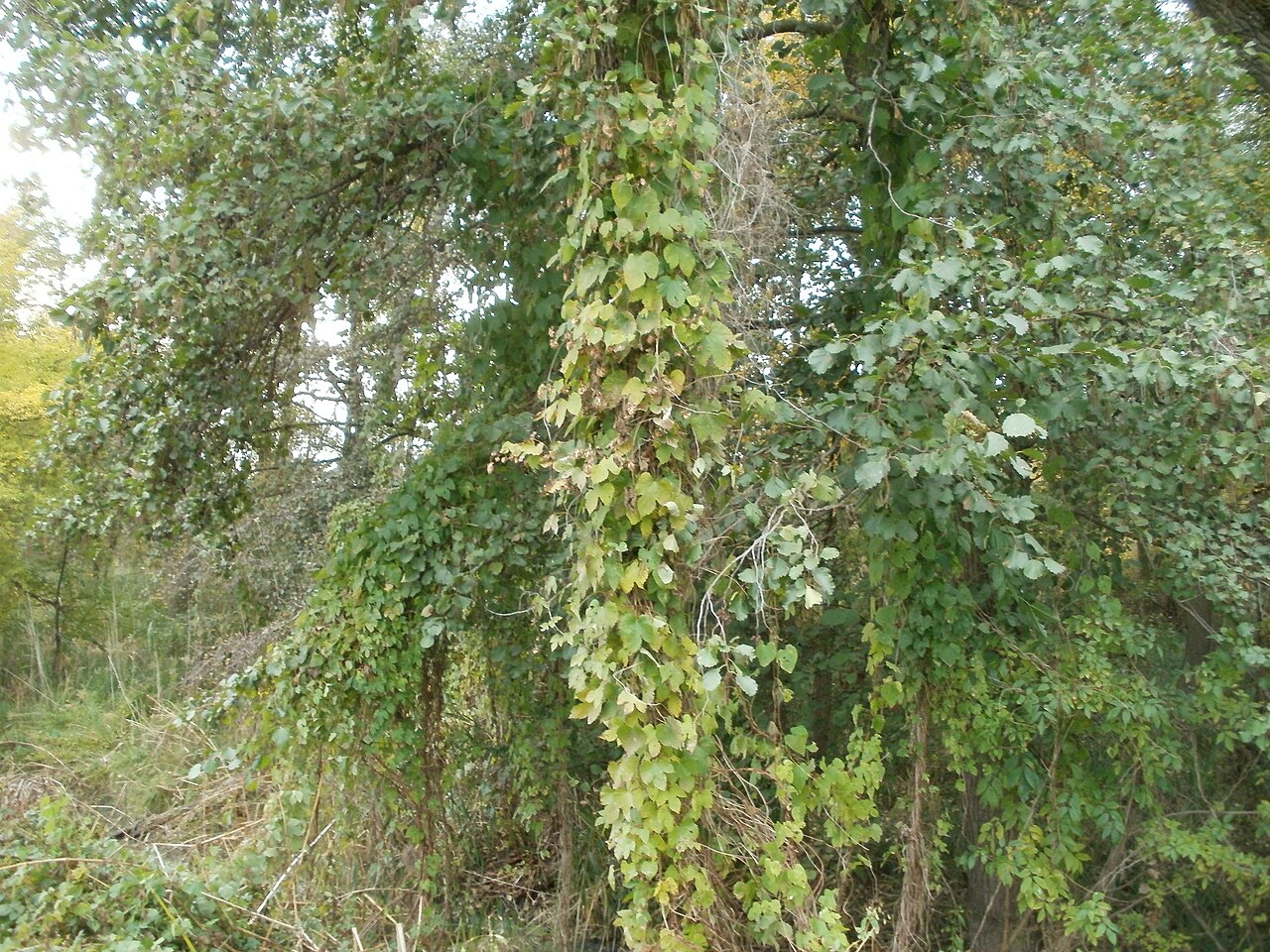
Humulus is a genus of twining herbaceous perennial climbers in the family Cannabaceae, comprising three species native across temperate regions of the Northern Hemisphere. The genus includes H. lupulus, the common hop grown for brewing, and H. japonicus, an annual climber from East Asia. Plants produce annual climbing stems called bines that twist clockwise around supports and reach 15-25 feet (4.6-7.6 m) in a single season before dying back to a perennial rootstock. Stems carry downward-pointing hooked hairs that grip surfaces and can abrade skin. Leaves are opposite, 3-6 inches (8-15 cm) long, and palmately lobed with three to five coarsely toothed lobes, though upper leaves may be unlobed. Most species are dioecious, with male and female flowers on separate plants. Female plants bear cone-like clusters called strobiles, 0.5-1.5 inches (1.3-3.8 cm) long, formed of overlapping papery bracts that hold yellow lupulin glands. Male plants carry loose branched panicles of small greenish flowers. The genus spreads by rhizomes and can form dense colonies where unmanaged. Bines die to the ground each autumn, and growth resumes from the crown the following spring. Cold tolerance varies across the genus, with H. lupulus hardy to USDA zone 3 and the annual species tolerating only a single frost-free season.
Native Range
Humulus occurs naturally across temperate Europe, Asia, and North America. H. lupulus ranges through Eurasia and North America, while H. japonicus is native to East Asia. The genus is absent from tropical lowlands and the Southern Hemisphere except where introduced.Suggested Uses
Humulus is grown on trellises, arbors, and fences as a fast seasonal screen. H. lupulus is cultivated commercially for its strobiles, used in brewing and herbal preparations. Golden-leaved selections are planted in gardens for summer cover.How to Identify
Appearance
Size & Dimensions
Height15' - 25'
Width/Spread3' - 6'
Bloom Information
Flowering occurs in summer, typically July to August in temperate zones. Male panicles and female strobiles appear on separate plants once bines reach full length. Strobiles ripen by late summer to early autumn, turning papery and golden as lupulin develops.
Detailed Descriptions
Foliage Description
greenGrowing Conditions
Sun Requirements
Requires 6-12 hours of direct sunlight daily
• Full Sun: 6+ hours of direct sunlight
• Partial Shade: 3-6 hours of direct sunlight
• Full Shade: Less than 3 hours of direct sunlight
Care & Maintenance
Care Guide
Most Humulus species grow in full sun and deep, moisture-retentive soil with a pH near 6.0 to 7.5. Bines climb quickly and need sturdy vertical supports of 12-20 feet (3.7-6.1 m). Plants draw heavily on water and nutrients during rapid summer growth, and dry soil reduces strobile production. Rhizomes spread laterally and may need confinement in small gardens. H. lupulus tolerates winters to USDA zone 3, while the annual species complete their cycle in one frost-free season. Downy mildew and two-spotted spider mite are frequent problems in humid or crowded plantings.Pruning
Cut spent bines to ground level after they die back in autumn or late winter. In spring, thin emerging shoots to three or four healthy bines per support to direct growth. Lateral sideshoots can be trimmed in midsummer to concentrate strobile formation.Pruning Schedule
Prune: March & November
fallearly spring