Humulus, Genus, lupulus, Species, 'Aureus', Cultivar,
- Genus & species
- Cultivar
golden hop
Northern Hemisphere (Europe, W Asia, North America; hedgerows, riverbanks)
Overview
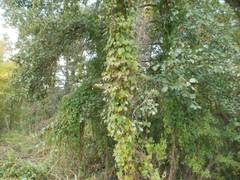
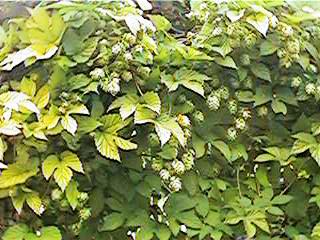
Humulus lupulus 'Aureus' is a vigorous twining herbaceous perennial vine reaching 15–20 feet (4.5–6 m) tall in a single growing season, dying back to the ground each winter and regrowing from the rootstock in spring. The cultivar is the golden-leaved selection of common hop, carrying deeply 3- to 5-lobed coarsely toothed leaves 4–6 inches (10–15 cm) across in bright golden-yellow to chartreuse; the gold color runs most intense in full sun positions and shifts toward chartreuse-green in shade. The stems (technically called bines, not vines, because hops climb by twining rather than by tendrils) wind clockwise around supports using stiff hooked hairs along the stem surface rather than the tendrils typical of most climbing plants. The species is dioecious—male and female flowers occur on separate plants—and 'Aureus' is typically propagated and sold as female stock. Female plants produce papery cone-like strobiles (hops) 1–2 inches (2.5–5 cm) long in late summer, aromatic when crushed with the resinous bitter scent familiar from brewing. Growth rate runs very fast: 1–2 feet (30–60 cm) of bine extension per week in peak summer. Hardy to zone 4.
Native Range
Humulus lupulus is native across the full Northern Hemisphere temperate zone—Europe, western Asia, and North America—growing in hedgerows, riverbanks, forest edges, and disturbed moist ground. The species has been in commercial cultivation for brewing since at least the 9th century in central Europe, and the golden-leaved form 'Aureus' has been grown ornamentally in European gardens since the 19th century. The cultivar carries the same hop chemistry as the green-leaved species and is functional for small-scale brewing use in addition to ornamental planting.Suggested Uses
Trained on arbors, pergolas, trellises, and fences for seasonal screening at one plant per 6–8 feet (1.8–2.4 m) of structure length in zone-4-and-warmer gardens. The golden foliage holds color from spring through fall and supplies vertical color in positions where a woody flowering vine would take years to establish. The very fast growth (15–20 feet / 4.5–6 m per season) produces quick coverage but requires annual hard cutback—unmanaged plants accumulate dead bines that trap debris and look unkempt by the following spring. Aggressive rhizome spread makes the cultivar a poor fit for small tightly planted gardens without physical root barriers or containment. Unsupported ground positions (where the bines sprawl and tangle), small gardens without containment options, and planting adjacent to cultivated neighboring properties where rhizome escape is unacceptable are poor fits for the cultivar.How to Identify
Appearance
Size & Dimensions
Height15' - 20'
Width/Spread6' - 10'
Bloom Information
Inconspicuous greenish flowers open in July. Female plants produce papery cone-like strobiles (hops) 1–2 inches (2.5–5 cm) long from August through September, ripening to pale green-gold. The strobiles carry a resinous aromatic scent when crushed and persist on the bines into fall until the first hard frost kills the top growth.
Detailed Descriptions
Foliage Description
Bright golden-yellow to chartreuse; deeply 3-5-lobed; coarsely toothed; 4-6 inches; gold intensifies in sunGrowing Conditions
Sun Requirements
Requires 4-10 hours of direct sunlight daily
• Full Sun: 6+ hours of direct sunlight
• Partial Shade: 3-6 hours of direct sunlight
• Full Shade: Less than 3 hours of direct sunlight
Care & Maintenance
Care Guide
Full sun to partial shade in average to moist well-drained soil matches the species' cultivation needs. Hardy to zone 4 (−30°F / −34°C). Full sun drives the most intense gold foliage color; shade positions shift the color toward chartreuse-green and reduce the ornamental value. A sturdy support structure matters because the bines reach 15–20 feet (4.5–6 m) in a single season and the summer foliage mass carries substantial weight—light wire trellises and thin strings fail under the load. All top growth is cut to the ground in late fall or early spring. The cultivar spreads aggressively by underground rhizomes, and the rhizomes send up new shoots several feet from the original crown in established plantings, so container cultivation, root barriers, or active rhizome management is required in small gardens.Pruning
All top growth is cut to the ground in late fall after the first hard frost has killed the bines, or alternatively in early spring before new growth emerges. New bines emerge from the rootstock each spring and reach full 15–20 foot height by midsummer. Thinning emerging shoots to 3–6 strongest bines concentrates the plant's growth into a smaller number of vigorous bines and improves ornamental display. Rhizome spread is managed by removing suckers or installing physical root barriers 12–18 inches deep around the planting area.Pruning Schedule
Prune: March & November
fallearly spring