Hoya, Genus, multiflora, Species, (variegated), Subspecies,
- Genus & species
- Subspecies
variegated Hoya multiflora
Southeast Asia (Thailand, Malaysia, Indonesia, Philippines)
Overview
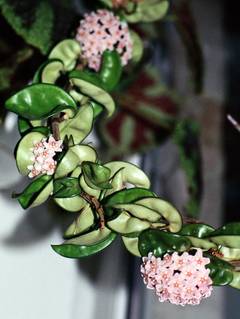
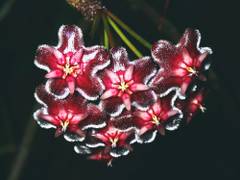
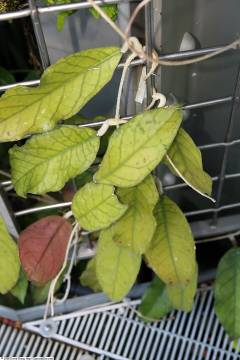
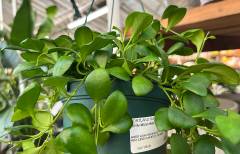
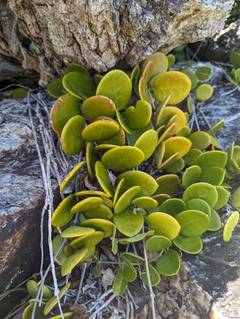
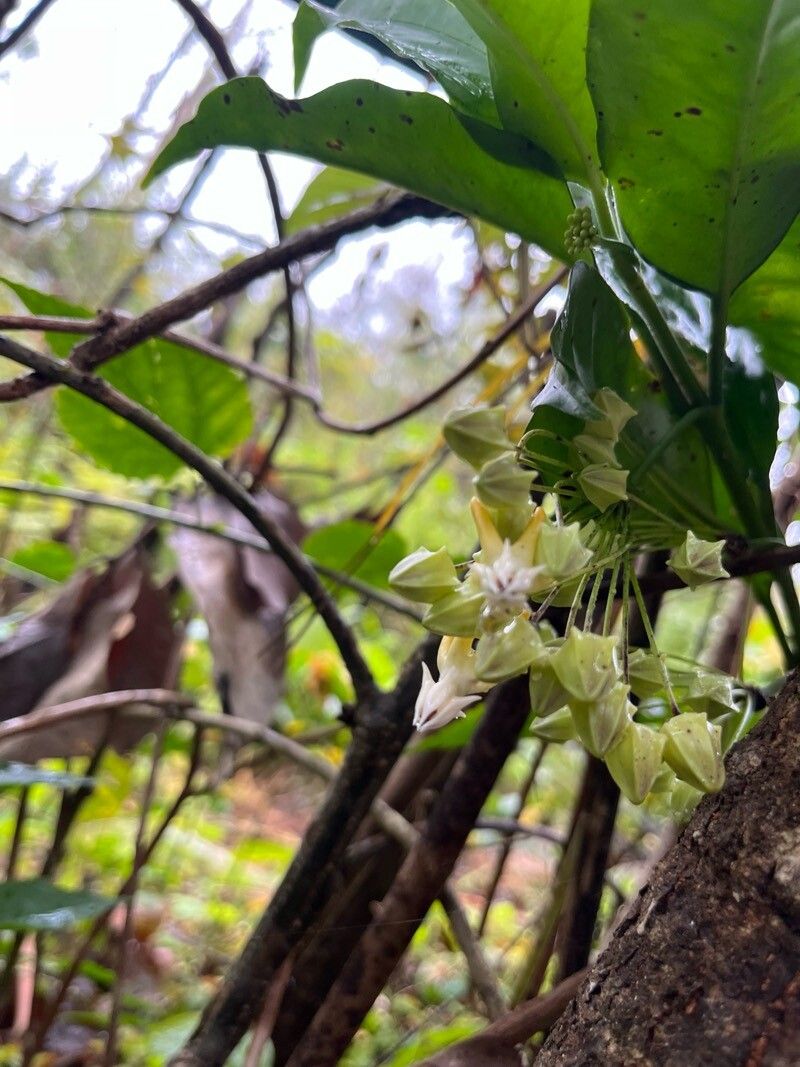
Hoya multiflora (variegated) is a tropical evergreen shrubby vine in the Apocynaceae (subfamily Asclepiadoideae), grown indoors or in tropical landscapes for its swept-back yellow-and-white waxy flowers. Mature plants reach 24–48 inches (60–120 cm) tall and 18–30 inches (45–75 cm) wide as a self-supporting shrub or longer when allowed to vine. Leaves are oblong-elliptic, 4–6 inches (10–15 cm) long and 1.5–2.5 inches (4–6 cm) wide, leathery, and held in opposite pairs along semi-woody stems. The variegated form carries irregular cream to pale-yellow streaks and sectors along leaf margins and across the lamina; variegation is unstable and individual stems may revert to plain green if internal sectors push out the variegated tissue. Flowers form in dense umbels of 25–40 individual stars, each 0.5–0.7 inch (12–18 mm) long, with white reflexed corollas and pale-yellow coronas that point sharply away from the central stem; the swept silhouette gives the plant its common name. Bloom occurs in repeating flushes of 3–6 weeks during warm months, with the same peduncle reused across multiple cycles, so peduncles are not removed after bloom. The species is non-fragrant or only faintly scented, separating it from heavily-scented Hoya species such as H. carnosa.
Native Range
Hoya multiflora is native to Southeast Asia, ranging from southern Thailand and peninsular Malaysia through Indonesia (Sumatra, Java, Borneo) to the Philippines, growing as an epiphyte or low shrub in lowland tropical rainforests at 100–800 m (330–2,600 ft) elevation. The variegated form is a horticultural sport propagated by stem cuttings rather than seed.Suggested Uses
Used as a hanging-basket or trellised houseplant in bright bathrooms, kitchens, and east-facing windows where humidity stays above 50%. Pairs in collections with other warm-growing epiphytes such as Hoya carnosa, Aeschynanthus, and small Anthurium. Spaced one plant per 6–8 inch (15–20 cm) pot, the variegated form reaches blooming size in 18–24 months from a rooted cutting.How to Identify
Appearance
Size & Dimensions
Height2' - 4'
Width/Spread1'6" - 2'6"
Bloom Information
Flowering begins in late spring (May–June) in indoor plants and continues in flushes of 3–6 weeks through summer and into early fall, with 4–8 individual umbels open per flush on a mature plant. Each umbel lasts 7–14 days before the individual flowers drop while the peduncle (spur) remains for reuse. Plants grown in temperatures above 70°F (21°C) and bright indirect light flower more reliably than those in cooler or shadier conditions, and bloom often pauses during winter dormancy below 65°F (18°C).
Detailed Descriptions
Foliage Description
green with cream to pale-yellow variegationGrowing Conditions
Sun Requirements
Needs bright indirect light. Keep it out of direct sun, which can scorch the leaves.
• Bright indirect light: a bright spot near a window, with no direct sun on the leaves
Care & Maintenance
Care Guide
Bright indirect light of 10,000–20,000 lux suits this species, with 1–2 hours of early morning direct sun acceptable; under 8,000 lux the variegated form etiolates and reverts toward solid green. Temperatures of 65–85°F (18–29°C) are required, with leaf drop starting at 50°F (10°C). A coarse epiphyte mix of orchid bark, perlite, and coco chips (3:1:1) drains within 30 seconds of watering and matches the rooting habit of the wild plant. Watering occurs when the top half of the pot dries; root rot in waterlogged medium is the main cause of plant loss. Balanced or low-nitrogen liquid fertilizer at half strength every 3–4 weeks during active growth (April–September) supports flowering; high-nitrogen feed promotes leaves at the expense of flowers. Spent peduncles are not removed because the plant reflowers from the same spur for several seasons.Pruning
Stems are tip-pruned only when length becomes unmanageable, since vegetative growing tips are where new peduncles form on this species rather than on existing wood. Damaged or scorched leaves are cut at the petiole using a clean blade. The reused flowering spur is left in place after bloom; cutting it removes future bloom from that node entirely.Pruning Schedule
Prune: February–March
winterearly spring
Container Growing
Suitable for container growing
Minimum container size: 1 gallons