Image 1 of 6
1 / 6
Plant Reference
Hoya, Genus, carnosa, Species, 'Compacta', Cultivar,
- Genus & species
- Cultivar
hindu rope plant
Garden cultivar; species native to East and Southeast Asia from southern China and Taiwan through Vietnam, Thailand, and the Malay Peninsula to Indonesia and the Philippines
Overview
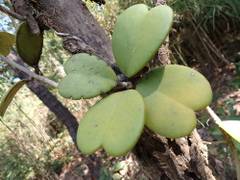
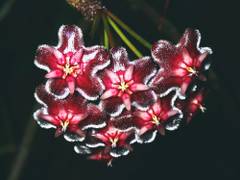
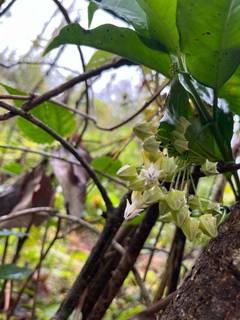
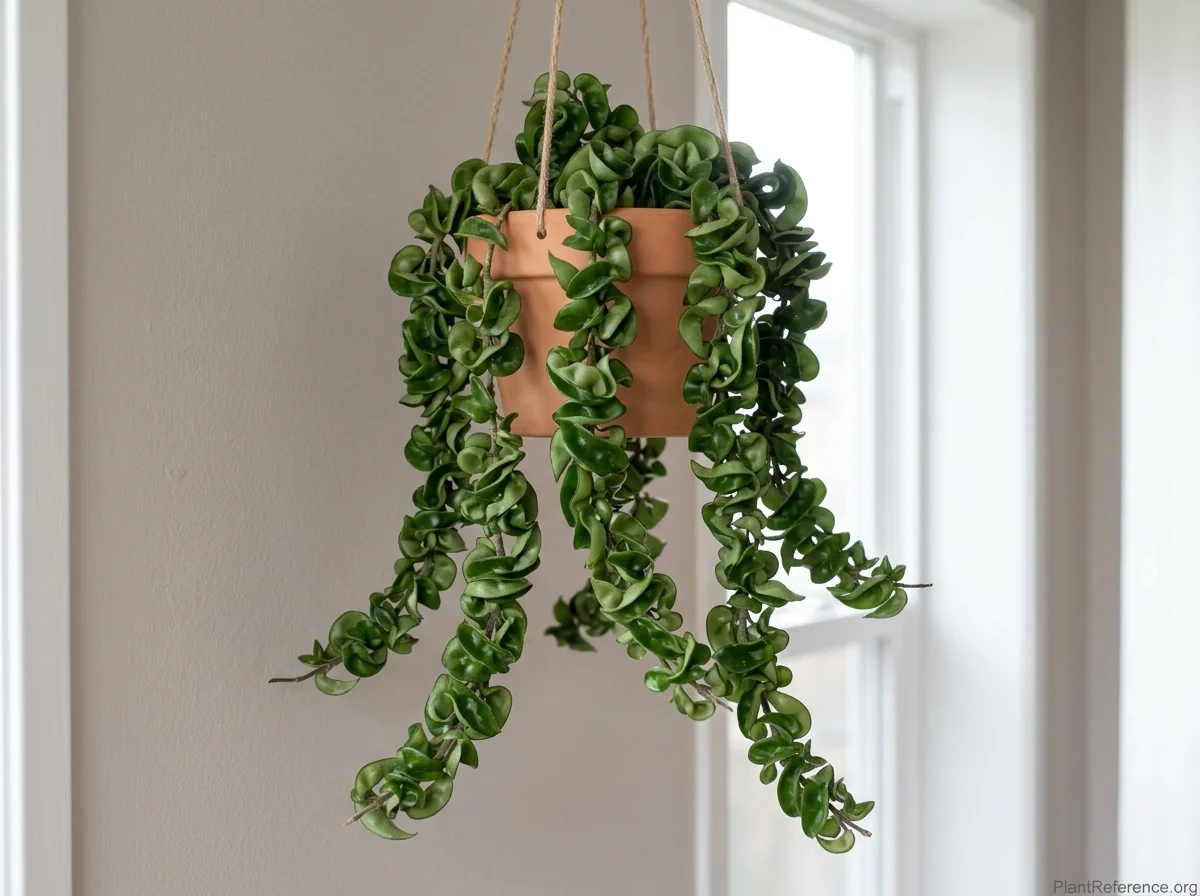
Hoya carnosa 'Compacta' is the Hindu rope plant — a curl-leaved cultivar of the wax plant grown almost exclusively as an indoor specimen, with vines reaching 24–60 inches (60–150 cm) long in container culture. The cultivar carries a stable mutation that twists, curls, and folds each leaf into a tight irregular bunched shape so dense that the leaves appear stacked or piled along the stem rather than arranged flat. Each leaf is thick, succulent, and 1–1.5 inches (2.5–4 cm) across when measured along the curl, with green coloration in the species-form sport and green-with-cream-margin coloration in the variegated 'Krinkle Kurl' / 'Compacta Variegata' sport. The growth rate is extremely slow at 4–8 inches (10–20 cm) of new vine length per year, compared with 12–24 inches (30–60 cm) per year for the standard H. carnosa, and a mature plant of 36 inches (90 cm) of vine takes 5–8 years to develop. The plant climbs by twining stems and short adventitious rootlets but is more often grown as a slow trailing specimen in hanging baskets given the dense leaf curl. Mature container specimens 4–6 years old produce pendant clusters of 15–30 small star-shaped pink-to-pale-red flowers with a darker pink central crown structure on short pedicels (peduncles), fragrant at night with a sweet caramel-and-honey scent; flowering occurs on the same peduncle year after year, so cutting off the stalks after bloom prevents the next year's flowers. Cultural failure modes match the parent species: over-watering (root rot), insufficient light (loss of variegation in the cream-margined sports, refusal to flower in all sports), and refusal to flower from too-frequent repotting. Non-toxic to dogs and cats and on the ASPCA safe list.
Native Range
The species Hoya carnosa is native to East and Southeast Asia, with a range from southern China and Taiwan through Vietnam, Thailand, and the Malay Peninsula to Indonesia and the Philippines, where it grows as a climbing epiphyte on tree trunks and branches in lowland and lower montane rainforest. H. carnosa 'Compacta' is a curl-leaved garden cultivar with no wild counterpart.Suggested Uses
Used as a slow trailing or climbing indoor specimen for hanging baskets and shelves in containers of 1–3 gallons (4–11 liters). The dense leaf curl and slow growth suit households that want a plant requiring infrequent watering and minimal repotting. Combines with smaller foliage houseplants such as Pilea peperomioides and Pothos cultivars for layered indoor groupings. Suitable for households with cats and dogs that browse foliage due to non-toxic status (on the ASPCA safe list).How to Identify
Appearance
Size & Dimensions
Height2' - 5'
Width/Spread8" - 1'6"
Bloom Information
Mature container specimens 4–6 years old flower in spring or summer, producing pendant clusters of 15–30 small star-shaped pink-to-pale-red flowers with a darker pink central crown structure on short pedicels (peduncles). Flowers are fragrant at night with a sweet caramel-and-honey scent. Flowering occurs on the same peduncle year after year — removing peduncles after bloom prevents the next year's flowers.
Detailed Descriptions
Flower Description
Pendant clusters of 15-30 small star-shaped pink-to-pale-red flowers with a darker pink central crown structureFoliage Description
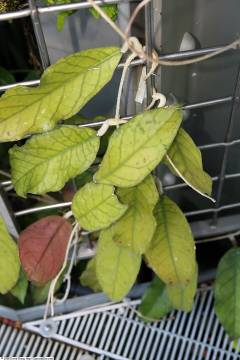
Twisted, curled, and folded thick succulent leaves 1-1.5 inches (2.5-4 cm) across in tight irregular bunches stacked along the stem; green in the species-form sport and green-with-cream-margin in the variegated sportGrowing Conditions
Sun Requirements
Needs bright indirect light. Keep it out of direct sun, which can scorch the leaves.
• Bright indirect light: a bright spot near a window, with no direct sun on the leaves
Care & Maintenance
Care Guide
Place in bright indirect light at 200–500 foot-candles for stable growth and reliable flowering; cream-margined sports lose variegation below 100 foot-candles, and direct sun above 4 hours scorches the curled leaves. Water when the soil is fully dry, typically every 2–4 weeks indoors; the succulent leaves store water and the plant tolerates drought far better than over-watering. Soil mix should be free-draining and chunky (orchid bark, perlite, and peat-based potting mix at roughly 40–30–30 percent ratios). Skip frequent repotting; the plant flowers more reliably when slightly root-bound and may take 2–3 years to flower after a repot. Do not cut off the short flower pedicels (peduncles) after bloom — the plant flowers on the same peduncle year after year, and removing them prevents the next year's flowers. Feed at half the label rate with a balanced liquid fertilizer monthly during active growth (spring through early autumn) and skip feeding in winter.Pruning
Cut just above a node with clean pruners to encourage branching or for cuttings; nodes root in moist potting mix or perlite in 6–10 weeks. The leaf-curl mutation is stable on cuttings, so propagation produces matching offspring. Do not remove the short flower peduncles after bloom — the plant flowers on the same peduncle year after year.Container Growing
Suitable for container growing
Minimum container size: 1 gallons