Hoya, Genus, heuschkeliana, Species, (variegated), Subspecies,
- Genus & species
- Subspecies
Hoya heuschkeliana variegated
Lowland tropical forests of the Philippines (Luzon and Mindanao)
Overview
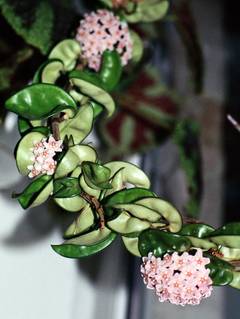
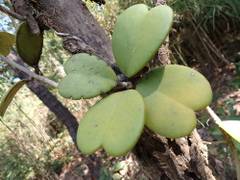
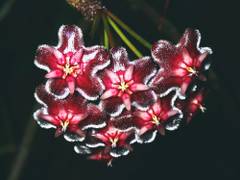
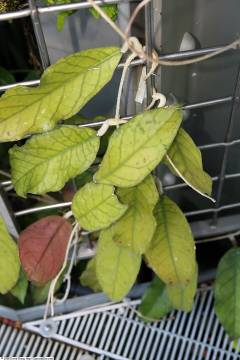
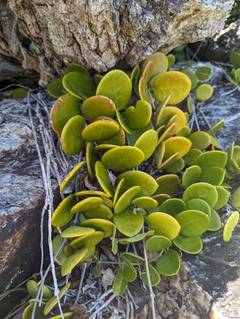
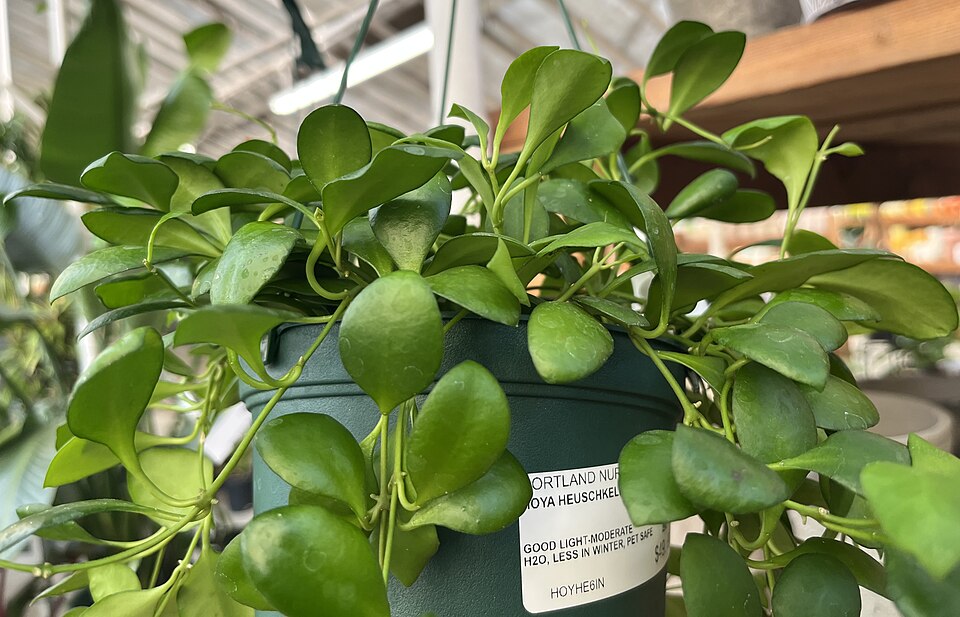
Variegated Hoya heuschkeliana is a small evergreen vining epiphyte producing thin trailing or twining stems reaching 3-5 feet (90-150 cm) long indoors, with potential to extend 10-15 feet (3-4.5 m) in greenhouse cultivation. Leaves are 0.5-1.5 inches (1.3-4 cm) long and 0.3-0.8 inch (0.8-2 cm) wide, ovate to elliptic, fleshy and slightly succulent with slightly recurved margins. Variegated forms display irregular cream to yellow patches, marginal bands, or sectoral stripes covering 20-50 percent of each leaf surface; new leaves often emerge with pink flushing under bright light. Internodes measure 1-3 inches (2.5-7.5 cm) on slender pencil-thin stems. Flowers appear in dense umbels of 8-15 small bell-shaped blooms each measuring 0.2-0.3 inch (5-8 mm) across, pale yellow to pale pink with a sweet caramel fragrance. Inflorescences emerge from short woody peduncles that persist between blooming cycles and reflower for several years from the same site. Plants flower 2-4 times per year under stable conditions above 65°F (18°C). Variegated cultivars produce 30-50 percent fewer flowers than solid-green H. heuschkeliana due to reduced chlorophyll. Foliage drops below 50°F (10°C).
Native Range
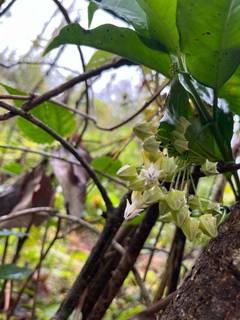
Native to lowland tropical forests of the Philippines, particularly Luzon and Mindanao islands, at elevations from sea level to 2,500 feet (760 m), where H. heuschkeliana grows as an epiphyte on tree trunks and branches under filtered shade and high humidity.Suggested Uses
Grown indoors as a hanging basket specimen in 4-6 inch (10-15 cm) pots, or trained on small trellises or wire hoops up to 2-3 feet (60-90 cm) tall. Used in terrariums, greenhouses, and warm bathrooms where humidity exceeds 50 percent and temperatures remain above 60°F (15°C). Cultivated by hoya collectors for the small bell-shaped flowers and caramel fragrance; the variegated form is sold in the specialty houseplant trade.How to Identify
Appearance
Size & Dimensions
Height3' - 5'
Width/Spread1' - 2'
Bloom Information
Flowers 2-4 times per year under indoor conditions of 65-80°F (18-27°C) with bright indirect light. Each bloom cycle produces umbels lasting 5-10 days, with sweet caramel fragrance most concentrated in the evening hours. Flowering ceases below 60°F (15°C) and during winter dormancy in cooler interiors.
Detailed Descriptions
Flower Description
Pale yellow to pale pinkFoliage Description
Green with cream to yellow variegation, pink-flushed new growthGrowing Conditions
Sun Requirements
Requires 2-6 hours of direct sunlight daily
• Full Sun: 6+ hours of direct sunlight
• Partial Shade: 3-6 hours of direct sunlight
• Full Shade: Less than 3 hours of direct sunlight
Care & Maintenance
Care Guide
Water when the top 1-2 inches (2.5-5 cm) of soil dries; succulent leaves store water and overwatering causes stem and root rot within 7-14 days. Maintain bright indirect light at 1,500-3,000 foot-candles to keep variegation and stimulate flowering; light below 1,000 foot-candles reduces flowering and may cause variegation reversion. Hold temperatures of 65-85°F (18-29°C) and humidity above 50 percent; foliage shrivels at humidity below 30 percent. Fertilize monthly with balanced 20-20-20 at half strength during active growth from spring through fall; suspend feeding during winter. Repot every 3-4 years into chunky orchid bark mix; the shallow root system suits small pots that constrain roots and encourage flowering. Mealybugs and scale colonize stems and leaves in dry conditions.Pruning
Cut stems back to a node only when controlling spread. Vining stems below the woody peduncles are retained as flowers form on the same peduncles year after year. Remove yellowing or damaged leaves at the petiole base year-round. Stem cuttings 4-6 inches (10-15 cm) long with 2-3 leaf pairs root in moist sphagnum or perlite within 4-8 weeks under bottom heat of 75-80°F (24-27°C).Container Growing
Suitable for container growing
Minimum container size: 1 gallons