Overview
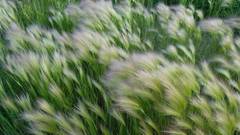
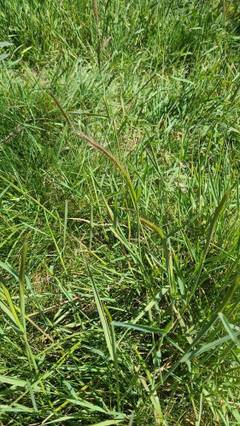
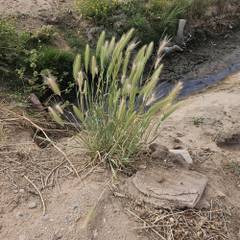
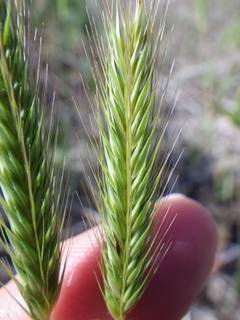
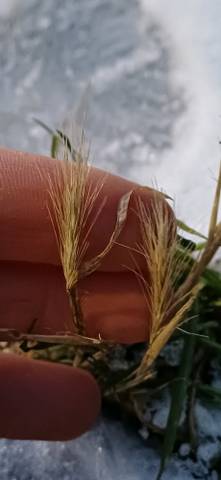
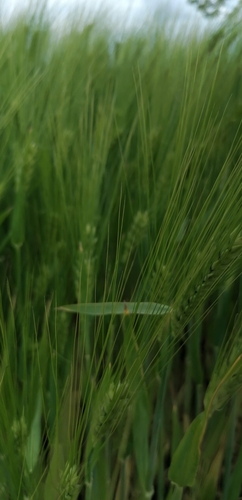
Hordeum vulgare is an annual cereal grass grown worldwide for grain, forming upright tufts of stems 24-48 inches (60-120 cm) tall topped by a dense, bristly flower and seed spike. The hollow, jointed stems carry flat, blue-green leaf blades 4-10 inches (10-25 cm) long with clasping bases and small ear-like lobes at the junction. Each spike bears rows of florets, every grain tipped with a long, stiff awn that can reach 4-6 inches (10-15 cm), giving the ripe ear a bearded look; awnless and hooded forms also exist. Grown from sown seed, it germinates quickly, produces tillers, flowers, and ripens within a single season, turning from green to gold as the grain fills. Two-row and six-row types differ in how many florets per node set grain, affecting yield and use for malting or feed. The crop suits cool, temperate growing seasons and tolerates drier, more saline, and more alkaline soils than wheat, though it lodges in rich, wet ground and is prone to powdery mildew, rusts, and aphids. After harvest the plant dies, and the field is resown each season. It has been cultivated as a grain crop for over 10,000 years.
Native Range
Hordeum vulgare was domesticated from wild barley (Hordeum vulgare ssp. spontaneum) in the Fertile Crescent of the Near East. It is now grown as a crop across temperate and subtropical regions worldwide and is not truly wild outside its area of origin.Suggested Uses
Grown agriculturally for malting, animal feed, and food grains, and as a cover or green-manure crop sown at field rates. In gardens it is grown in blocks for ripe ears, as a winter cover crop, and for cut-and-dried arrangements. The awned ears are also used in dried floral work.How to Identify
Appearance
Size & Dimensions
Height2' - 4'
Width/Spread8" - 1'
Bloom Information
Barley flowers in late spring or summer depending on whether it is sown in autumn or spring, with pollination often occurring within the partly closed spike. Flowering is brief, followed by grain filling over several weeks. The crop ripens to gold and is harvested in summer.
Detailed Descriptions
Flower Description
Green to goldFoliage Description
Blue-greenGrowing Conditions
Sun Requirements
Requires 6-12 hours of direct sunlight daily
• Full Sun: 6+ hours of direct sunlight
• Partial Shade: 3-6 hours of direct sunlight
• Full Shade: Less than 3 hours of direct sunlight
Water & Climate
Water Needs
Drought Tolerance
Drought tolerant when established
Care & Maintenance
Care Guide
Grow in full sun in well-drained, fertile to moderately fertile soil with a near-neutral to slightly alkaline pH; barley tolerates drier and more alkaline ground than most cereals. Sow seed in autumn for winter barley or in early spring for spring barley, drilling into a firm, weed-free seedbed. Water is rarely needed in suitable climates, though drought during grain fill lowers yield, and overly rich, wet soil causes the stems to lodge. Feed with nitrogen according to the intended use, as excess nitrogen reduces malting quality and promotes lodging. Watch for powdery mildew, rusts, and aphids, which reduce yield in dense, humid stands. As an annual, it completes its cycle in one season and is resown each year.Pruning
No pruning is carried out on this annual grain crop. The whole plant is cut at harvest once the grain ripens and dries. Straw left after harvest is removed or incorporated into the soil.Container Growing
Suitable for container growing
Minimum container size: 3 gallons
Toxicity
Non-toxicPlanting Guide
Planting Methods & Timing
Planting Method
direct sow
Direct Sow Timing
Autumn for winter barley or early spring for spring barley
Days to Maturity
90–120 days
Plant Spacing
1 inches