Hordeum, Genus, jubatum, Species,
- Genus & species
foxtail barley
North America and northern Asia; grasslands, roadsides, alkaline flats, irrigation ditches, and disturbed ground from sea level to approximately 9,000 feet (2,700 m).
Overview
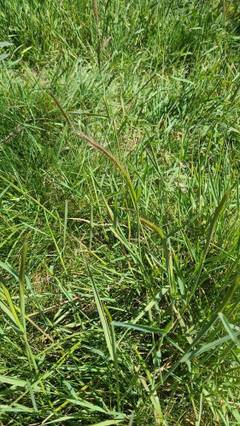
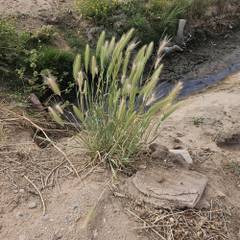
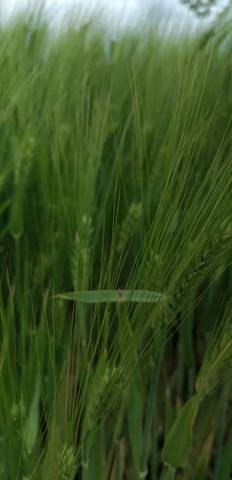
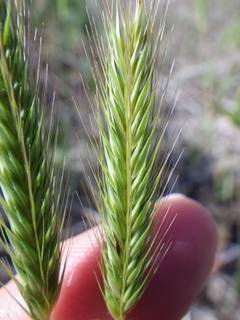
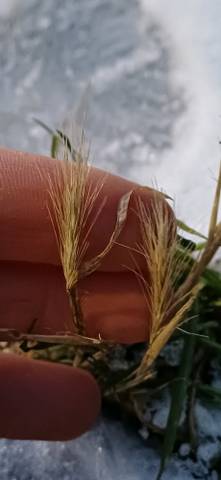
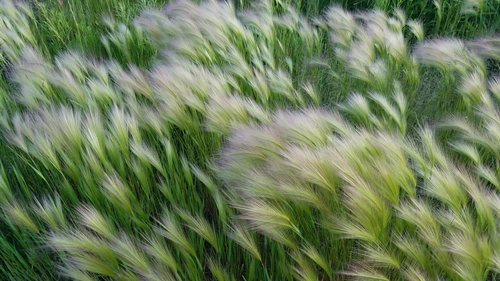
Hordeum jubatum is a short-lived tufted perennial grass (often behaving as a winter annual) reaching 12-24 inches (30-60 cm) tall and 6-12 inches (15-30 cm) wide. Leaf blades are 2-5 inches (5-13 cm) long and 0.1-0.2 inch (2-5 mm) wide, flat, rough on both surfaces, with small auricles at the junction of blade and sheath. The inflorescence is a nodding bushy spike 2-4 inches (5-10 cm) long with slender awns 1-3 inches (2.5-8 cm) long that spread outward in all directions, producing the bottlebrush or foxtail appearance that gives the common names. Awns are barbed along the shaft and have a silky sheen when backlit. Spikelets occur in groups of three at each node, with only the central spikelet fertile. At maturity, the spike disarticulates (breaks apart) at each node, and the awned spikelet clusters are dispersed by wind, water, and attachment to animal fur. Barbed awns penetrate the mouth, gums, tongue, eyes, and skin of grazing animals and cause ulceration, abscess formation, and in some cases eye damage, so harvested hay containing mature foxtail barley is unsuitable as livestock forage. A single plant produces several thousand awned spikelets. Hardy in USDA zones 3-9 (-40°F / -40°C). The species tolerates alkaline and saline soils and is most competitive on nutrient-poor, saline, or compacted ground.
Native Range
Hordeum jubatum is native to North America and northern Asia, where it grows in grasslands, roadsides, alkaline flats, irrigation ditches, and disturbed ground from sea level to approximately 9,000 feet (2,700 m). The species is present in all 50 U.S. states and all Canadian provinces and is most abundant in the western and central United States.Suggested Uses
The species is used in grass identification courses for teaching barley-type spikelet morphology (three spikelets per node with only the central fertile) and for teaching seed dispersal by mechanical attachment. The barbed awn structure is used in teaching injury mechanisms in livestock and in wildlife. The species is included in saline-tolerant plant identification for rangeland ecologists and is studied in grassland restoration as an indicator of alkaline, compacted, or nutrient-poor soil conditions.How to Identify
Appearance
Size & Dimensions
Height1' - 2'
Width/Spread6" - 1'
Bloom Information
Nodding bushy spikes emerge over a 2-week period from May through July, with peak flowering in the Pacific Northwest in June. Plants are wind-pollinated. Spikes shatter 3-4 weeks after maturity beginning in July; mature awns catch wind and light, producing a silvery-golden shimmer across stands.
Detailed Descriptions
Flower Description
Greenish to purplish, becoming golden-tan at maturity; inflorescences are nodding bushy spikes 2-4 inches (5-10 cm) long with slender awns 1-3 inches (2.5-8 cm) long spreading outward in all directionsFoliage Description
Green to gray-green; flat leaf blades 2-5 inches (5-13 cm) long and 0.1-0.2 inch (2-5 mm) wide; rough on both surfaces; small auricles clasp the stem at the junction of blade and sheathGrowing Conditions
Sun Requirements
Requires 6-12 hours of direct sunlight daily
• Full Sun: 6+ hours of direct sunlight
• Partial Shade: 3-6 hours of direct sunlight
• Full Shade: Less than 3 hours of direct sunlight