Hieracium, Genus, caespitosum, Species,
- Genus & species
yellow hawkweed
Overview
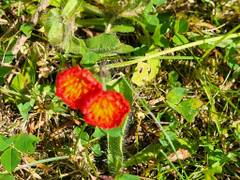
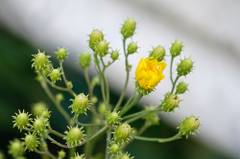
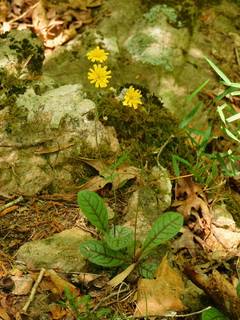
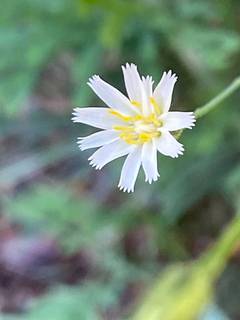
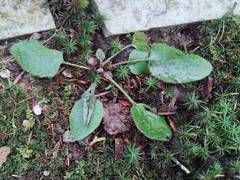
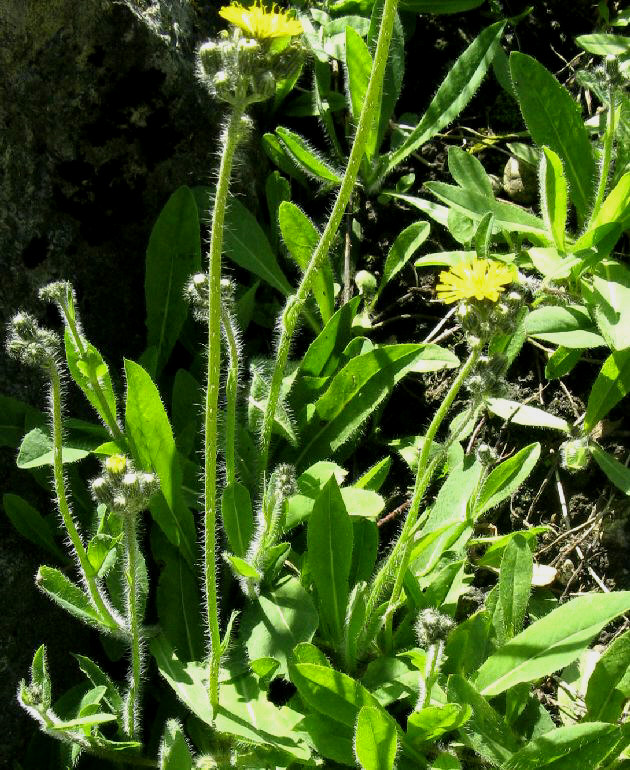
Hieracium caespitosum is a stoloniferous perennial in the family Asteraceae reaching 8-30 inches (20-75 cm) tall and 6-18 inches (15-45 cm) wide, forming dense colonies via above-ground stolons and short rhizomes. Plants form a basal rosette of oblanceolate leaves 2-8 inches (5-20 cm) long, covered densely in long stiff hairs on both surfaces. Flowering scapes are erect, carrying 1-3 reduced leaves, covered in dark glandular and stellate hairs, and topped by a compact to somewhat open cluster of 5-30 flower heads. Flower heads are 0.4-0.6 inch (10-15 mm) across, composed entirely of yellow ligulate florets. All plant parts exude milky white latex when broken. A single scape produces 500-3,000 seeds with wind dispersal by the pappus. Stolons radiate from the rosette and produce daughter rosettes that establish dense mat-forming colonies that exclude other vegetation. Reproduction is primarily apomictic. The species is listed as a Class B noxious weed in Washington State. The species often co-occurs with H. aurantiacum (orange hawkweed) in invaded meadows and pastures and hybridizes with it to produce populations with intermediate flower colors.
Native Range
Hieracium caespitosum is native to Europe, in meadows, grasslands, and roadsides from sea level to approximately 6,500 feet (2,000 m). Introduced to North America as a garden plant and as a contaminant of grass seed. Naturalized in the Pacific Northwest, northeastern United States, and eastern Canada, particularly in mountain meadows, pastures, lawns, and roadsides.Suggested Uses
Used in noxious-weed identification training alongside H. aurantiacum for teaching the hawkweed species complex. The apomictic reproduction and stoloniferous colony formation are taught in weed-biology courses. Studied in invasion ecology of mountain meadows and in hybridization dynamics with H. aurantiacum.How to Identify
Appearance
Size & Dimensions
Height8" - 2'6"
Width/Spread6" - 1'6"
Bloom Information
Compact to somewhat open clusters of 5-30 yellow ligulate flower heads 0.4-0.6 inch (10-15 mm) across on dark-haired scapes, borne May through July over 1-3 weeks per scape. In the Pacific Northwest, peak bloom falls in June. Seeds produced apomictically mature 2-3 weeks after head opening. Stolons produce daughter rosettes from spring through fall, independent of flowering.
Detailed Descriptions
Flower Description
Yellow; ligulate flower heads 0.4-0.6 inch (10-15 mm); borne in clusters of 5-30 on dark-haired scapes; May-JulyFoliage Description
Medium green; oblanceolate 2-8 inches (5-20 cm); covered densely in long stiff hairs on both surfaces; basal rosette with occasional reduced stem leaves; deciduousGrowing Conditions
Sun Requirements
Requires 4-10 hours of direct sunlight daily
• Full Sun: 6+ hours of direct sunlight
• Partial Shade: 3-6 hours of direct sunlight
• Full Shade: Less than 3 hours of direct sunlight