Hieracium, Genus, aurantiacum, Species,
- Genus & species
orange hawkweed
Overview
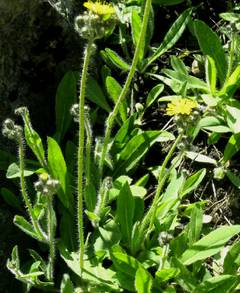
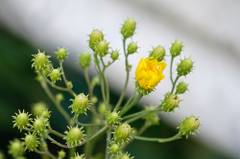
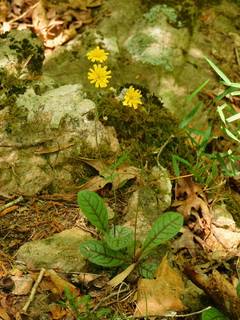
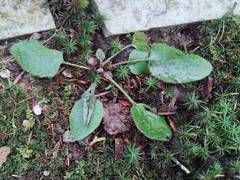
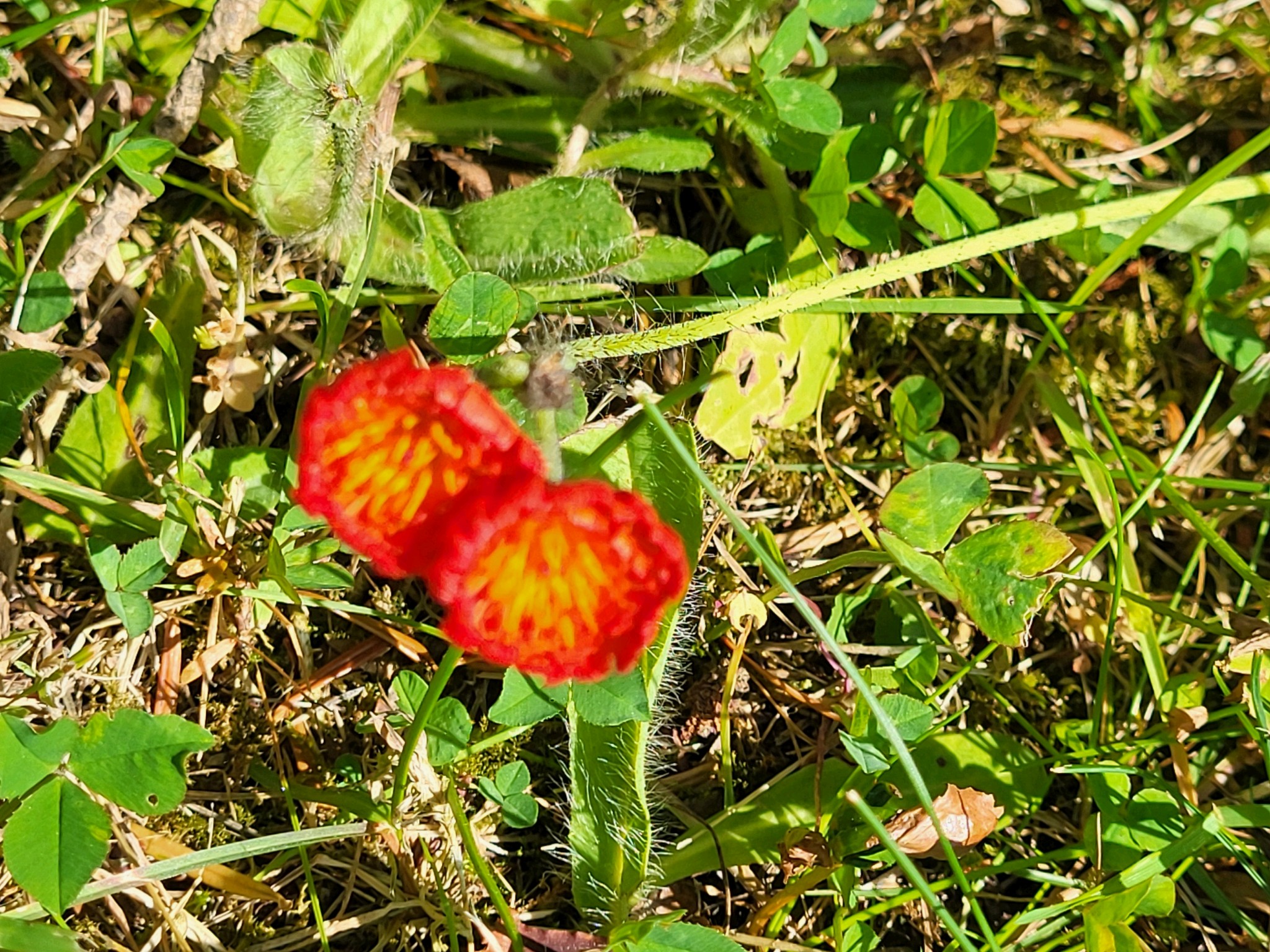
Hieracium aurantiacum is a stoloniferous perennial in the family Asteraceae reaching 6-24 inches (15-60 cm) tall and 6-18 inches (15-45 cm) wide, forming expanding colonies via above-ground stolons and below-ground rhizomes. Plants form a basal rosette of spatulate to oblanceolate leaves 2-6 inches (5-15 cm) long, covered densely in long stiff dark hairs on both surfaces and margins. Flowering stalks (scapes) are leafless or carry 1-2 reduced leaves, erect, covered in dark glandular and stellate hairs, and topped by a compact cluster of 2-12 flower heads. Flower heads are 0.5-0.75 inch (12-18 mm) across, composed entirely of ligulate florets, and vivid orange to red-orange; this is the only orange-flowered hawkweed in the Pacific Northwest. All plant parts exude milky white latex when broken. A single plant produces 500-2,000 seeds per flowering scape, with wind dispersal by the pappus. Stolons radiate from the rosette and root at the tip to form daughter rosettes 4-12 inches (10-30 cm) from the parent, which enables rapid colony expansion. Reproduction is primarily apomictic (seeds produced without fertilization), producing genetically uniform colonies. The species is listed as a Class B noxious weed in Washington State and invades meadows, pastures, roadsides, and forest clearings, particularly at mid-to-high elevations.
Native Range
Hieracium aurantiacum is native to alpine and subalpine meadows of central and northern Europe, from the Pyrenees through the Alps to Scandinavia, at elevations of 3,000-8,000 feet (900-2,400 m). Introduced to North America as a garden ornamental. Naturalized in the Pacific Northwest, northeastern United States, and eastern Canada, particularly in mountain meadows, pastures, and roadsides at 1,000-6,000 feet (300-1,800 m).Suggested Uses
Used in noxious-weed identification training, particularly for mountain-meadow and high-elevation pasture managers. The apomictic reproduction and stoloniferous spread are taught in weed-biology courses. Studied in invasion ecology of mountain meadows and alpine grasslands. The vivid orange flower color carries the species into teaching examples for garden-escape invasive species.How to Identify
Appearance
Size & Dimensions
Height6" - 2'
Width/Spread6" - 1'6"
Bloom Information
Clusters of 2-12 vivid orange to red-orange ligulate flower heads 0.5-0.75 inch (12-18 mm) across on dark-haired leafless scapes, borne May through July over 1-2 weeks per scape. In the Pacific Northwest, peak bloom falls in June. Seeds are produced apomictically (without pollination) and mature 2-3 weeks after head opening; pappus enables wind dispersal over moderate distances. Stolons produce daughter rosettes continuously from spring through fall.
Detailed Descriptions
Flower Description
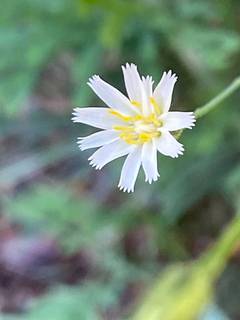
Vivid orange to red-orange; ligulate flower heads 0.5-0.75 inch (12-18 mm); borne in clusters of 2-12 on dark-haired leafless scapes; May-JulyFoliage Description
Medium green; spatulate to oblanceolate 2-6 inches (5-15 cm) long; covered densely in long stiff dark hairs on both surfaces; basal rosette; deciduousGrowing Conditions
Sun Requirements
Requires 4-10 hours of direct sunlight daily
• Full Sun: 6+ hours of direct sunlight
• Partial Shade: 3-6 hours of direct sunlight
• Full Shade: Less than 3 hours of direct sunlight