Image 1 of 10
1 / 10
© John Tann from Sydney, Australia, some rights reserved (CC-BY) · Wikimedia Commons
Hibbertia, Genus, vestita, Species,
- Genus & species
hairy guinea-flower
Overview
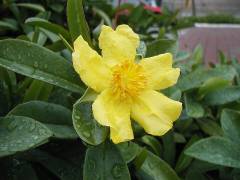
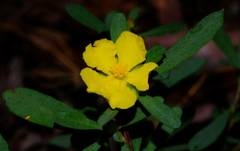
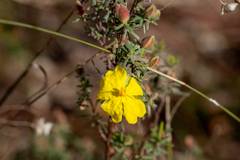
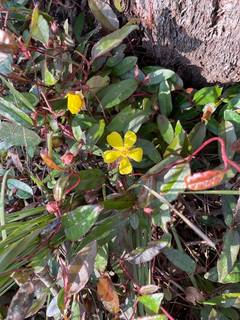
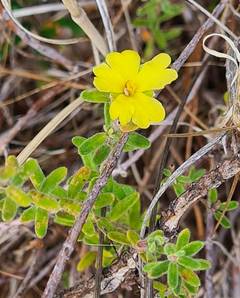
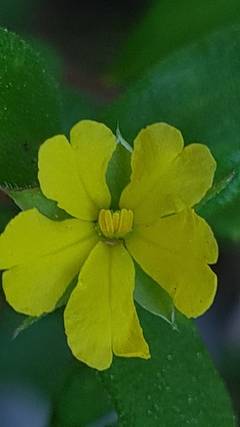
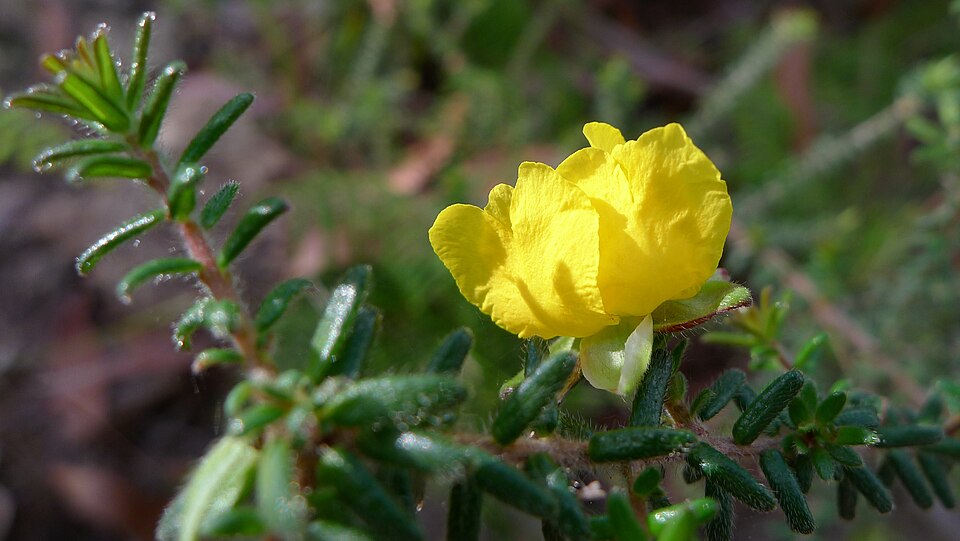
Hibbertia vestita is an evergreen subshrub reaching 6-24 inches (15-60 cm) tall and spreading 12-40 inches (30-100 cm) wide, with slender stems that are prostrate to low-spreading. Stems, leaves, and flower stalks are covered in soft spreading hairs, giving the plant a grey-green, hairy texture. Leaves are narrow to oblong, 0.2-0.8 inch (5-20 mm) long, with margins rolled under and a hairy surface. Flowers are yellow, five-petalled, 0.4-0.8 inch (10-20 mm) across, sitting close to the stems, each with numerous stamens surrounding the central ovaries. Flowering runs from late winter through spring, mainly August to November. The petals are broad and slightly notched. Plants form a low, spreading patch that follows the contours of the ground. Small dry fruits follow the flowers and split to shed seed. The species grows on sandy and rocky soils in heath, woodland, and coastal scrub. It is shorter-lived on heavy or wet soils. Growth is moderate once established.
Native Range
Native to southeastern Australia, occurring in New South Wales, Victoria, South Australia, and Tasmania. Grows in heath, dry woodland, and coastal scrub on sandy or rocky, well-drained soils.Suggested Uses
Used as a low groundcover in native and low-water gardens, on banks, and in rockeries, spaced 16-24 inches (40-60 cm) apart. Suits informal and coastal plantings where its spreading habit fills gaps between larger shrubs.How to Identify
Appearance
Size & Dimensions
Height6" - 2'
Width/Spread1' - 3'4"
Bloom Information
Detailed Descriptions
Foliage Description
grey-greenGrowing Conditions
Sun Requirements
Requires 6-12 hours of direct sunlight daily
• Full Sun: 6+ hours of direct sunlight
• Partial Shade: 3-6 hours of direct sunlight
• Full Shade: Less than 3 hours of direct sunlight
Care & Maintenance
Care Guide
Grows in full sun to part shade on well-drained sandy or rocky soils. Established plants tolerate dry periods and light frost. Heavy clay and waterlogged ground shorten the plant life span. Occasional watering through the first summer aids establishment, after which rainfall is usually sufficient. Propagation is from seed or semi-hardwood cuttings. Few pests affect the plant in cultivation.Pruning
Light pruning after flowering keeps growth dense and tidy. The plant tolerates being cut back lightly but responds poorly to hard pruning into bare stems. Trimming spent flower shoots can prompt a lighter second flush.Pruning Schedule
Prune: November–December
late springsummer
Container Growing
Suitable for container growing
Minimum container size: 3 gallons