Hibbertia, Genus, exutiacies, Species,
- Genus & species
prickly guinea-flower
Overview
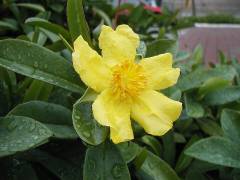
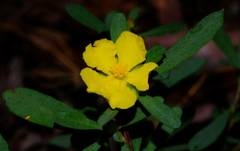
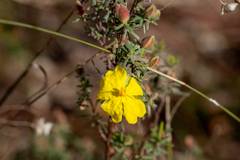
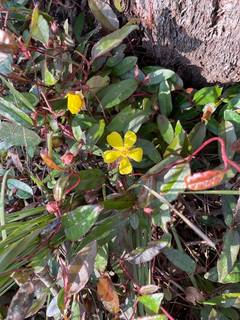
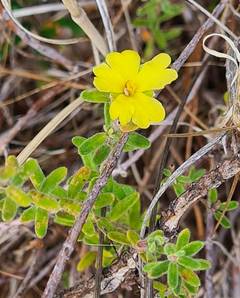
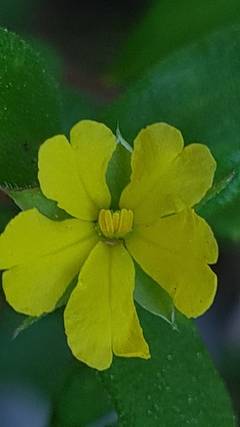
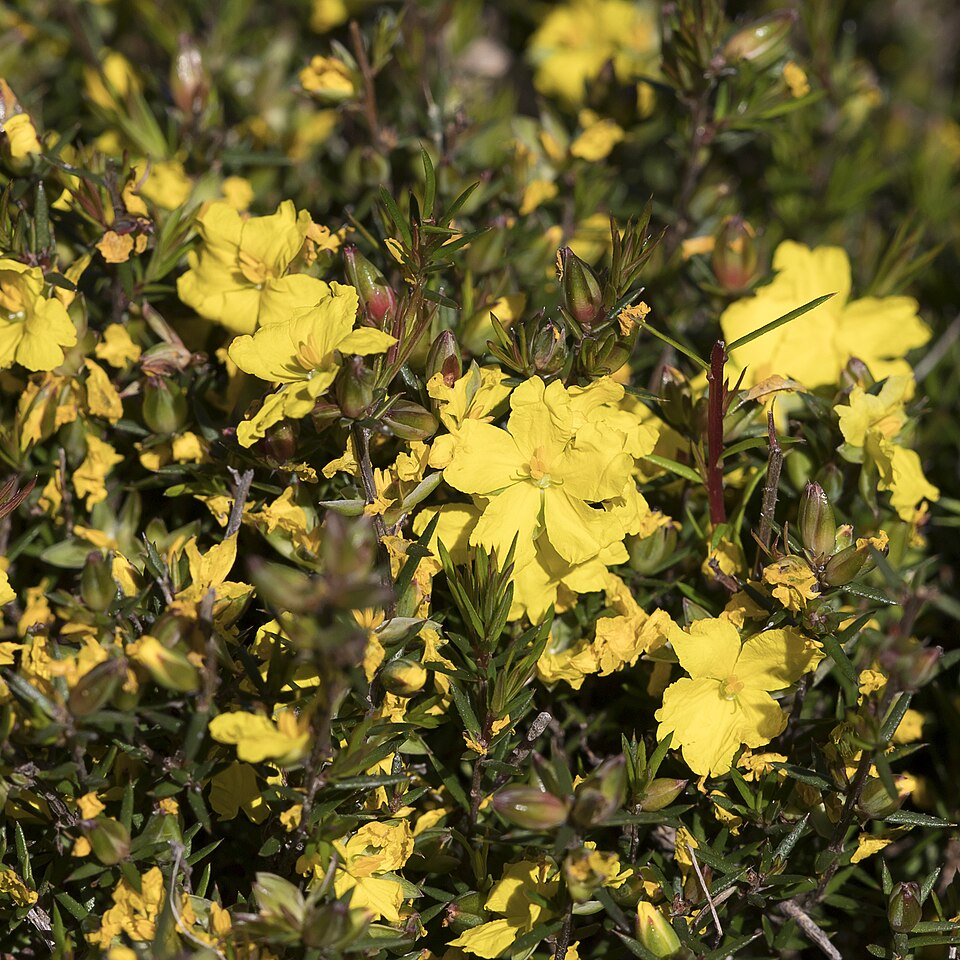
Hibbertia exutiacies is an evergreen shrub reaching 12-40 inches (30-100 cm) tall and 12-32 inches (30-80 cm) wide, with rigid, spreading branches that end in sharp spine-like points. The branchlets are crowded with small, narrow leaves 0.2-0.6 inch (5-15 mm) long, stiff and often clustered on short side shoots. Flowers are yellow, five-petalled, and 0.4-0.8 inch (10-20 mm) across, borne singly along the stems with numerous stamens at the centre. Flowering occurs in spring, mainly September to November. The petals are notched at the tip, a feature shared with several related Hibbertia species. Plants form a dense, prickly mound used as cover by small birds. After flowering, small dry fruits split to release seeds. The species grows on shallow, well-drained soils in mallee and heath. The spiny branch tips make handling difficult. Growth is slow to moderate, and plants tolerate dry summers once established.
Native Range
Native to southern Australia, occurring in South Australia and western Victoria. Grows in mallee, heath, and open woodland on shallow, sandy or stony soils.Suggested Uses
Used in low-water and native gardens as a prickly barrier and in mixed shrub plantings, spaced 24-36 inches (60-90 cm) apart. The dense spiny habit suits informal screening and shelters small birds.How to Identify
Appearance
Size & Dimensions
Height1' - 3'4"
Width/Spread1' - 2'8"
Bloom Information
Flowers in spring, mainly September to November in southern Australia. Bloom is concentrated over several weeks. Flowering is heavier following wet winters.
Detailed Descriptions
Foliage Description
greenGrowing Conditions
Sun Requirements
Requires 6-12 hours of direct sunlight daily
• Full Sun: 6+ hours of direct sunlight
• Partial Shade: 3-6 hours of direct sunlight
• Full Shade: Less than 3 hours of direct sunlight
Care & Maintenance
Care Guide
Grows in full sun to light shade on well-drained sandy or stony soils. Established plants tolerate extended dry periods and light frost. Wet, poorly drained soils shorten the plant life span. Little watering is needed once roots are established. The species is propagated from seed or cuttings, both of which can be slow to strike. Spiny branch tips make close work around the plant awkward.Pruning
Light tip pruning after flowering keeps the shrub compact and encourages branching. Hard pruning into old bare wood produces little regrowth. The spiny stems make pruning slow.Pruning Schedule
Prune: November–December
late springsummer
Container Growing
Suitable for container growing
Minimum container size: 5 gallons