Hibbertia, Genus, cuneiformis, Species,
- Genus & species
cutleaf hibbertia
Overview
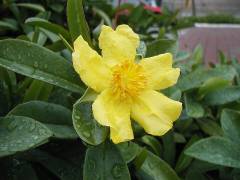
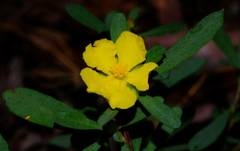
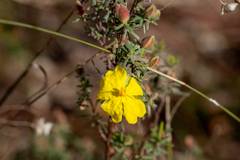
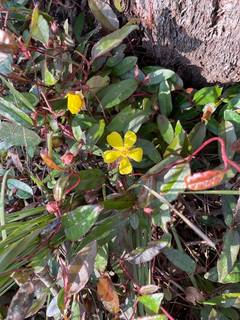
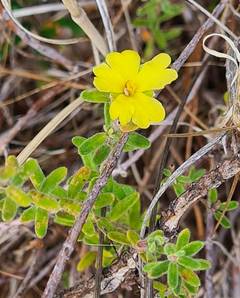
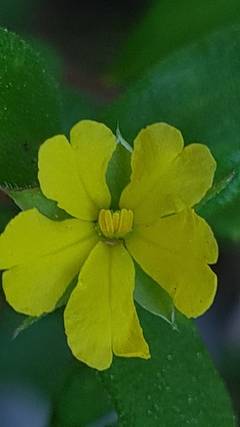
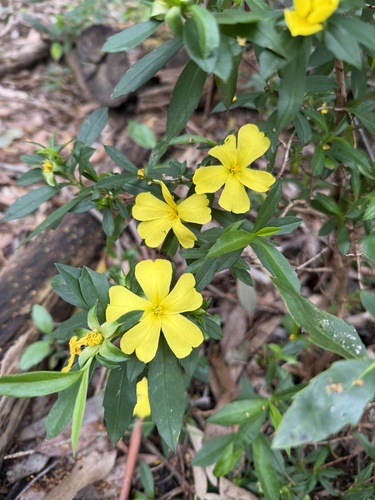
Hibbertia cuneiformis is an erect evergreen shrub native to southwestern Western Australia, growing 3–8 feet (1–2.5 m) tall with a bushy, upright habit. The glossy green leaves are wedge-shaped to oblong, 0.6–1.6 inches (1.5–4 cm) long, with toothed margins toward the broad tip. Bright yellow open flowers 0.8–1.2 inches (2–3 cm) across, each with five notched petals and a central cluster of stamens, appear over a long period from the branch tips and upper leaf axils. Hibbertia cuneiformis grows naturally in jarrah and karri forest, woodland, and along creek lines, on sandy and gravelly soils. It tolerates a range of well-drained soils and grows in full sun to part shade. It withstands light frost and dry spells once established but is damaged by prolonged waterlogging. The long flowering season and upright habit lead to its use as a garden and screening shrub in mild climates.
Native Range
Native to southwestern Western Australia. It grows in jarrah and karri forest, open woodland, and along creek lines on sandy and gravelly soils.Suggested Uses
Hibbertia cuneiformis is used as a flowering shrub, informal screen, and filler in native and low-water gardens. Its upright habit suits mixed shrub borders and woodland-edge plantings in mild climates.How to Identify
Appearance
Size & Dimensions
Height3' - 8'
Width/Spread3' - 6'
Bloom Information
Flowering occurs over a long season from spring into summer, mainly September to January, with scattered flowers at other times. The bright yellow flowers open at the branch tips and upper leaf axils. Each flower is short-lived, but the shrub produces a steady succession over many weeks.
Detailed Descriptions
Foliage Description
glossy greenGrowing Conditions
Sun Requirements
Requires 4-9 hours of direct sunlight daily
• Full Sun: 6+ hours of direct sunlight
• Partial Shade: 3-6 hours of direct sunlight
• Full Shade: Less than 3 hours of direct sunlight
Care & Maintenance
Care Guide
Hibbertia cuneiformis grows in full sun to part shade on well-drained sandy, gravelly, or loamy soils. It tolerates dry spells once established and needs only occasional water in its native range, though regular moisture extends flowering. Prolonged waterlogging damages the roots, so good drainage is important. It withstands light frost and suits mild, near-frost-free climates. Light pruning after flowering keeps the shrub bushy and compact.Pruning
Light pruning after the main flowering keeps the shrub dense and shapes its upright form. It tolerates trimming of the soft outer growth but recovers slowly from hard cutting into old wood. Removing spent flowering shoots produces branching.Container Growing
Suitable for container growing
Minimum container size: 5 gallons