Hibbertia, Genus, riparia, Species,
- Genus & species
erect guinea-flower
Overview
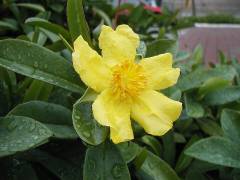
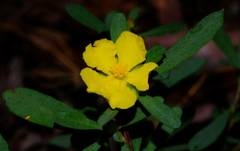
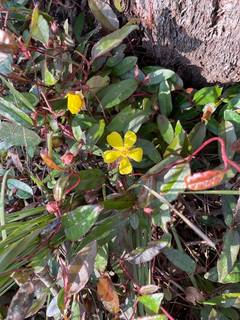
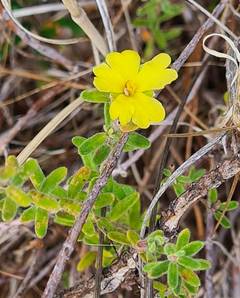
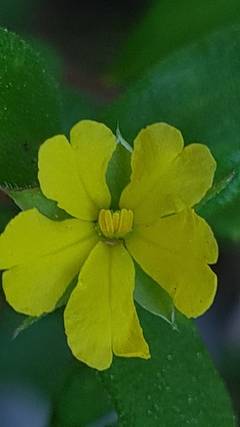
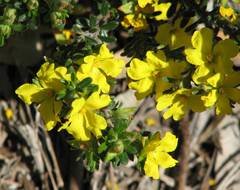
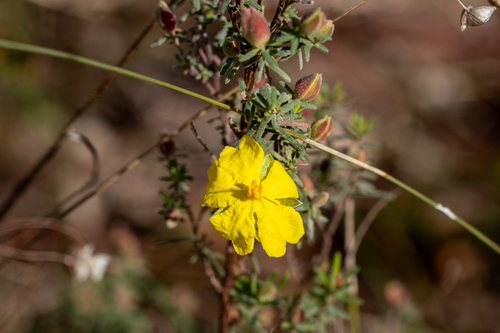
Hibbertia riparia is a small woody shrub reaching 8-32 inches (20-80 cm) tall and 8-24 inches (20-60 cm) wide, with a wiry, upright to spreading habit. Stems are slender and often densely branched, carrying small narrow leaves 0.2-0.6 inch (5-15 mm) long with margins rolled under. Flowers are bright yellow with five notched petals, 0.6-1 inch (15-25 mm) across, borne singly on short stalks along the stems. Flowering is concentrated in spring. The flowers open in sunshine and are short-lived, replaced in succession over several weeks. Plants regenerate from seed and, in some populations, resprout after fire. Growth is slow to moderate, with plants reaching mature size in 2-4 years. The small leaves and open framework give a sparse appearance outside the flowering period. Frost in its native range is tolerated, but waterlogged soils cause root decline.
Native Range
Native to south-eastern Australia, including Victoria, New South Wales, Tasmania, and South Australia. Grows in dry sclerophyll forest, heathland, and rocky slopes in sandy or gravelly well-drained soils.Suggested Uses
Planted in rockeries, native gardens, and well-drained embankments, spaced 16-24 inches (40-60 cm) apart. Suits low-water and coastal heath plantings. The sparse habit outside flowering limits use as a dense groundcover.How to Identify
Appearance
Size & Dimensions
Height8" - 2'8"
Width/Spread8" - 2'
Colors
Bloom Information
Flowers mainly in spring (September to December in its native range), with occasional flowers into early summer. Individual flowers last one to two days, opening in sunny conditions. The overall display extends across several weeks.
Detailed Descriptions
Foliage Description
green to grey-greenGrowing Conditions
Sun Requirements
Requires 5-8 hours of direct sunlight daily
• Full Sun: 6+ hours of direct sunlight
• Partial Shade: 3-6 hours of direct sunlight
• Full Shade: Less than 3 hours of direct sunlight
Care & Maintenance
Care Guide
Grows in full sun to light shade in sandy or gravelly, sharply drained soils. Water during establishment in the first year; established plants tolerate dry conditions and decline in prolonged wet soil. Tolerates light to moderate frost. Root rot develops in heavy clay and poorly drained sites. Few pests or diseases are recorded. Light pruning after flowering keeps the framework dense.Pruning
Trim lightly after flowering to remove spent stems and maintain a compact shape. Cut back by no more than one quarter, as the plant reshoots slowly from older wood. Hard pruning into bare stems may not regenerate.Pruning Schedule
Prune: November–December
late springsummer
Container Growing
Suitable for container growing
Minimum container size: 3 gallons